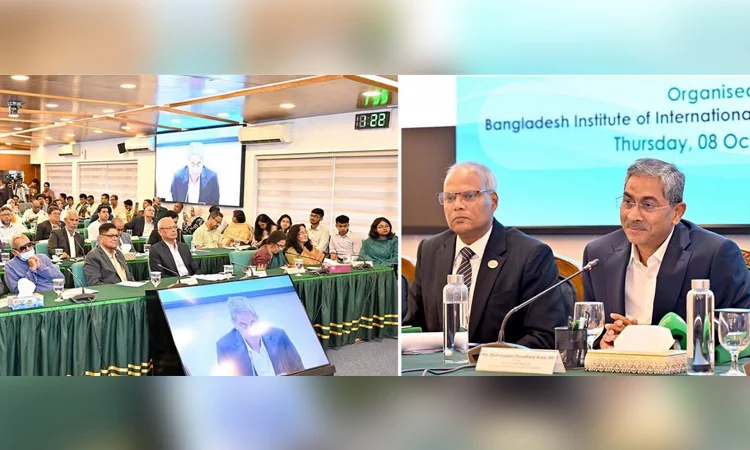


The Bangladesh Institute of International and Strategic
Studies (BIISS), in collaboration with the United Nations Office for Project Services
(UNOPS), convened a high-level roundtable today titled “The Power of Local: How
Grassroots Communities Drive SDG Achievement in Bangladesh.”
The event highlighted the critical role of community-led initiatives in achieving the
Sustainable Development Goals (SDGs) by 2030. Participants included senior
government officials, diplomats, academics, youth representatives and grassroots
leaders, who gathered at the BIISS Auditorium to discuss how Bangladesh can leverage
local innovation and governance to address enduring development challenges.
Opening the dialogue, Major General Iftekhar Anis, Director General of BIISS,
emphasized, “Real progress lies in the hands of our local communities. Their lived
experiences and solutions are invaluable in shaping policies that truly leave no one
behind.”
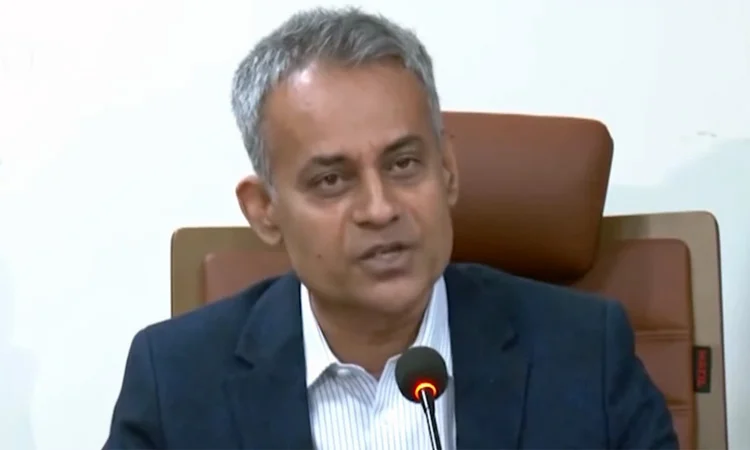
Mr. Sudhir Muralidharan, Country Manager of UNOPS Bangladesh and Bhutan,
underlined the importance of collaboration: “Together with BIISS, we are amplifying local
voices and efforts. Sustainable, equitable change is only possible when it is rooted in
inclusive planning and driven by community-led action.”
As Chief Guest, H.E. Mr. Håkon Arald Gulbrandsen, Ambassador of the Royal
Norwegian Embassy in Dhaka, commended Bangladesh’s progress while stressing the
need for stronger local institutions: “Bangladesh has shown remarkable development
progress. Investing in local governance is not an option, it is essential for ensuring lasting
and equitable growth.”
Delivering the keynote address, Dr. Maruful Islam, Professor of Development Studies at
the University of Dhaka, identified gaps in data and governance at the local level: “We
have the vision, but to realize it we must empower local actors, safeguard their autonomy,
and strengthen data and institutions to turn plans into tangible outcomes.”
Representing the Government of Bangladesh, Mr. Iqbal Abdullah Harun, Secretary of the
Ministry of Planning, reaffirmed official commitment: “Our priority is empowering local
government bodies to lead SDG implementation. Their success is our nation’s success.”
Dr. Michal Krejza, Head of Development Cooperation at the European Union Delegation
to Bangladesh, added: “The SDGs cannot succeed through a top-down approach.
Involving local communities is paramount. The EU has consistently supported Bangladesh
in localizing the SDGs, with women at the center.”
Bringing a grassroots voice, Khushi Kabir, Coordinator of Nijera Kori, stressed the
importance of community-driven solutions: “When communities design and drive their
own development, outcomes are more sustainable and just. This roundtable is a step
towards recognizing that power.”
The discussion concluded with a collective call to strengthen local data systems,
improve financing mechanisms, and advance deeper collaboration among government,
development partners, and civil society to accelerate progress toward the SDGs.
About BIISS
The Bangladesh Institute of International and Strategic Studies (BIISS) is a premier
research institute dedicated to advancing policy-relevant studies on international and
strategic affairs.
About UNOPS
The United Nations Office for Project Services (UNOPS) supports the UN and partners
worldwide in delivering peacebuilding, humanitarian, and development projects through
expertise in infrastructure, procurement, human resources and project management.