
TBT DESK: A coalition of civil society organisations on Wednesday warned that a sharp decline in public financing for Bangladesh’s water, sanitation and hygiene (WASH) sector could jeopardise progress towards Sustainable Development Goal (SDG) 6 and weaken the country’s climate resilience efforts.
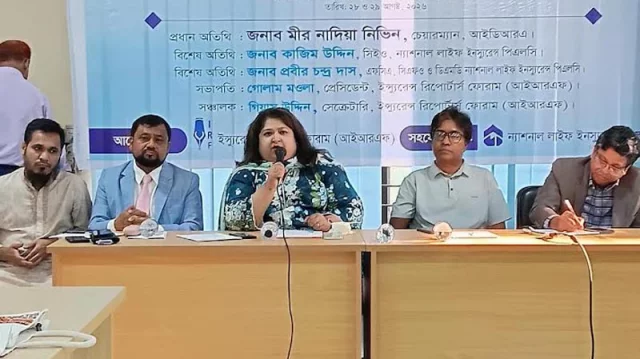
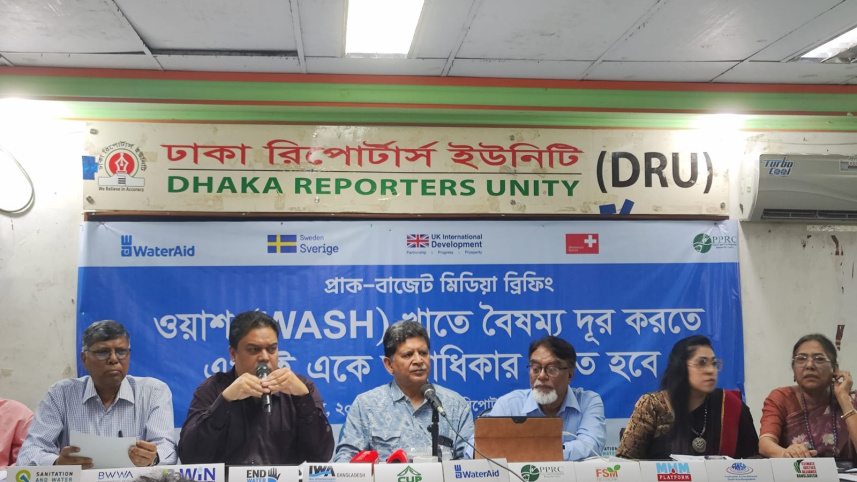
The warning came at a pre-budget media briefing organised by the Network of WASH Networks, where speakers highlighted a steep fall in allocations for the WASH sector under the Annual Development Programme (ADP).
According to a budget analysis prepared by WaterAid Bangladesh and the Power and Participation Research Centre, WASH funding declined from Tk 187.28 billion in FY2022-23 to Tk 109.01 billion in the current fiscal year, marking a 40 per cent reduction over three years.
On behalf of the network, Hossain Zillur Rahman and Mohammad Abdul Wazed prepared a policy brief in consultation with network leaders.
Speaking at the event, Dr Rahman said the declining allocation reflected a serious mismatch between rising national development spending and shrinking investment in public health, local government infrastructure and water systems.
Advocate Fayazuddin Ahmad said that although 98 per cent of the population used improved water sources, access to safely managed drinking water stood at only 55 per cent nationwide, according to the preliminary MICS 2025 report.
He said a 23 percentage-point gap remained between urban and rural areas, with safely managed water coverage at 71 per cent in cities compared with 48 per cent in rural regions, largely due to structural funding disparities and contamination of tube wells by arsenic and microbes.
The briefing also highlighted major geographical inequalities in budget allocation. Around two-thirds of the national WASH development budget is directed towards urban areas, municipalities and WASAs, while vulnerable regions such as char lands, haors, coastal belts and hilly districts receive just over 10 per cent of the total allocation.
The speakers noted that Dhaka WASA alone accounted for nearly 29 per cent of the national WASH allocation, while several city corporations, including Rajshahi, Rangpur, Cumilla, Sylhet and Dhaka South, reportedly received no allocation in FY2025-26.
Concerns were also raised over the country’s weak faecal sludge management system. The briefing said safe disposal of human waste remained between 2 and 5 per cent in urban areas and virtually absent in rural Bangladesh due to inadequate investment in the sector.
Mohammad Zobair Hasan said current spending trends undermined the goals of Bangladesh’s National Adaptation Plan 2023-2050, as climate change continued to intensify water stress through sea-level rise, flooding and groundwater depletion.
The network proposed several measures for the upcoming national budget, including reversing the decline in WASH allocations, prioritising rural and hard-to-reach areas, introducing direct WASH allowances for poor households, and expanding sanitation facilities in schools and healthcare institutions.
The speakers also called for stronger institutional capacity at local government level to ensure the long-term sustainability of WASH infrastructure and services.