
TBT DESK: The opposition party, Bangladesh Jamaat-e-Islami, has proposed increasing the individual tax-free income threshold to Tk600,000 from the current Tk350,000, arguing that lower tax burdens would ease pressure on households and support economic activity.
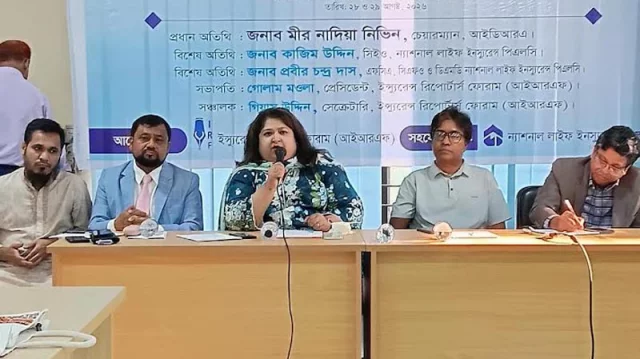
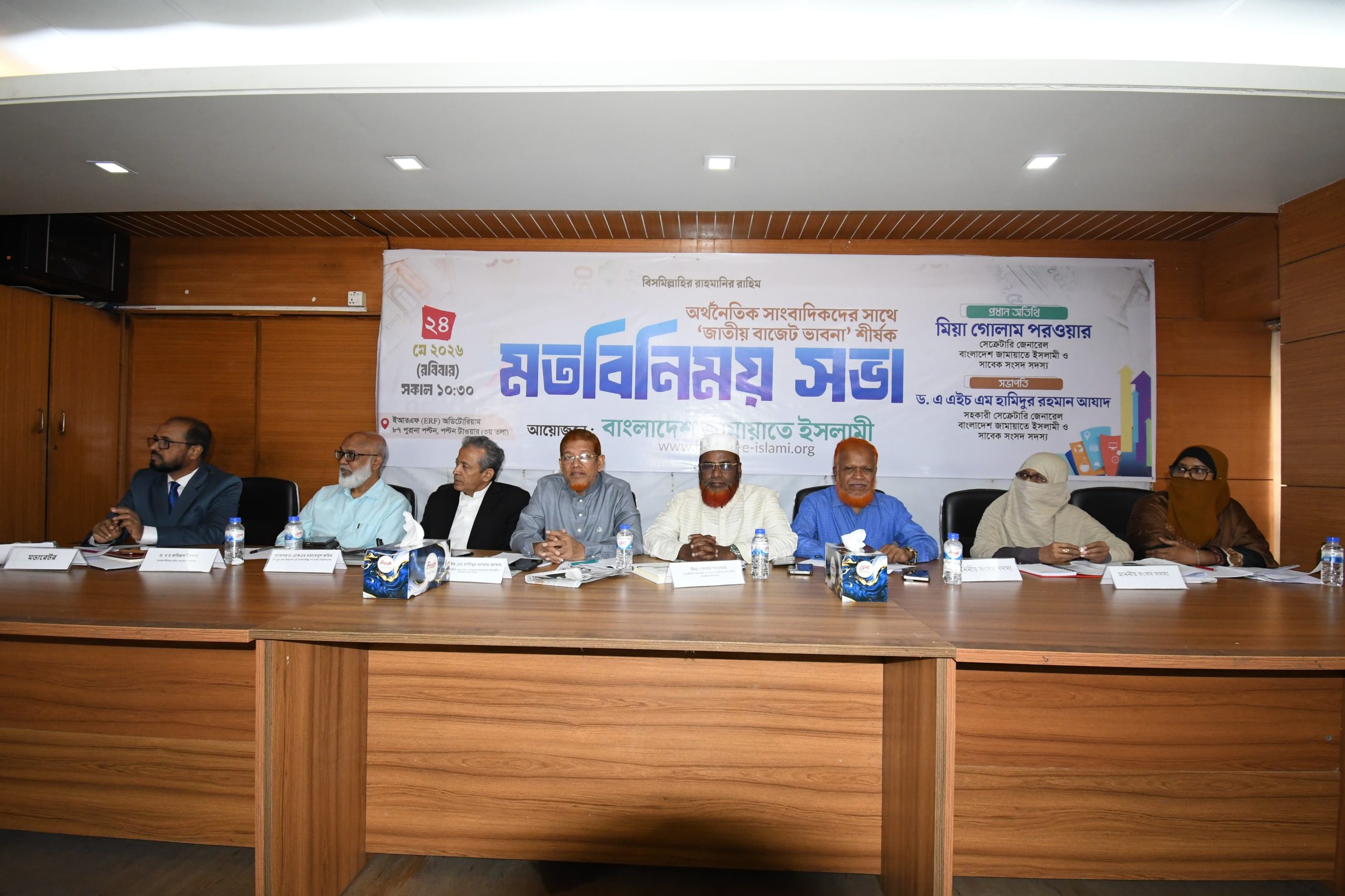
The proposal was placed during a budget discussion meeting organised by Jamaat at the auditorium of the Economic Reporters' Forum (ERF) in Paltan on Sunday.
The party also recommended reducing the average corporate tax rate to 19 per cent, while keeping tax rates on tobacco and narcotics unchanged. It further said there was no need to increase the tax-to-GDP ratio at this stage, instead advocating for expanding the tax net.
Presenting the party’s budget proposals, A K M Waresul Karim, Dean of the Department of Economics at North South University, said Jamaat favours a smaller but more efficient budget focused on quality expenditure rather than size.
He argued that higher tax collection could discourage employment generation and increase business costs, ultimately putting pressure on prices and earnings.
“We are not in favour of increasing the tax-to-GDP ratio. Rather, we want to broaden the tax base,” Waresul Karim said, while also calling for the abolition of advance income tax. He further alleged that officials of the National Board of Revenue were providing misleading policy advice to the government.
The economist also criticised the government’s proposed Tk60,000 crore stimulus package aimed at reopening closed factories and questioned the rationale behind the plan to expand family card coverage.
Addressing the event as chief guest, Jamaat Secretary General Mia Golam Parwar said budgets in Bangladesh had often been used as instruments of “mismanagement and exploitation” rather than improving people’s livelihoods.
He called for increased allocations to education, healthcare and agriculture, citing concerns over social development and employment generation.
Referring to a World Bank assessment, Parwar claimed Bangladesh remained among countries with the lowest allocation to education, arguing that greater investment in the sector would contribute to job creation.
He also alleged widespread corruption among revenue officials.
The discussion meeting was chaired by Jamaat Assistant Secretary General Hamidur Rahman Azad, who questioned the government’s family card programme, raising concerns over its scale and implementation.
The proposals come as political parties and stakeholders intensify discussions ahead of the national budget, with taxation, inflation and public spending emerging as key areas of debate.