
TBT DESK: Energy experts have welcomed a series of fiscal incentives proposed in the FY2026–27 national budget, saying the measures mark a clear policy shift towards renewable energy and could help accelerate Bangladesh’s transition to a cleaner and more resilient energy system.
The observations came at a dialogue titled “Proposed National Budget FY2026–27: What Did the Power and Energy Sector Receive?” organised by the Centre for Policy Dialogue (CPD) at its Dhanmondi office in Dhaka on Wednesday.
Presenting the CPD’s analysis, Senior Research Associate Helen Mashiyat Preoty said the budget contains a range of tax and tariff measures designed to encourage green investment and reduce dependence on imported fossil fuels.
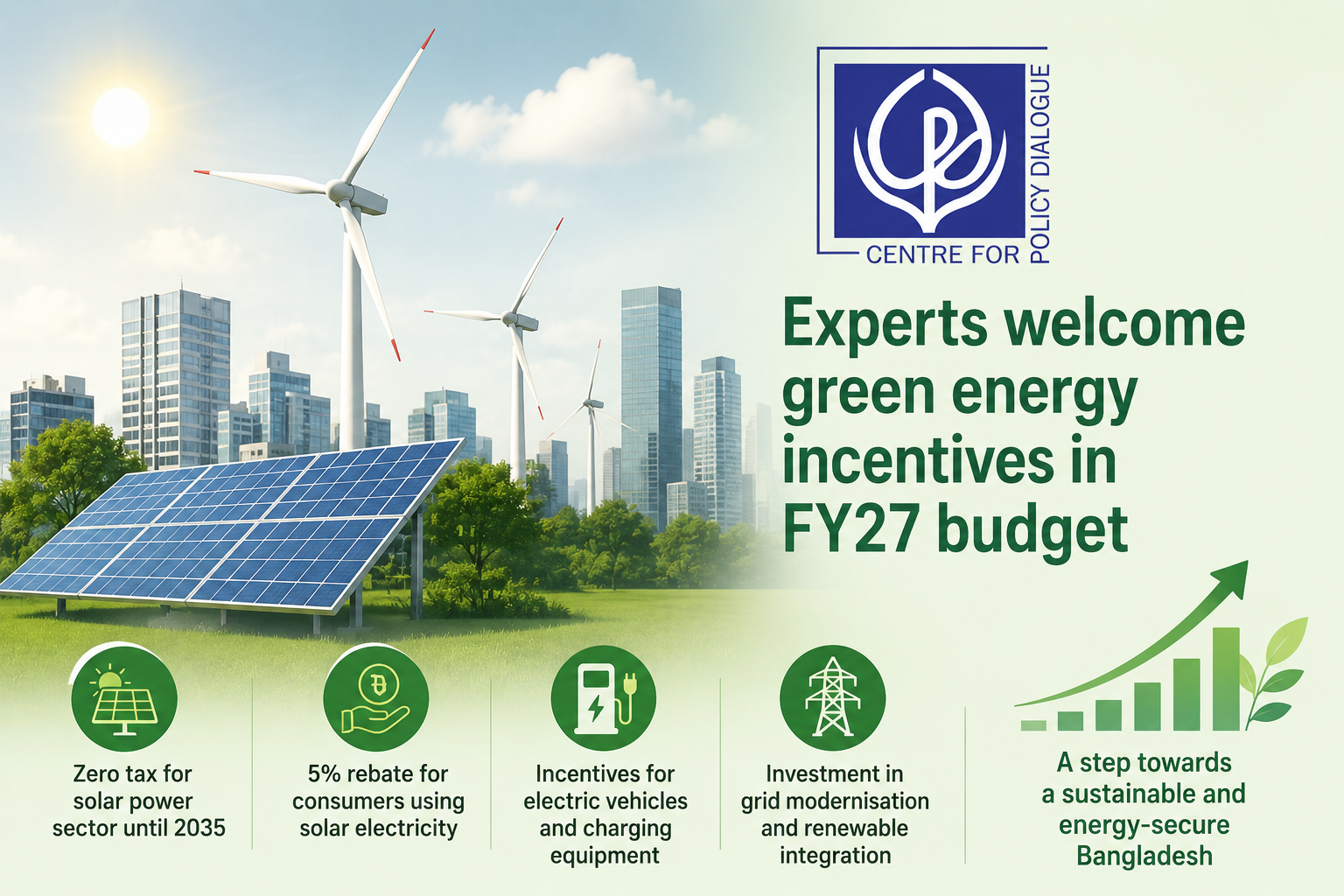
She noted that a zero per cent tax rate for the solar power sector until 2035, a five per cent rebate for consumers using solar electricity, and reduced duties on solar equipment and components would help bring down investment costs and improve the sector’s attractiveness.
The Ministry of Power, Energy and Mineral Resources has been allocated Tk 17,345 crore in the proposed budget, reflecting continued emphasis on the energy sector.
Preoty added that several earlier recommendations from CPD on renewable energy, energy storage, electric vehicles (EVs) and grid modernisation had been reflected in the budget, indicating what she described as a positive shift towards sustainable energy development.
She also highlighted EV-related incentives, including the removal of import duties on charging equipment, lower import taxes on electric vehicles, and reduced annual income taxes on EV ownership.
The study further noted the government’s focus on strengthening domestic energy security through expanded gas exploration, offshore bidding and increased exploration capacity, alongside efforts to diversify energy sources.
According to the analysis, investments in smart grids, smart metering and renewable energy integration would help modernise the country’s power infrastructure and support future expansion of clean energy.
However, Ms Preoty cautioned that further expansion of renewable projects, faster grid modernisation and additional green fiscal measures would be required to fully achieve long-term transition goals.
The study recommended increased support for renewable energy projects, upgrading transmission and distribution networks, targeted incentives for solar irrigation, and the introduction of a comprehensive green fiscal framework.
Moderating the discussion, CPD Research Director Khondaker Golam Moazzem stressed the need for stronger renewable energy investment, improved governance, reduced system losses and more efficient use of public resources.
He also called for greater institutional capacity, policy consistency, enhanced accountability in project implementation and improved transparency in energy pricing and subsidy management.
Economists, energy specialists and stakeholders from various sectors attended the event.
CPD concluded that the FY2026–27 budget represents a positive step towards a cleaner and more energy-secure future, while emphasising the need for continued reforms to ensure sustainable development of the power and energy sector.