
TBT DESK
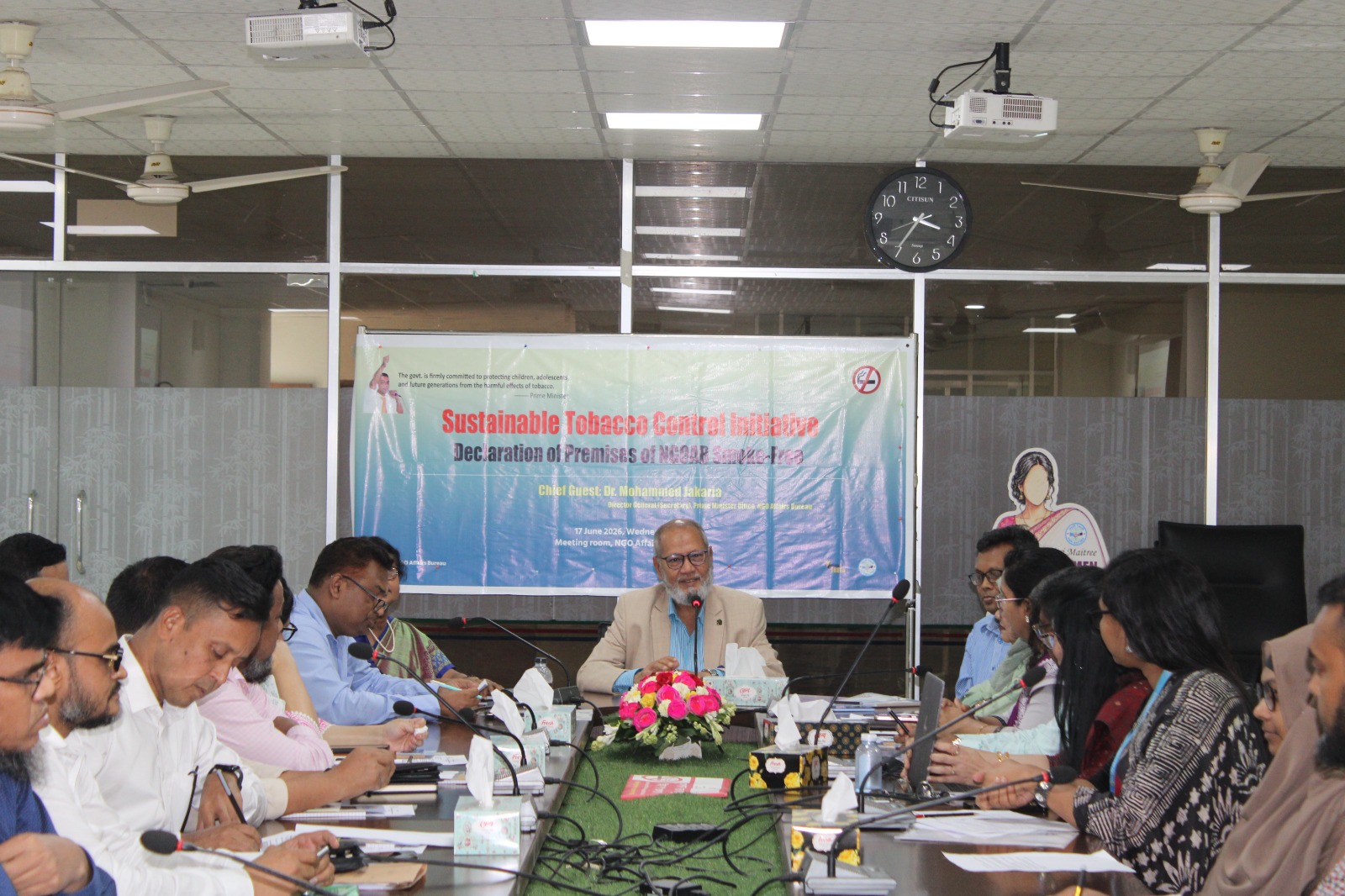
To safeguard public health and protect non-smokers from the harmful effects of second-hand smoke, the NGO Affairs Bureau has officially declared its office premises a completely smoke and tobacco-free zone in accordance with national guidelines.
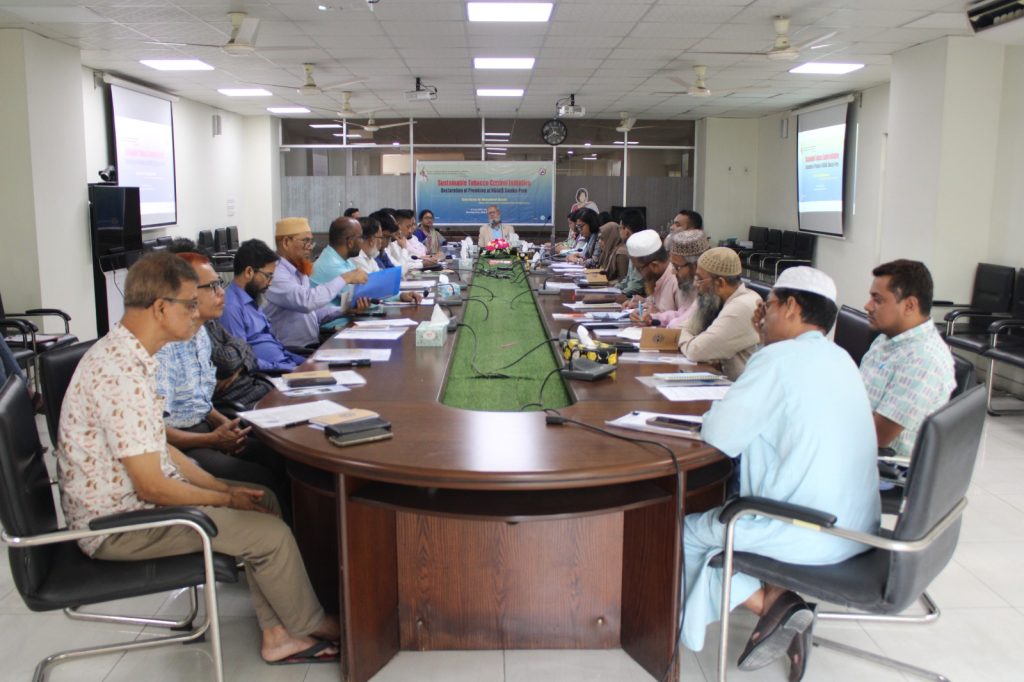
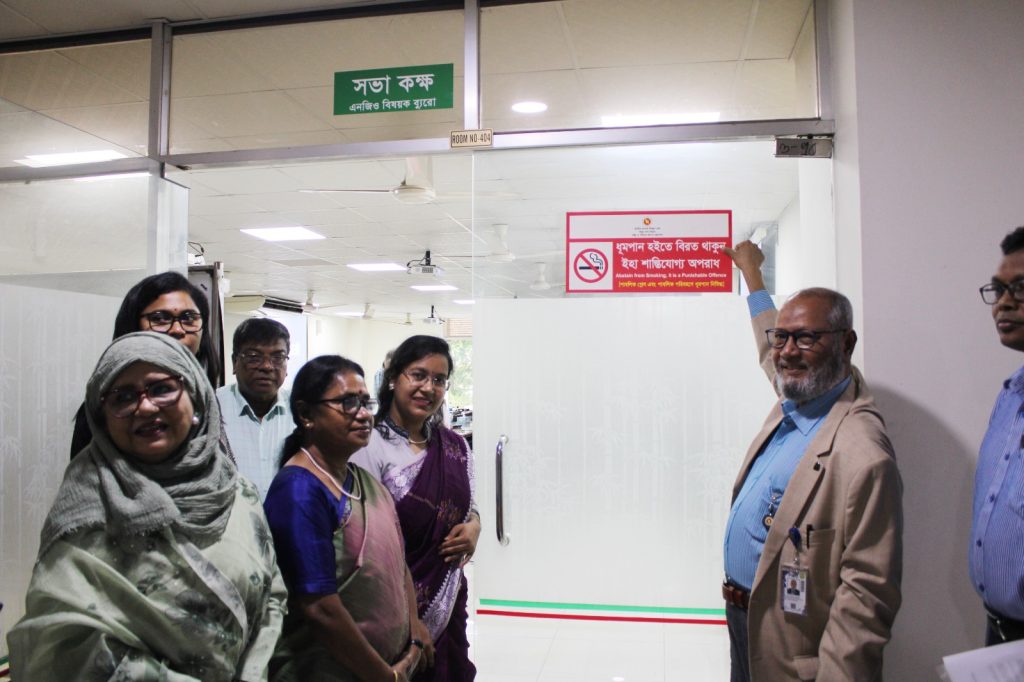
The declaration was made on Wednesday (17 June) by Dr. Mohammed Jakaria, Director General of the NGO Affairs Bureau, during an event titled “Sustainable Tobacco Control Initiative: Declaration of Premise of NGO Affairs Bureau Tobacco-Free” held at the Bureau’s meeting room. Under the declaration, the sale, purchase, and use of all tobacco products within the NGO Affairs Bureau premises are strictly prohibited. This measure aims to ensure that employees and visitors are protected from the harmful effects of second-hand smoke. The Director General further stated that all activities within the office will be conducted in compliance with national tobacco control guidelines, maintaining a completely smoke and tobacco-free environment.
During the event, it was highlighted that Bangladesh remains one of the largest consumers of tobacco in the world. Among South Asian countries, Bangladesh has the highest tobacco use prevalence at 35.3 percent, compared to 28.6 percent in India and 19.1 percent in Pakistan. According to the Global Adult Tobacco Survey (GATS) 2017, approximately 37.8 million adults in Bangladesh currently use tobacco. Data from the Tobacco Atlas 2025 indicate that nearly 200,000 people die each year in Bangladesh from tobacco-related diseases, while several hundred thousand more suffer from disability and illness. Recent research conducted by the Health Economics Institute of the University of Dhaka found that tobacco tax revenue amounted to approximately BDT 41,000 crore during the 2024–25 fiscal year. In contrast, the economic cost of tobacco-related deaths, health damage, and environmental degradation reached nearly BDT 87,000 crore—more than double the revenue generated. Overall, tobacco use continues to pose a growing threat to public health, the economy, and the environment in Bangladesh.
Bangladesh became a signatory to the World Health Organization’s Framework Convention on Tobacco Control (WHO FCTC) in 2003. Building upon this commitment, the Smoking and Tobacco Products Usage (Control) (Amendment) Act, 2026 was enacted. Key provisions of the law include the prohibition of smoking and tobacco use in all public places and both motorized and non-motorized public transport; the prohibition of designated smoking areas (DSAs) in public places and public transport; a ban on tobacco advertising and promotion at points of sale, on social media, in print and electronic media, and in cinemas and films; restrictions on tobacco companies using corporate social responsibility (CSR) activities for promotion; prohibition of tobacco sales to and by persons under 18 years of age; and a ban on tobacco sales within 100 meters of educational institutions, hospitals, clinics, sports venues, and children's parks. The law also mandates the display of “No Smoking” signage in public places and public transport.
In this context, the NGO Affairs Bureau office has been declared a completely smoke and tobacco-free zone to protect public health and shield non-smokers from the harmful effects of second-hand smoke.
As Chief Guest, Dr. Mohammed Jakaria stated: “Smoking harms not only smokers but also non-smokers who are exposed to second-hand smoke. Ensuring a tobacco-free environment is essential for protecting public health. Since the NGO Affairs Bureau is a public institution and the Smoking and Tobacco Products Usage (Control) (Amendment) Act, 2026 prohibits smoking and tobacco use in all public places, we have a responsibility to safeguard the health of our employees and visitors. It is from this sense of responsibility that we have decided to declare this office tobacco-free. We also plan to expand this initiative further in the future.”
Speaking as Special Guest, Shivani Bhattacharya, Convener of the Anti-Tobacco Mothers’ Forum, said: “Declaring the NGO Affairs Bureau office smoke-free and tobacco-free is undoubtedly a far-sighted and public health-friendly initiative. Through this declaration, the Bureau has not only taken an administrative decision but has also demonstrated its strong commitment to health protection and tobacco control. We hope that all NGOs and offices under the Bureau’s jurisdiction will gradually take similar steps to ensure tobacco-free environments.”
Tanushree Haldar, Co-Convener of the Anti-Tobacco Teachers’ Forum, remarked: “This timely and commendable decision by the NGO Affairs Bureau will serve as a model and inspiration for other public and private institutions across the country. Declaring workplaces smoke and tobacco-free will not only ensure a healthier and safer environment but will also strengthen the government’s ongoing tobacco control efforts.”
Expressing gratitude to the NGO Affairs Bureau authorities, Shaheen Akter Dolly, Executive Director of Nari Maitree and Chair of the event, stated: “This initiative by the NGO Affairs Bureau is a highly positive and significant step toward tobacco control. However, it should not remain merely a declaration. Its effective implementation requires the collective efforts of all officers and staff of the Bureau. I believe that commitment already exists among everyone in this office. We hope that other public and private workplaces will be inspired by the example set by the NGO Affairs Bureau.”
The event was also attended by Barrister Md. Khalilur Rahman Khan, NDC, Director (Joint Secretary) of the NGO Affairs Bureau, officials from various departments of the Bureau, and members of the Anti-Tobacco Mothers’, Teachers’, and Youth Forums. All participants emphasized the importance of maintaining a tobacco-free workplace and welcomed the initiative.