


As the global community faces an existential crisis driven by climate change and the depletion of natural resources, moving away from the "Linear Economy"—the traditional "take-make-dispose" mindset—has become an unavoidable necessity. In this context, the "Circular Economy" has emerged as a viable and effective solution. However, a fundamental question remains: who will lead this radical transformation? the state, the industrial sector, or civil society?
The circular model is built upon the principles of "Reduce, Reuse, and Recycle." It represents an economic system where waste is reimagined as a resource and the emphasis is placed on extending the lifecycle of products. Such a complex and far-reaching transition cannot be achieved by any single entity in isolation. Instead, it requires a synchronized and collective effort from the state, industry, and civil society.
The state serves as the primary architect of any national transformation. In implementing a circular economy, the government must take a leading role as the policymaker. No significant change can be sustained without a robust legal framework and a system of incentives. The state is responsible for crafting policies that encourage the recycling industry. By offering green tax benefits, mandating modern technology in waste management, and providing duty exemptions on eco-friendly imports, the state can provide clear direction to the private sector. When the state establishes a supportive ecosystem, it facilitates the participation of all other stakeholders.
To accelerate this transition, the government must strategically raise funds. Specifically, the issuance of "Sovereign Green Bonds" can mobilize capital from domestic and international markets to be used exclusively for sustainable infrastructure. Furthermore, establishing a functional carbon credit market is now a necessity. According to World Bank data, revenues from carbon taxes and emission trading systems reached approximately $100 billion globally by 2024. If Bangladesh establishes its own carbon market, industrial enterprises could profit by selling credits earned through emission reductions, thereby incentivizing spontaneous investment in environmental protection.
Industrial and commercial enterprises are the primary engines of this cycle, as they control production and marketing. As a healthcare entrepreneur, I witness firsthand how challenging waste management can be in modern hospitals and large-scale factories. Industry must redefine production processes to ensure products are durable and reusable. This not only protects the environment but also reduces production costs in the long run. Firms must invest in research to utilize innovative technologies that reduce their carbon footprint. Only when industry accepts environmental responsibility alongside profitability will the circular model reach its full potential.
This industrial evolution requires providing significant opportunities for young entrepreneurs and startups. Startups focusing on "Waste-tech" and circular supply chains can bring revolutionary changes to traditional industries. These efforts should include the establishment of "Clean Energy Firms" or renewable energy institutions. The International Renewable Energy Agency (IRENA) says that by 2030, investments in renewable energy could create three times as many jobs as the linear economy. Developing solar or biogas-based clean energy hubs within our industrial zones would significantly reduce carbon emissions.
Funding remains a major hurdle for the circular economy. In this regard, "Equity Finance" or partnership-based investment is often more effective than traditional bank loans. When investors provide equity to startups or clean energy projects, entrepreneurs can focus on long-term, high-risk innovation without the immediate burden of debt. Additionally, the creation of a "Credit Exchange House" should be seriously considered. This platform would allow for the transparent trading of carbon credits, green credits, and waste management certificates, providing a solid financial foundation for the entire circular model.
Finally, we must look to civil society. No model can achieve global impact without a shift in the habits and lifestyles of the general public. As conscious consumers, civil society is empowered to control market demand. When the public prioritizes eco-friendly and reusable products, industries are compelled to adapt their production systems. If citizens adopt habits such as waste segregation and embrace a culture of sustainability, state-led initiatives are far more likely to succeed. This transition must ultimately evolve into a social movement.
In reality, the leadership of the circular model does not rest with a single individual, nation, or group; it is a "tripartite partnership." The state sets the direction, the industrial sector follows the path, and civil society supports and accelerates the journey. We must remember that while resources are finite, potential is infinite. If we do not abandon the linear model today, we will leave behind a world of waste for future generations. As a responsible citizen and a representative of the healthcare sector, I believe every action we take must maintain a balance with the environment. The circular economy is more than an economic theory; it is a philosophy for the survival of a beautiful and healthy planet. When the state, industry, and civil society speak with one voice, the journey toward a new and sustainable world will truly begin.
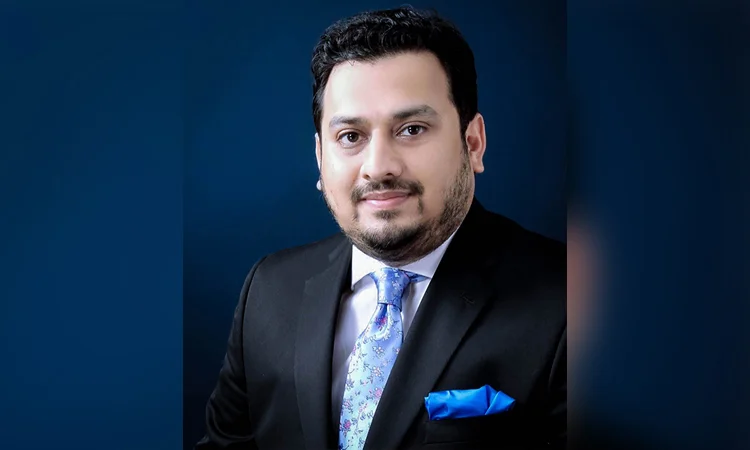
Sakif Shamim (Economist)
Managing Director, Labaid Cancer Hospital and Super Specialty Centre
Deputy Managing Director, Labaid Group