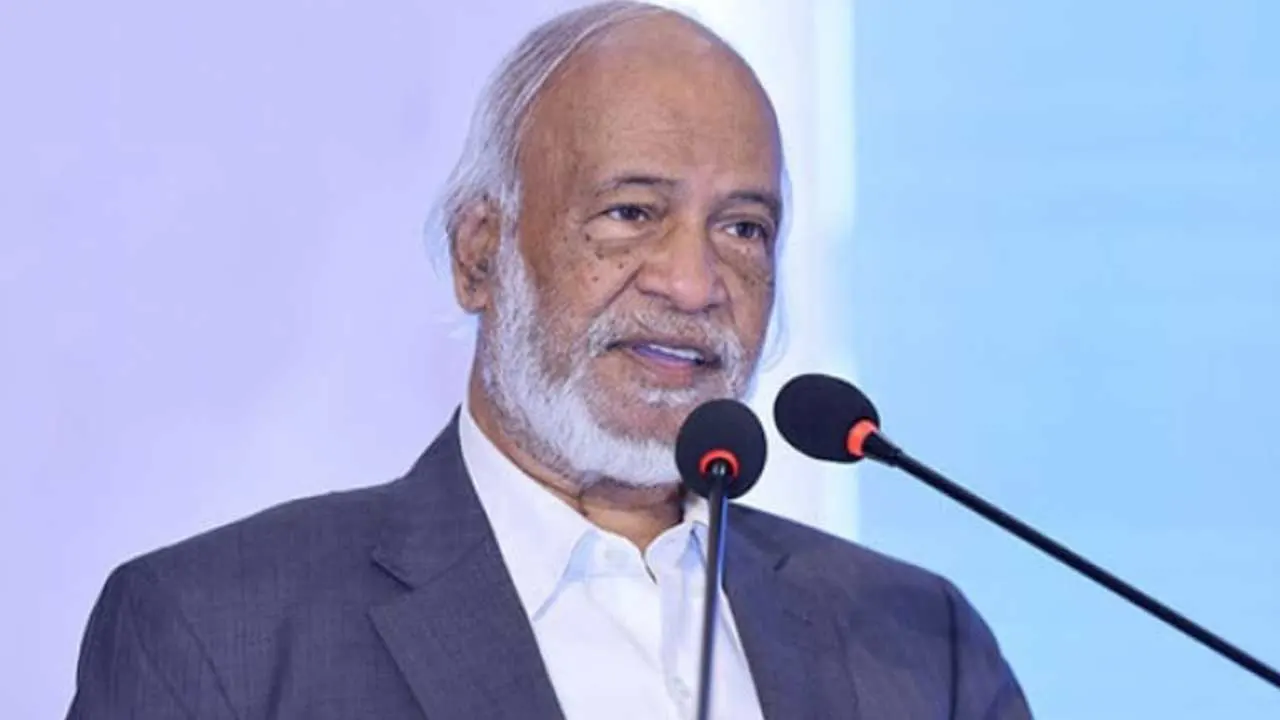
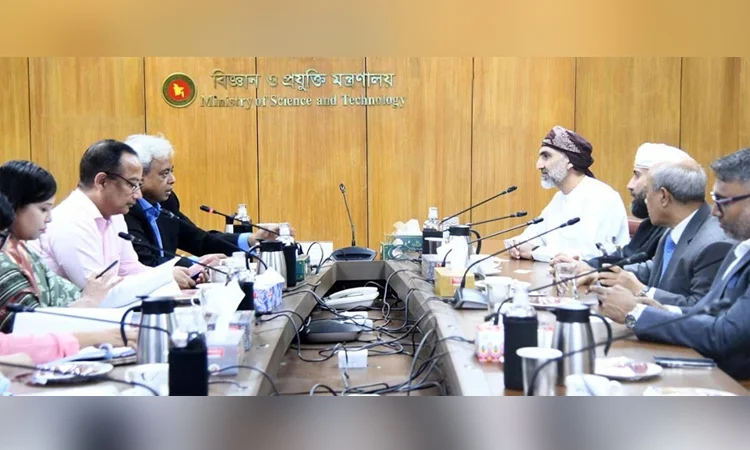

A delegation of Bangladesh led by Science and Technology Secretary Md. Anwar Hossain and a delegation led by Said Abdul Ghafoor Saif Udeen, Chief Executive Officer of Star Drones, Innovation Park Muscat, Seeb, Oman, along with leaders of the Saudi Arabia–Bangladesh Chamber of Commerce and Industry held a bilateral discussion at the Secretariat here.
The meeting focused on advancing cooperation in technology, innovation, and joint research, said an official handout.
The primary objective of the discussion was to identify potential areas of collaboration between the two countries in artificial intelligence (AI), drone technology, agricultural technology, startup funding, food security, and innovation.
During the discussion, the Omani representatives presented their initiatives in science, drone technology, and artificial intelligence.
They highlighted the existence of a startup investment fund that provides financing for early-stage innovations.
The delegation also noted that Oman is developing its own Large Language Model (LLM) and is placing significant emphasis on data security.
The meeting further discussed the importance of Muslim-majority countries developing and utilizing their own technology infrastructure and data centers to ensure secure data storage.
In his remarks, Secretary Md. Anwar Hossain highlighted Bangladesh's large, young, and productive workforce, particularly graduates in ICT and engineering disciplines.
He also outlined the government's initiatives to promote semiconductor design and robotics, emphasizing the importance of sharing expertise in semiconductor chip design and research, as well as training and developing Bangladesh's youth in these fields.
The Omani delegation shared that drone technology has been successfully used in Oman to spray pesticides across thousands of acres of agricultural land.
They noted that Bangladesh has tremendous potential to utilize drone technology in agriculture, pesticide application, disaster management, and fire safety.
The meeting also explored opportunities for joint research on developing and utilizing salt-tolerant rice varieties in Bangladesh.
In addition, the Omani delegation expressed interest in specialized rice varieties suitable for diabetic patients.
Both sides proposed collaborative research on food processing technologies, particularly for extending the shelf life of fruits such as jackfruit and pineapple for export to international markets.
Dr. Samina Ahmed, Chairman of the Bangladesh Council of Scientific and Industrial Research (BCSIR), stated that BCSIR has developed vitamin- and mineral-enriched nutritious food products to combat child malnutrition, which could also be beneficial for use in Africa and Oman.
The Omani delegation also highlighted its research on controlling the Red Palm Weevil, a destructive pest affecting date palm trees, and proposed joint research into its potential medicinal properties.
The Bangladesh delegation responded that developing the necessary legal framework and policies could be considered to facilitate such research.
During the bilateral meeting, researchers, startup entrepreneurs, and policymakers from both countries were invited to visit each other's science parks and research facilities to strengthen collaboration.
The science and technology secretary extended a special invitation to the Omani delegation to participate in the National Innovation Fair, scheduled to be held in Bangladesh this September.
Furthermore, both sides agreed to appoint designated focal points/representatives to maintain communication and coordinate the implementation of the initiatives discussed during the meeting.
Additional Secretaries of the ministry Muhammad Ashraf Ali Faruk Dr. Syeda Naushin Parnini, Chief Technology Officer of Star Drones, Innovation Park Muscat, Seeb, Oman Bassim Allah Bakhsh Ghulam Al-Zadjali, Bangladesh Atomic Energy Commission Chairman (routine charge) Dr. M. Moinul Islam and Saudi Arabia–Bangladesh Chamber of Commerce and Industry President Ashraful Haque Chowdhury were present, among others.