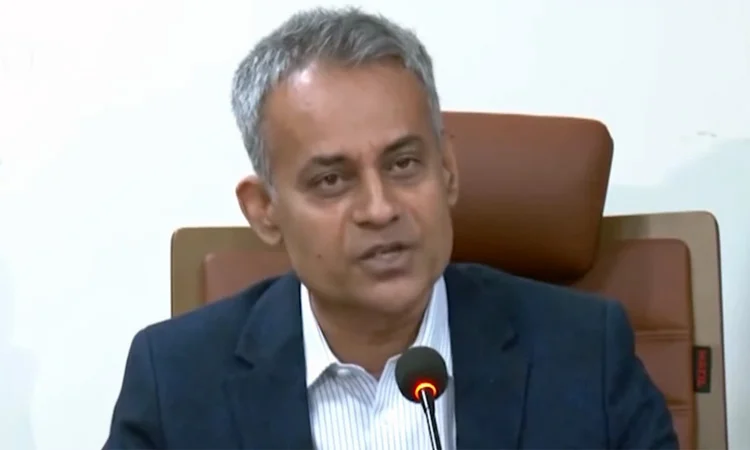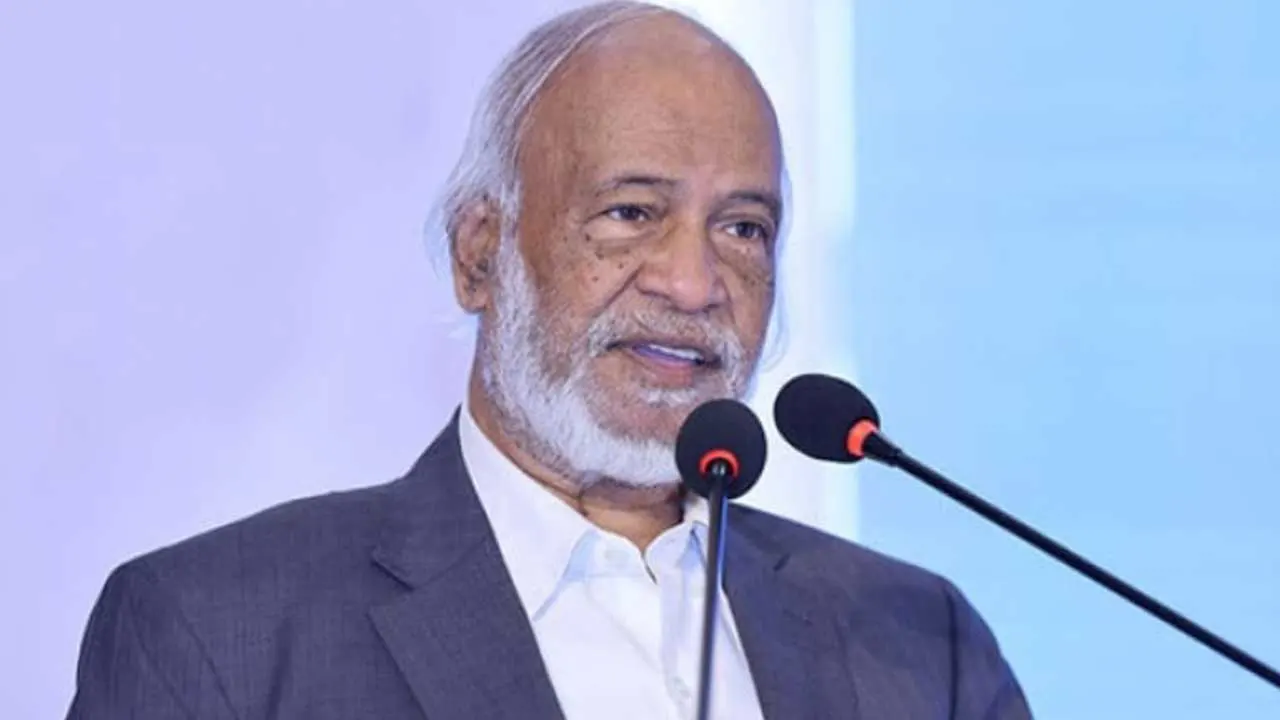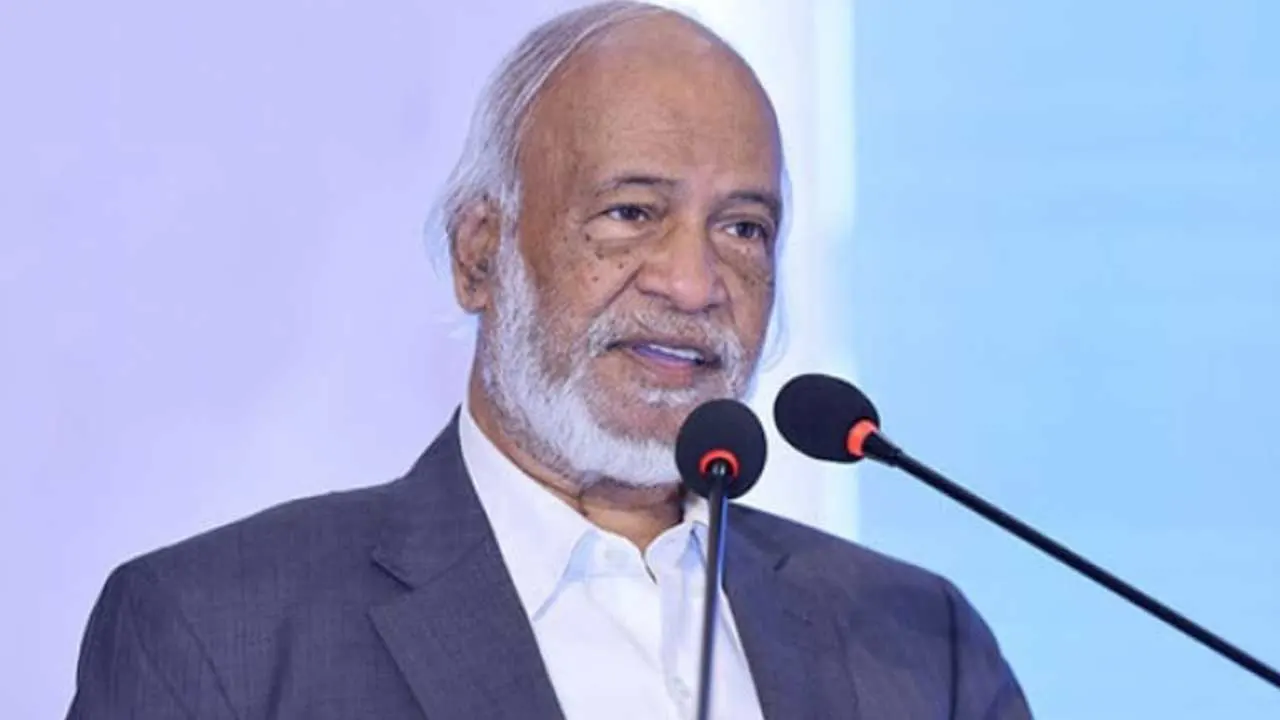
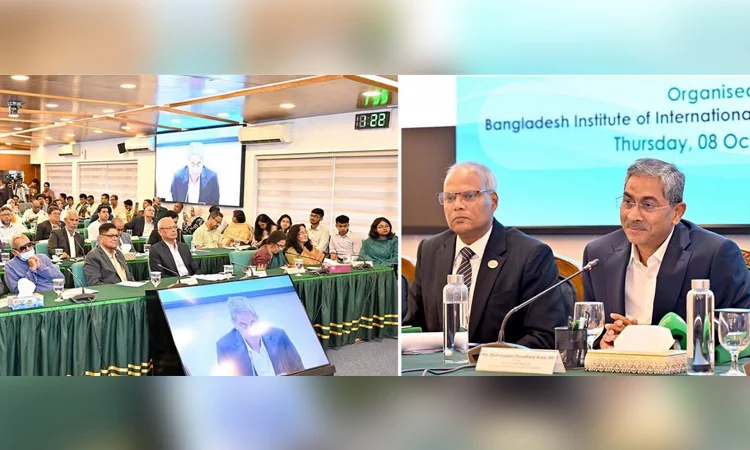

Water Resources Minister Shahid Uddin Chowdhury Anee today said Bangladesh wants a new, longer-term Ganges water-sharing agreement with India containing a guarantee clause to safeguard the country’s required dry-season share.
“The 1996 Ganges Water Sharing Treaty is set to expire in 2026. The Bangladesh government is seeking a new or revised agreement, rather than simply renewing the existing treaty, including guarantee provisions to protect Bangladesh’s required dry season share... This is very important for our challenges,” he said.
The minister was addressing a seminar titled “Rethinking Water Futures: Youth Leadership, Justice and Cooperation” at the Bangladesh Institute of International and Strategic Studies (BIISS) auditorium here.
Speaking to journalists after the seminar, he said the government’s preference was to move towards a fresh agreement of longer duration with stronger safeguards for Bangladesh.
“We should move forward through a new agreement, preferably for a longer duration and with a guarantee clause,” Anee said.
“Our government’s policy is to prioritise any agreement while protecting the interests of the people and the national interest of the country,” he added.
The 30-year Ganges Water Sharing Treaty, signed in 1996, is due to expire on December 12, 2026.
Anee said Bangladesh and India were already working continuously through the Joint Rivers Commission (JRC) with the objective of completing a new arrangement before the existing treaty expires.
“Based on the meetings held so far, we are hopeful that the agreement will be completed before December 12, 2026,” he said.
The minister said Bangladesh’s main priority would be to restore a guarantee provision similar to that contained in the 1977 Ganges water-sharing agreement.
He said the 1977 agreement, concluded for five years, contained a guarantee clause, while the 1996 treaty was concluded without such a provision.
“As discussed in this seminar, the 1977 agreement was even stronger than the 1996 treaty,” he said in his speech.
Asked whether Bangladesh was therefore seeking a new treaty rather than merely extending the present one, Anee said that was the direction emphasised during the seminar.
He said there was broad agreement on pursuing a longer-term arrangement containing a guarantee mechanism.
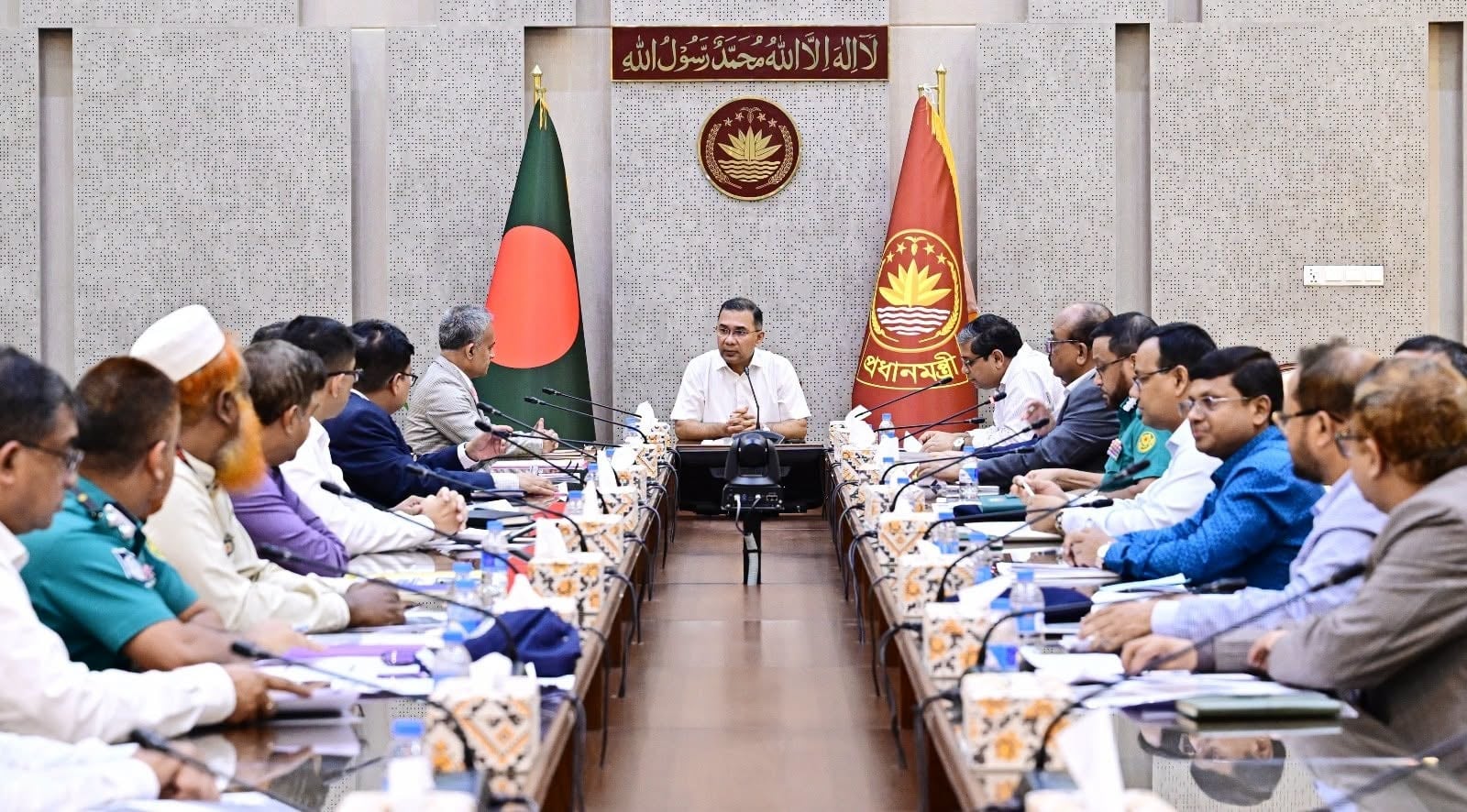
The JRC technical team is already working on the matter, he said, adding that the remaining issues would move to the ministerial level once the technical work is completed.
Anee said Bangladesh’s water diplomacy should be guided by cooperation, scientific evidence, data sharing and stronger institutional mechanisms.
“Water should be viewed as a shared ecological and economic system whose sustainable management generates benefits for both countries,” he said.
He stressed that Bangladesh, as a downstream riparian country, faces the dual challenge of excessive water during the monsoon and shortages during the dry season.
Flooding, river erosion, salinity, waterlogging and drought are interconnected challenges that require Bangladesh to look beyond traditional water management, he said.
“We need to think in terms of water diplomacy, basin-wide cooperation, climate resilience, inclusive governance and intergenerational justice,” Anee said.
The water resources minister said Bangladesh’s geographical reality made regional cooperation over shared rivers a necessity rather than an option.
He also highlighted Bangladesh’s accession to the UN Water Convention, saying it gives the country an important multilateral platform to advocate equitable and responsible use of trans-boundary water resources, information sharing and sustainable management.
Bangladesh should use multilateral platforms to build coalitions with countries facing similar challenges involving floods, salinity and trans-boundary river management, he said.
“Our water diplomacy should therefore be based on a simple principle: cooperation should create mutual benefits rather than being framed explicitly as a competition over water,” the minister said.
Anee also highlighted the Teesta Master Plan as another major water-management priority for the government.
He said the Teesta creates a difficult seasonal paradox for northern Bangladesh, with severe water shortages in the dry season and flooding and erosion during the monsoon.
The government is consulting experts from Bangladesh University of Engineering and Technology (BUET) as well as local and international specialists as it prepares to move ahead with technical and feasibility work, he said.
“We will have to take up the feasibility study very soon. The project work will begin on the basis of that study,” he told journalists.
Anee said the government was focusing on completing the necessary preparatory work within 2027 so that the main Teesta project could begin that year.
He also described the Padma Barrage and Teesta Master Plan as strategically important mega projects that could benefit around 70 million people.
The Padma Barrage project has already received ECNEC approval, he said, adding that the government expects visible physical work to begin sometime between January and March next year.
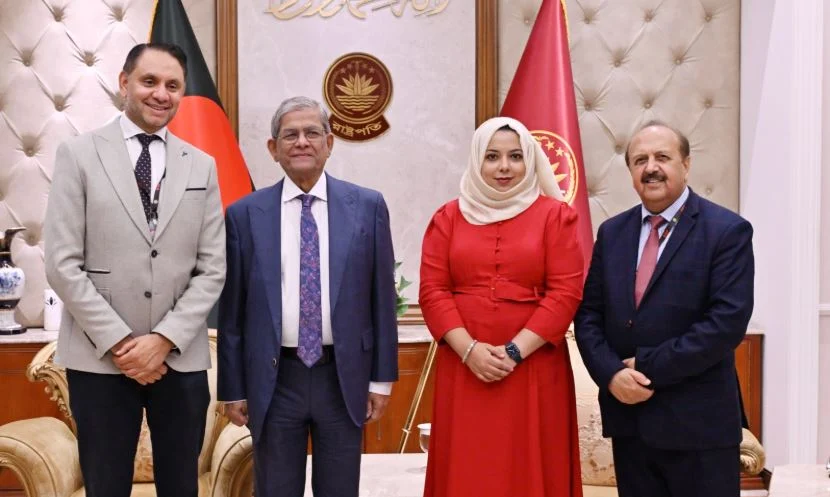
State Minister for Foreign Affairs Humaiun Kobir attended the seminar as guest of honour, while Anee joined as the chief guest.
The seminar focused on strengthening Bangladesh’s water diplomacy, inclusive governance and public-private partnerships in trans-boundary water management, as well as integrating youth leadership into water justice and decision-making.