
TBT DESK: The Bangladesh Reconditioned Vehicles Importers and Dealers Association (BARVIDA) has urged the government to reconsider several proposed fiscal measures in the national budget for FY2026-27, warning that higher duties on reconditioned vehicles could raise prices, hurt middle-income consumers, and ultimately affect government revenue.
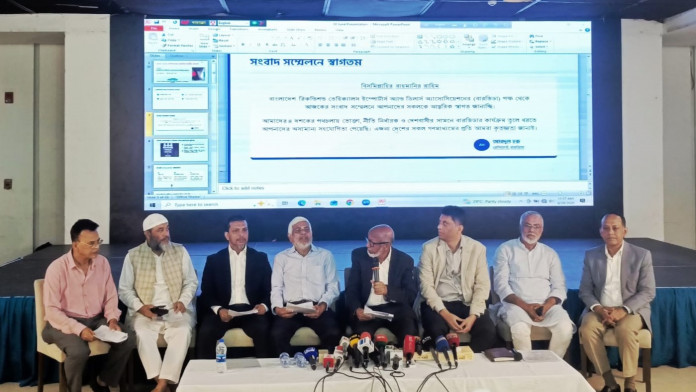
Speaking at a press conference at the Dhaka Club on Saturday, BARVIDA President Abdul Haque said the association supported the government's broader efforts to stabilise the economy and improve transport infrastructure. However, he expressed concern that some budget proposals would place additional pressure on the country's reconditioned vehicle sector.
While welcoming the government's initiatives to promote electric vehicles (EVs) and environmentally friendly transport, BARVIDA said Bangladesh currently lacks the infrastructure needed for widespread EV adoption. The association urged policymakers to extend incentives to hybrid vehicles, describing them as a practical and sustainable bridge towards greener mobility.
According to BARVIDA, the reconditioned vehicle industry has invested nearly Tk 20,000 crore in Bangladesh and contributes around Tk 6,000 crore annually to the national exchequer. The sector also employs hundreds of thousands of people, both directly and indirectly.
The association voiced concern over the proposed increase in taxes on fossil-fuel-powered reconditioned vehicles, saying revisions to engine-capacity slabs and higher duties could push up prices by several lakh taka for some models. Such increases, it said, would disproportionately affect middle-class buyers, who make up the largest share of the market.
BARVIDA also criticised what it described as unequal treatment between new and reconditioned plug-in hybrid vehicles. Under the proposed budget, tax concessions have been offered for certain new plug-in hybrid models, while regulatory duties remain applicable to reconditioned imports.
"The policy creates an uneven playing field and places reconditioned vehicle importers at a disadvantage," Abdul Haque said.
The association noted that the sector is already facing headwinds from foreign-exchange constraints, currency depreciation and weaker consumer purchasing power, all of which have weighed on vehicle imports and sales. Additional fiscal burdens, it warned, could further contract the market.
BARVIDA said reconditioned Japanese vehicles continue to enjoy strong demand because of their safety standards, fuel efficiency, reliability and resale value. It called for a long-term and balanced policy framework to ensure fair taxation, protect consumers and support sustainable growth in the automotive sector.
The association urged the government to withdraw the proposed increase in duties on fossil-fuel-powered reconditioned vehicles and extend the tax benefits currently available to new plug-in hybrid vehicles to reconditioned imports as well.
Abdul Haque said BARVIDA remained committed to working with the government to promote safe, fuel-efficient and environmentally responsible transport while continuing to contribute to national revenue and economic development.