
TBT DESK
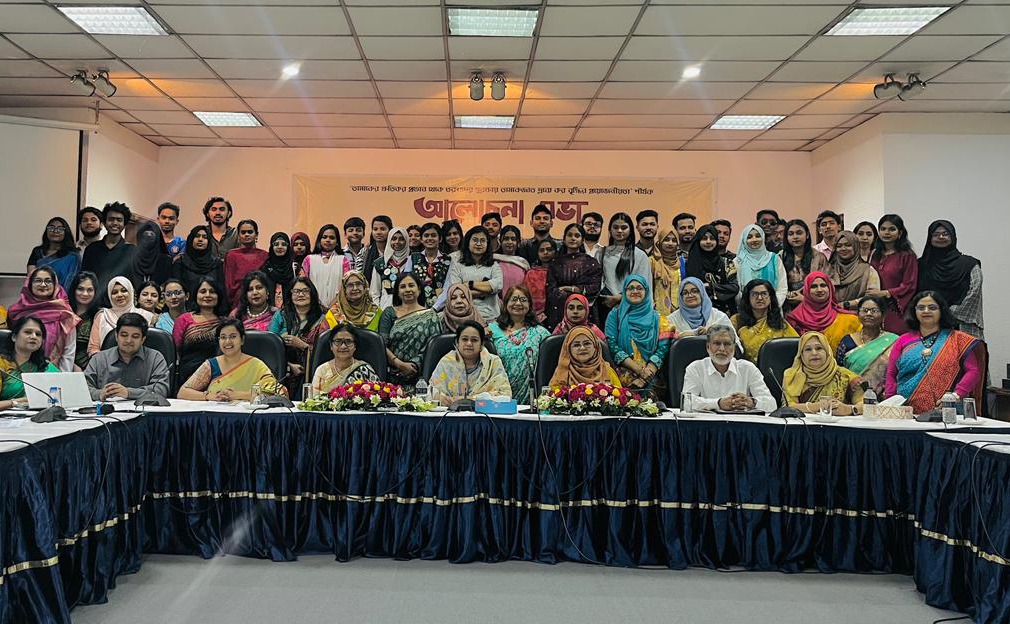
Engineer Sanzida Islam Tuli, a Member of Parliament from the reserved women’s seat of the Government of Bangladesh, has said that there is no alternative to increasing the prices and taxes on tobacco products in order to protect the country’s future generations from the devastating grip of tobacco. She made the remarks as a special guest at a discussion titled “The Necessity of Increasing Taxes on Tobacco Products to Protect Youth from the Harmful Effects of Tobacco,” organized by Nari Maitree at the CIRDAP auditorium in the capital on Tuesday (May 12).
In her speech, she said, “In recent times, we have witnessed the strength of youths. The current government also has confidence in youth leadership. While young people are helping move the country forward, tobacco companies are pushing those very youths toward addiction in pursuit of profit. Public health protection is impossible if tobacco companies continue to benefit in this way. The current government is committed to protecting public health and also has specific goals for tobacco control. Increasing taxes and prices on tobacco products in the upcoming budget can help move further toward those goals. I will raise this issue during the parliamentary session. At the same time, I urge the government to take strong measures on this matter.”
The meeting stated that Bangladesh is one of the world’s largest tobacco-consuming countries. Among South Asian countries, Bangladesh has the highest tobacco use rate at 35.3 percent, compared to 28.6 percent in India and 19.1 percent in Pakistan. According to the Global Adult Tobacco Survey (GATS 2017), around 37.8 million adults in Bangladesh currently use tobacco. According to Tobacco Atlas 2025, nearly 200,000 people die every year in Bangladesh from tobacco-related diseases, while several hundred thousand more become disabled. Recent research by the Health Economics Institute of University of Dhaka found that in the 2024–25 fiscal year, tobacco sector revenue was around Tk 41,000 crore, whereas deaths, health damage, and environmental harm caused by tobacco cost the country nearly Tk 87,000 crore annually. In other words, the damage is more than double the revenue earned. Overall, tobacco use and its consequences are increasingly threatening public health, the economy, and the environment in Bangladesh.
An analysis of Bangladesh’s tobacco tax measures and structure shows that the current system is highly complex and insufficient to discourage tobacco use. Cigarettes are currently divided into four price tiers—low, medium, high, and premium—and an ad valorem tax system is in place. Because there are multiple price tiers and products available at different prices, tax and price measures fail to effectively reduce tobacco use. If the price of one tobacco product increases or a consumer’s living standard changes, consumers can simply switch to another product according to their preference and affordability. In particular, because the prices of low- and medium-tier cigarettes are very similar, consumers can easily choose between them.
Therefore, for the 2026–27 fiscal year, it was proposed that the existing four cigarette price tiers be reduced to three to simplify tax collection and increase prices. The proposal recommends merging the two lower tiers and setting the price of a 10-stick pack at Tk 100, while setting the price of a high-tier 10-stick pack at Tk 150 and a premium-tier pack at Tk 200. It also recommends maintaining the existing 67 percent supplementary duty on all cigarette tiers and imposing a fixed tax of Tk 4 per 10-stick pack. This would encourage low-income smokers to quit and discourage young people from starting smoking.
Shibani Bhattacharya, convener of Nari Maitree mothers’ forum against tobacco, said, “Prices of rice, lentils, oil, salt, and everything else are increasing, but bidi and cigarette prices are not rising significantly. As a result, these products remain affordable, especially for young people and low-income groups. That is why tobacco use is not decreasing; rather, it is increasing. As part of the government, I urge the current administration to increase tobacco prices and ensure public health protection.”
In the thematic presentation, Professor Dr. Shafiun Nahin Shimul, Director of the Health Economics Institute at the University of Dhaka, said, “Retail and base prices of tobacco products in the country are very low. So even though tax rates are high, they do not significantly contribute to reducing tobacco use or increasing government revenue. This flawed tax structure creates contradictions, and tobacco companies exploit this opportunity to influence the National Board of Revenue against raising taxes. If cigarette prices are increased only through higher price tiers without increasing supplementary duties, a large portion of the increased price goes into the pockets of tobacco companies. However, if prices and taxes are increased according to this proposal, nearly 500,000 adults would be encouraged to quit smoking, more than 372,000 young people would be discouraged from starting smoking, and tobacco tax revenue would exceed Tk 85,000 crore—an increase of Tk 44,000 crore compared to the previous fiscal year.”
Md. Abir Hossain, a member of Nari Maitree youth forum against tobacco, said, “The future of a country depends on its youth. If we, the youth, become addicted, the country’s future will suffer. Tobacco companies deliberately target us and push us toward addiction. One of the best ways to prevent this addiction is to effectively increase taxes and prices on tobacco products so they are kept out of young people’s reach. The government must take necessary steps and increase tobacco taxes and prices in the upcoming budget.”
The meeting was chaired by Shaheen Akhtar Dolly, Executive Director of Nari Maitree. Members of the anti-tobacco mothers’, teachers’, journalists’, and youth forums were also present. All participants strongly demanded higher taxes on tobacco products.