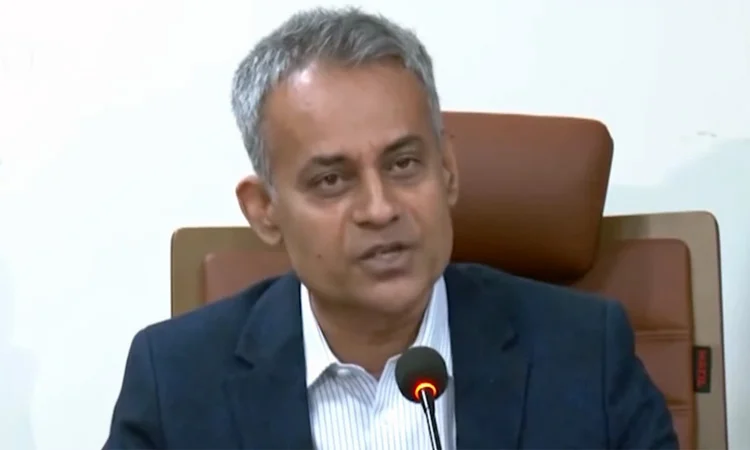
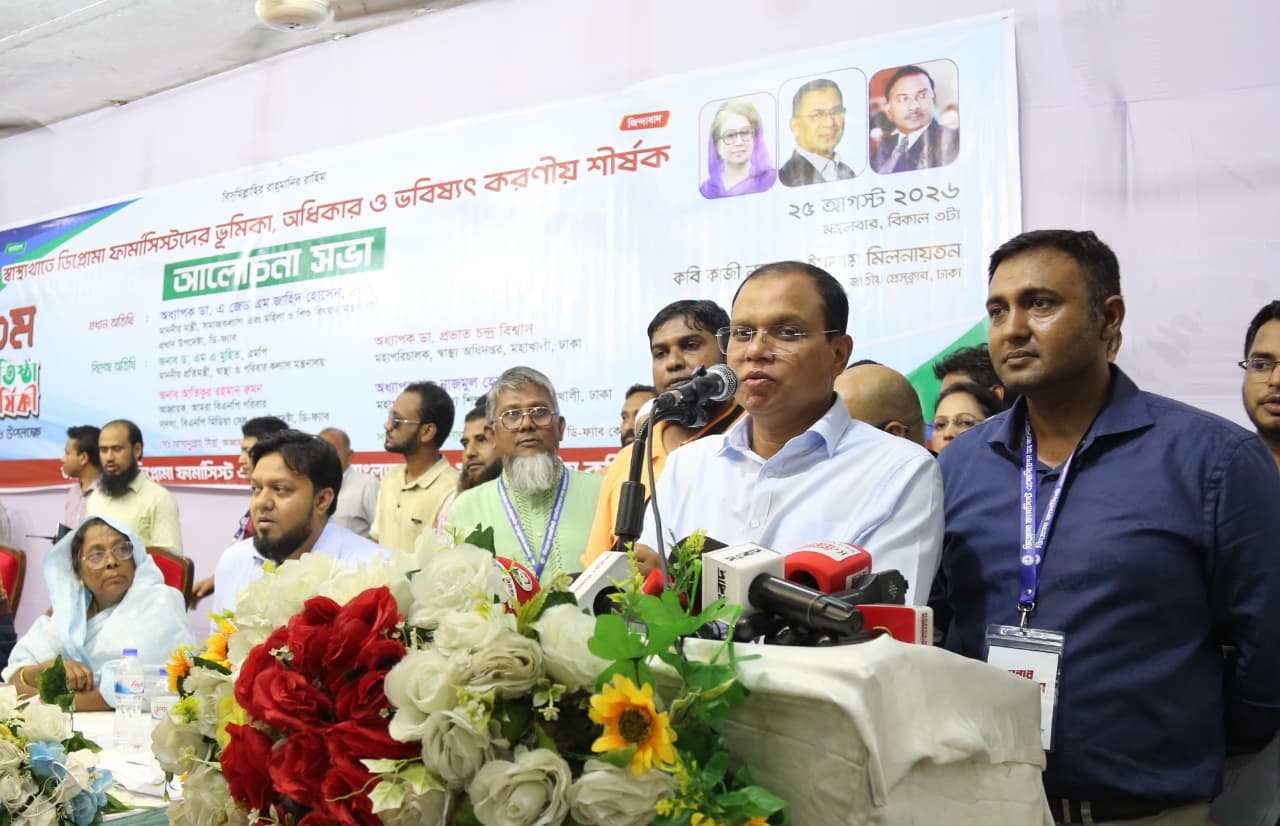

Prime Minister's Additional Press Secretary Atikur Rahman Ruman today said diploma pharmacists play a crucial role in improving the quality of national healthcare, ensuring safe medicine management and taking healthcare services to the grassroots.
"Pharmacists work as frontline warriors at every stage, from the production of medicines to ensuring that quality medicines reach patients in the correct dosage. Ensuring their professional dignity, legitimate rights and appropriate working environment is essential for a modern healthcare system," he said.
He was addressing a discussion titled "Role, Rights and Future Course of Action of Diploma Pharmacists in the Health Sector" at the Kazi Nazrul Islam Auditorium of the Jatiya Press Club here today.
Ruman said doctors diagnose diseases and provide treatment guidance, while pharmacists carry out the technical responsibilities of ensuring proper and safe use and storage of medicines.
"New posts for diploma pharmacists should be created and regular recruitment increased at every level of the country's healthcare system, particularly at upazila health complexes and rural hospitals. Otherwise, ordinary people will be deprived of quality pharmaceutical care," he said.
The Additional Press Secretary said the government is highly sensitive to eliminating professional discrimination and ensuring posting based on skills.
"The government will take effective measures, in consultation with the Ministry of Health, to create opportunities for promotion of diploma pharmacists, address pay disparities and ensure a conducive working environment," he said.
Ruman said diploma pharmacists could establish a strong position not only in the country but also globally by continuously nurturing their knowledge and skills.
Diploma pharmacist representatives and health experts from different parts of the country highlighted various challenges and problems in their workplaces at the discussion.
Speakers said as international health standards, there should be at least one pharmacist for every four doctors, but both public and private hospitals in Bangladesh face a shortage of pharmacists.
Pharmacist leaders placed a number of demands at the meeting, including introducing full-fledged "hospital pharmacy management" in all public and private hospitals and ensuring medicine dispensing through diploma pharmacists.
They also demanded immediate recruitment against newly created diploma pharmacist posts at upazila and union-level health centres, implementation of Grade-10 status, formulation of a consistent promotion policy after a specified period of service, a ban on the sale of antibiotics without prescriptions, and mandatory operation of pharmacy counters by registered pharmacists.
Speakers at the discussion also called for a specific and strategic roadmap for reforming the healthcare sector. They stressed the need for doctors, nurses, medical technologists and pharmacists to work as an integrated team to improve the quality of healthcare services.
Central leaders of the Diploma Pharmacist Association, representatives of the health sector, officials of different professional organisations and senior journalists attended the event.