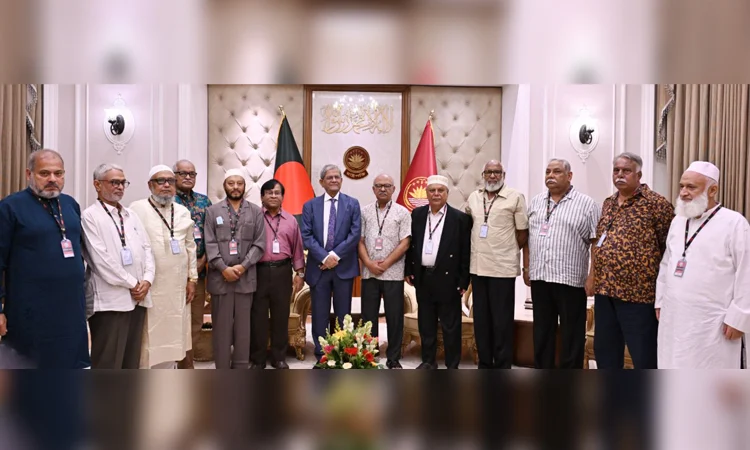
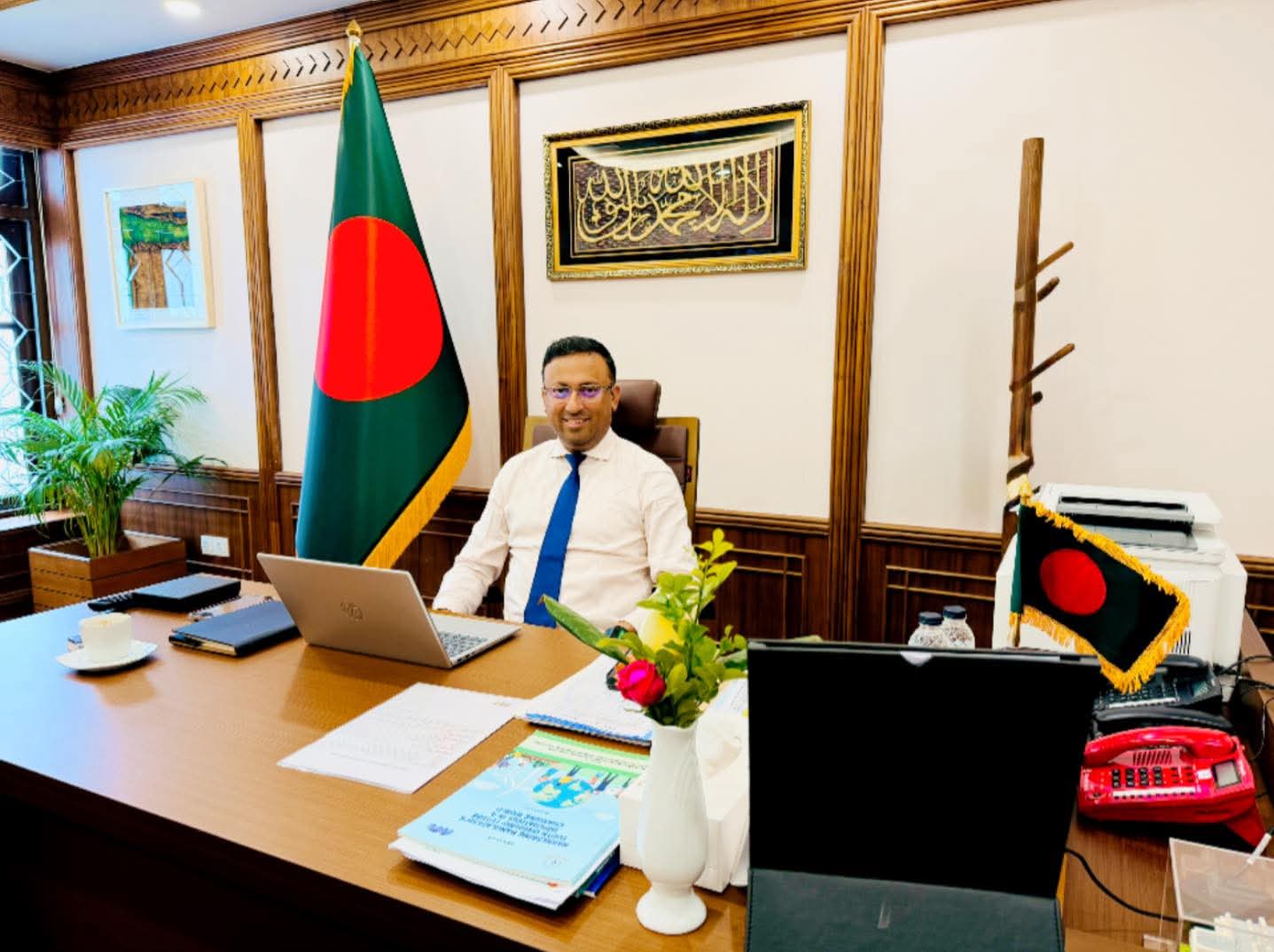

The recent controversy branding the newly appointed State Minister for Foreign Affairs, Mr. Humayun Kabir, as a “foreign citizen” is not merely an attack on an individual; rather, it appears to be a broader attempt to question the country’s diplomatic progress. At the outset, one thing must be made clear—labeling someone as a “foreign citizen” to create controversy may be easy, but such simplistic arguments have little relevance in the complex realities of state governance and diplomacy.
International Reality and Context
Today’s world is fully globalized. In countries like Pakistan, India, the United States, the United Kingdom, and Canada, individuals with dual citizenship or long-term international exposure are serving in key government positions. This is not an exception, but a normal feature of modern governance. From this perspective, questioning Mr. Humayun Kabir—who is a Bangladeshi citizen by birth—by attaching a “foreign” label does not align with global realities; rather, it reflects a politically motivated narrative.
The Legal Question is Fundamental
The most important issue here is—what does the law of Bangladesh say? If, under the Constitution and applicable legal framework, he is fully eligible for this position, then his appointment is unquestionably legitimate. Attempts to conduct media trials or mislead public opinion beyond the boundaries of law are neither appropriate nor acceptable. In a democratic system, the decisions of an elected government, made within the legal framework, remain the ultimate standard—not individual or politically driven opinions.
Competence Over Labels
For a State Minister for Foreign Affairs, the most critical factors are international experience, diplomatic skill, and global connectivity. Judging someone solely based on a label is both unreasonable and counterproductive. Rather, the individual who can effectively represent the country on the global stage is the most suitable for the role. Mr. Humayun Kabir’s experience and capabilities establish him as a strong and qualified candidate for this position.
Global Exposure as a Strength
Modern diplomacy no longer depends solely on local experience. Diplomats from countries like France, Germany, China, Pakistan, and India have long served abroad while successfully safeguarding their national interests. In this context, growing up or working abroad is not a weakness—it is a significant strength. Mr. Humayun Kabir’s international experience should be viewed as an added advantage for Bangladesh.
National Interest is the Ultimate
Ultimately, the key question is—can he protect Bangladesh’s interests? Can he strengthen international relations? If the answers are positive, then debates over his citizenship become irrelevant. In governance, emotions or labels do not matter—performance and outcomes do.
Political Narrative vs Reality
The reality is that the “foreign citizen” issue is being used by certain quarters to construct a political narrative. However, the real question for the people should be—do they want an inefficient individual simply because he is “local,” or a competent, globally experienced representative who can strongly position Bangladesh on the world stage?
Simply put—
Anyone who can safeguard national interests is truly qualified.
Labels like ‘foreign’ may serve politics, but they cannot run a state.
Writer -
Sardar M. Jahangir Hossain
Former Assistant Secretary, International Affairs (China)
Jatiyatabadi Jubo Dal, Central Executive Committee.