
TOAB Director Nasir Uddin Badal seeks sustainable development of the world’s largest mangrove forest
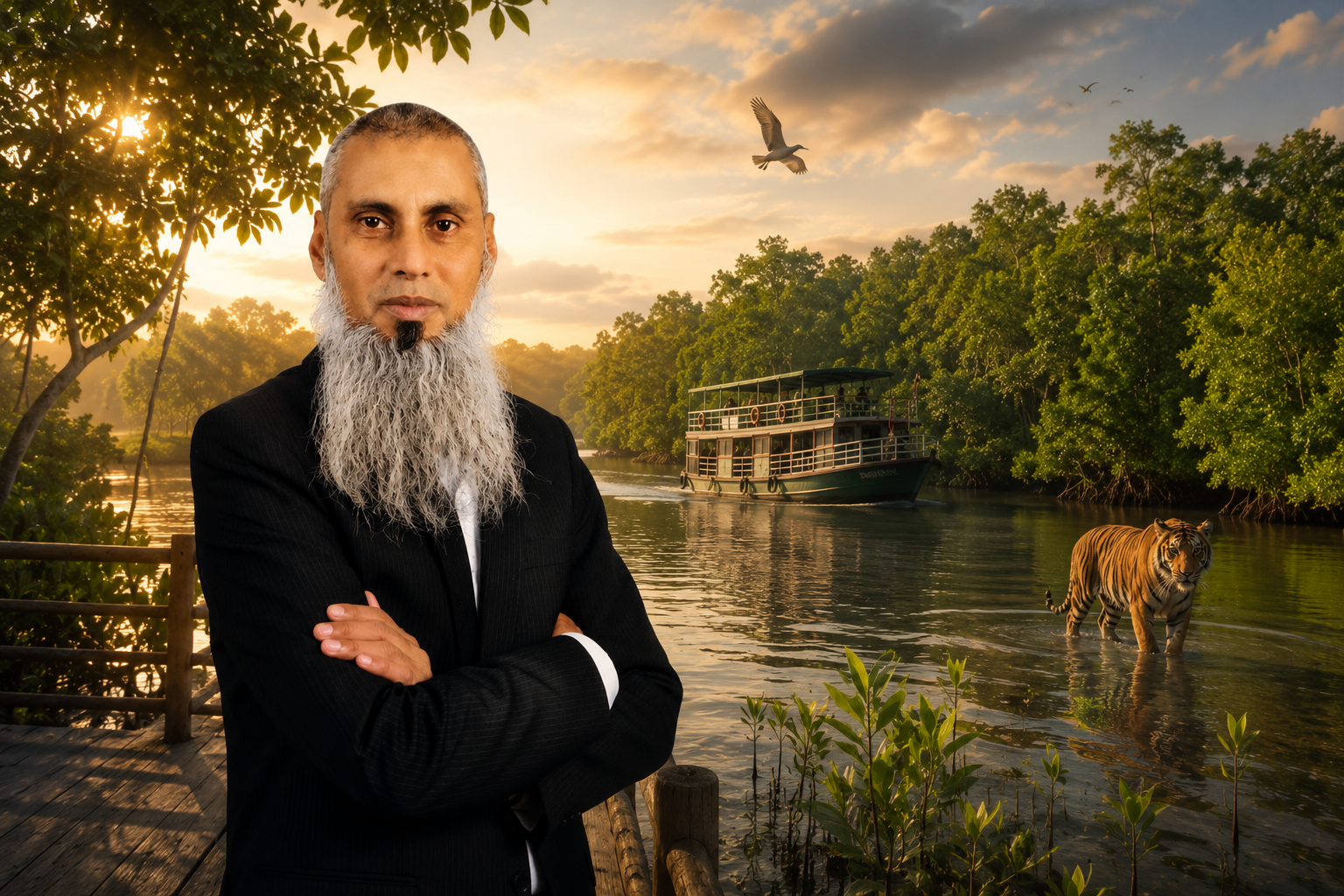
The Sundarbans, the world’s largest mangrove forest and a UNESCO World Heritage Site, has the potential to emerge as a world-class eco-tourism destination if sustainable planning, modern infrastructure and effective global promotion are ensured, said newly elected Tour Operators Association of Bangladesh (TOAB) Director Nasir Uddin Badal.
Badal, who is also the owner of Aral Sea and Sundori Eco Resort, has been promoting sustainable tourism, environmental conservation and employment opportunities for local communities in the Sundarbans region for years.
In an exclusive interview with The Bangladesh Today’s Niaz Mahmud, he highlighted the immense tourism prospects of the Sundarbans, existing challenges and his vision for developing Bangladesh’s tourism sector.
TBT: How do you assess the current state of tourism in the Sundarbans?
Badal: The Sundarbans has enormous tourism potential. Every year, thousands of local and foreign tourists visit this unique natural wonder. However, despite its attractions, we are still far behind our potential.
There are major challenges in transportation, jetties, safe water transport, quality accommodation, trained tour guides, and international promotion. Addressing these issues is essential to develop the Sundarbans as a leading eco-tourism destination.
TBT: What inspired you to establish Aral Sea and Sundori Eco Resort?
Badal: From the beginning, my objective was to create a tourism model where visitors can enjoy the beauty of the Sundarbans without damaging its fragile ecosystem.
We focused on environmentally friendly infrastructure, local architectural designs, and creating employment opportunities for nearby communities. A large number of our employees come from local areas, which helps ensure that tourism benefits the surrounding population.
TBT: What are the biggest challenges in developing tourism in the Sundarbans?
Badal: Infrastructure remains the biggest challenge, along with the absence of long-term planning. Many tourists want to visit the Sundarbans, but transportation difficulties, lack of proper information, and limited modern facilities often discourage them.
Another important challenge is the lack of strong international branding. The Sundarbans deserves much greater global recognition.
TBT: How can tourism development be balanced with environmental conservation?
Badal: Environmental protection must be at the centre of eco-tourism. Sustainable tourism is possible only when nature is preserved.
We encourage tourists to reduce plastic use, practice proper waste management, and strictly adhere to the Forest Department's guidelines. The Sundarbans is one of Bangladesh’s greatest natural assets, and protecting it is our collective responsibility.
TBT: How important is tourism for local communities?
Badal: Tourism plays a significant role in the local economy. Thousands of people living around the Sundarbans depend directly or indirectly on tourism-related activities.
The sector has created employment opportunities in hotels and resorts, boat services, tour guiding, transportation, handicrafts, restaurants, and other businesses. Sustainable tourism can become a major source of income for local communities.
TBT: What should Bangladesh do to attract more international tourists?
Badal: Bangladesh needs stronger global branding of the Sundarbans, easier visa procedures, improved transportation facilities, and international-standard tourism services.
We should participate more actively in international travel fairs, develop partnerships with foreign travel agencies and strengthen digital marketing campaigns. As a UNESCO World Heritage Site, the Sundarbans should be promoted globally more attractively and professionally.
TBT: What will be your priorities as a newly elected TOAB Director?
Badal: My priority is to bring tourism entrepreneurs from all regions of Bangladesh under a stronger platform.
I will work for professional training, skill development, safe tourism practices, digital promotion and policy support for the sector. Strong cooperation between the government and private sector will be crucial for sustainable tourism development.
TBT: How is climate change affecting tourism in the Sundarbans?
Badal: We are experiencing the impacts of climate change directly. Cyclones are becoming more frequent and intense, river erosion is increasing, salinity is rising, and biodiversity is facing growing pressure.
These challenges are also affecting tourism. Developing climate-resilient infrastructure and strengthening conservation measures are now essential for the future of the Sundarbans.
TBT: What message would you like to give tourists?
Badal: I warmly welcome everyone to visit the Sundarbans, but I request that tourists be responsible travellers. They should avoid littering, reduce plastic use, respect wildlife, minimize noise pollution, and follow all rules set by the Forest Department.