
DMTCL will earn more than Tk10cr per year
Md Tarek Hossain: Commuters rushing through Dhaka’s bustling Metro Rail stations no longer need to detour for daily essentials. Small-format supershops are transforming station concourses into convenient one-stop retail spots, blending modern convenience with the high footfall of the city’s mass transit system.
This shift marks a significant evolution in Bangladesh’s retail landscape, where supershops traditionally sought standalone locations or malls. Now, operators are moving directly to where people already gather in large numbers.
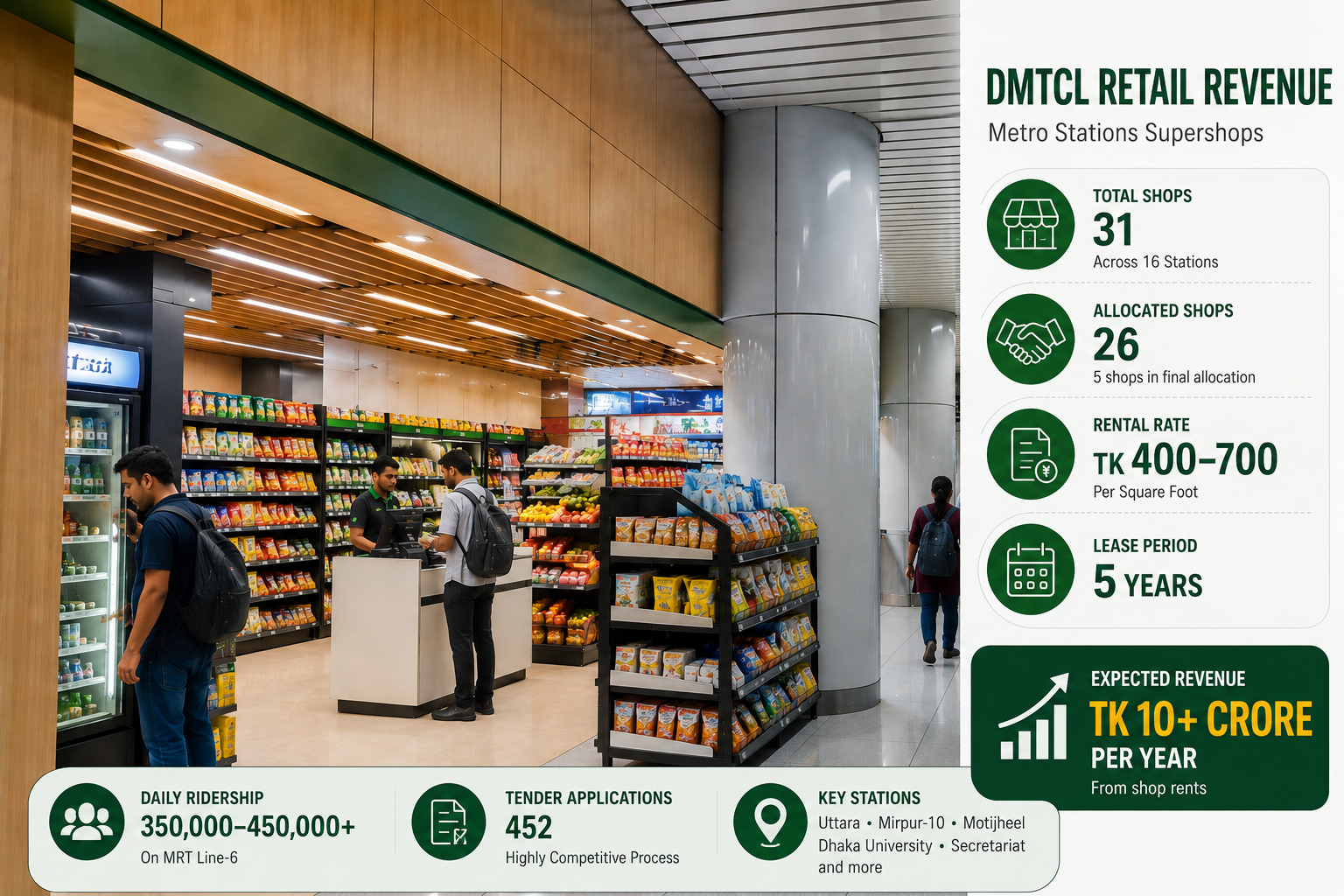
Dhaka Metro Rail (MRT Line-6) has recorded impressive ridership since its phased opening. By mid-2025, cumulative passengers reached around 157.5 million, with daily averages now hovering between 350,000 and 450,000. Busy stations like Mirpur-10 (highest at nearly 17.8 million cumulative passengers), Motijheel, Uttara North, and Agargaon see thousands passing through daily.
This steady stream of time-pressed office-goers, students, and residents creates an ideal customer base for quick shopping. Metro authorities have responded by leasing retail spaces: 31 retail stores are already operating across 16 stations, with plans for more.
Leading the charge is Meghna Group of Industries (MGI) with its ‘Fresh Super Mart’ brand. In late 2025, MGI signed a five-year agreement with Dhaka Mass Transit Company Limited (DMTCL) to open nine outlets across MRT Line-6 stations, including Uttara North (two outlets), Uttara Centre, Pallabi, Mirpur-10, Mirpur-11, Dhaka University, Bangladesh Secretariat, and others. Operations began rolling out from January 2026, marking the first time modern retail stores operate inside Bangladesh metro stations.
According to Dhaka Mass Transit Company Limited (DMTCL), there are 31 shops across 16 stations from Uttara to Motijheel. Out of these, 26 shops have already been allocated to various companies, while the remaining 5 shops are in the final stage of allocation.
The shops were allotted through a competitive tender process that received an overwhelming 452 applications. Due to high competition, the shops have been rented out at significantly higher rates than conventional markets. The rent ranges from Tk 400 to Tk 700 per square foot.
DMTCL expects that once all shops are allocated, the authority will earn more than Tk 10 crore per year from shop rents alone. The lease agreements are for five years.
For many Dhaka residents, these station supershops are more than just shops, they solve real daily hassles.
These small-format stores typically stock daily essentials, groceries, fresh produce, snacks, beverages, and household items, designed for quick grabs rather than bulk shopping. Commuters appreciate the air-conditioned comfort and proximity, especially during Dhaka’s notorious rains or scorching heat.
The move aligns with intensifying competition in Bangladesh’s supershop sector. Established players like Unimart, Shwapno, Meena Bazar, and Agora are facing new entrants, pushing innovation in location strategy. Instead of waiting for customers to come to them, retailers are going where the footfall already exists.
As more Metro lines expand and ridership grows toward the projected 500,000+ daily on Line-6, station retail is expected to flourish further. What began as a revenue idea for DMTCL is quietly reshaping urban convenience in Dhaka, turning transit stops into vibrant community hubs.