
Medical Advisor of Overseas Chinese Association in Bangladesh (OCAIB)
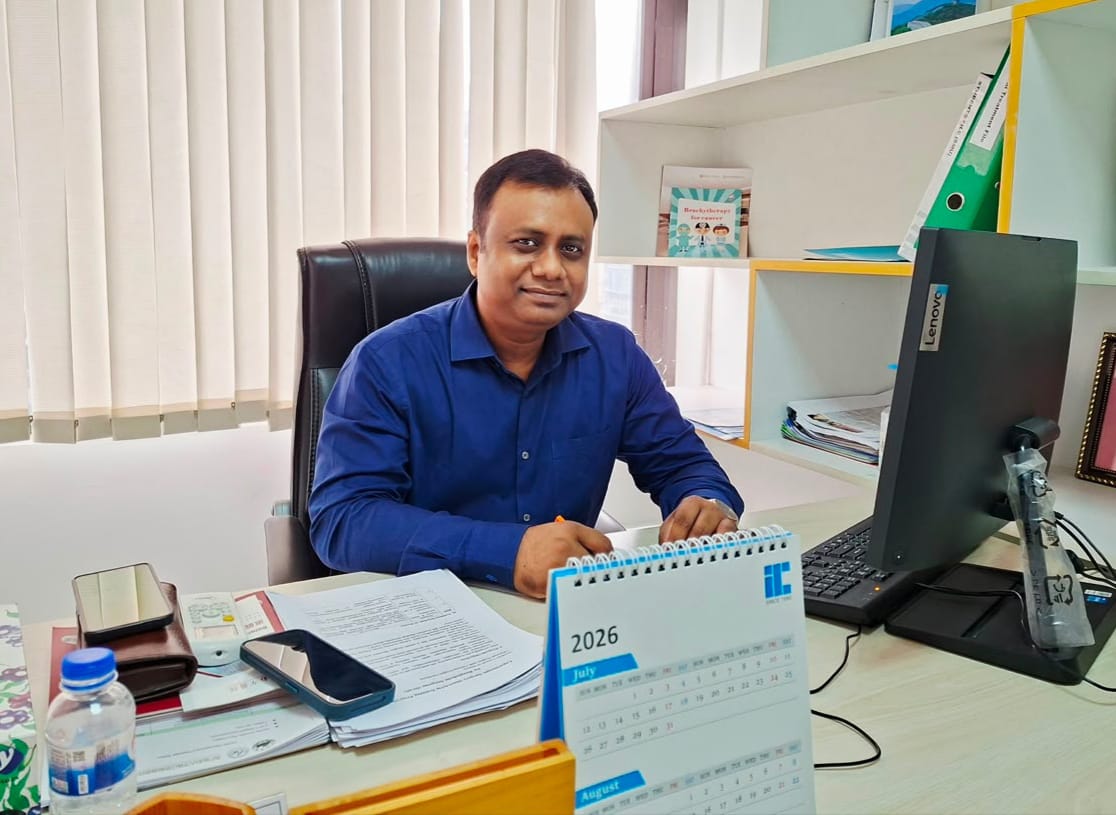
Dr. Md Abu Kausar Shapon
Bangladesh stands at a critical juncture in its development journey. Alongside economic growth, infrastructure development, industrialization, employment generation, and technological advancement, one of the country’s greatest challenges is how to build a productive, technology-driven, and self-reliant economy. To achieve this goal, strengthening Bangladesh’s relationship with China in a strategic, multidimensional, and long-term manner can play a significant role.
China is now one of the world’s major economic and technological powers. Its experience and capabilities in infrastructure, industrial production, information technology, artificial intelligence, renewable energy, agricultural technology, healthcare, medical devices, e-commerce, and logistics can offer Bangladesh valuable opportunities for cooperation and learning.
However, Bangladesh-China relations should not remain limited to trade and infrastructure development. A new approach is needed—“From Trade to Technology, from Investment to Industrialization, and from Cooperation to Capacity Building.”
Reducing the Trade Gap Through Increased Production
Bangladesh and China have maintained strong commercial relations for many years. However, one of Bangladesh’s major challenges is the significant imbalance between imports and exports. To address this, Bangladesh needs not only greater access to the Chinese market for Bangladeshi products but also industries capable of becoming integrated into China’s global supply chains.
Chinese investors should be encouraged to view Bangladesh not merely as a consumer market but as a production and export hub.
There are significant opportunities for joint ventures in electronics, medical devices, pharmaceuticals, agricultural machinery, automobile components, solar-energy equipment, information technology, and industrial machinery.
Technology Transfer Must Be at the Heart of Cooperation
Importing foreign technology alone is not enough to build a developed Bangladesh. Young Bangladeshis must acquire not only the ability to use advanced technologies but also the capacity to innovate and manufacture them.
Joint research initiatives between Chinese universities, research institutions, and technology companies and their Bangladeshi counterparts should be expanded. Particular attention should be given to Artificial Intelligence, Robotics, Biotechnology, Renewable Energy, Medical Technology, and Smart Manufacturing.
For Bangladesh, one of the most important priorities should be establishing an effective framework for Technology Transfer. Foreign investment should bring not only capital but also technology, training, knowledge, and skills development.
Healthcare Can Become a New Avenue for Cooperation
Healthcare is one of the most promising areas of Bangladesh-China cooperation.
The demand for advanced medical infrastructure, modern medical technologies, and specialized healthcare services is growing rapidly in Bangladesh. At the same time, China has made significant progress in medical-device manufacturing, hospital infrastructure, telemedicine, digital healthcare, and medical technology.
Bangladesh could establish specialized hospitals, medical technology parks, diagnostic centers, rehabilitation centers, and medical equipment manufacturing hubs through Chinese-Bangladeshi partnerships.
At the same time, opportunities for Bangladeshi doctors, nurses, medical technologists, and healthcare administrators to receive training and fellowships in China could be expanded.
This would strengthen Bangladesh’s healthcare capacity and enable more patients who currently travel abroad for treatment to receive quality care within the country. It would not only save valuable foreign currency but could also create opportunities for Bangladesh to develop medical tourism.
China’s Agricultural Experience Can Benefit Bangladesh
Agriculture remains one of the foundations of Bangladesh’s economy. However, climate change, limited arable land, rising production costs, and food-security challenges are increasing.
China’s experience in modern agricultural technology, improved crop varieties, agricultural mechanization, water management, food preservation, and food processing can be highly valuable for Bangladesh.
A Smart Agriculture Demonstration Zone could be established through Bangladesh-China cooperation to introduce modern technologies, increase productivity, and bring advanced agricultural practices directly to farmers.
Skills Development for Young People Should Be the Greatest Investment
Bangladesh’s greatest asset is its young population. However, transforming a large population into productive human capital requires substantial investment in skills development.
Bangladesh could establish a China-Bangladesh Technical and Vocational Training Network in partnership with Chinese technical and industrial training institutions.
Training in electronics, machinery, automation, AI, software, medical technology, construction, robotics, and modern agriculture would enable Bangladeshi youth to compete not only in the domestic economy but also in the international labor market.
Bangladesh Needs Industrialization, Not Infrastructure Alone
Alongside roads, bridges, power plants, and communication infrastructure, Bangladesh now needs a significant expansion of productive industries.
Bangladesh can learn valuable lessons from China’s industrialization experience. Industrial zones and special economic zones can be developed through joint investment by Chinese and Bangladeshi entrepreneurs.
The goal should be:
“Made in Bangladesh, Technology from China, Market for the World.”
If this model can be successfully implemented, Bangladesh can gradually transform itself from an import-dependent economy into a production- and export-oriented economy.
The Relationship Must Remain Balanced and National-Interest Driven
Strengthening relations with China does not mean weakening Bangladesh’s relationship with any other country. The foundation of Bangladesh’s foreign policy should remain national interest and balanced diplomacy.
Bangladesh should continue developing mutually beneficial relationships with China, India, Japan, the United States, the European Union, and other development partners.
At the same time, cooperation with China should emphasize transparency and accountability in project selection, debt management, environmental impact, technology transfer, employment generation, and overall economic benefits.
A China-Bangladesh Strategic Economic Partnership for the Next Decade
Bangladesh now has an opportunity to take its relationship with China to a new level. For this purpose, a long-term China-Bangladesh Strategic Economic Partnership Framework could be developed.
Its key pillars could include:
HoweverBangladesh’s future development cannot depend solely on foreign aid or loans. What the country needs is a combination of knowledge, technology, investment, skills, and productivity.
China, with its vast development experience, technology, industrial capacity, and market, can become an important partner in Bangladesh’s development journey. At the same time, Bangladesh—with its young population, strategic geographical location, large domestic market, and emerging industrial capabilities—can also become an important partner for China.
Therefore, it is time to take the relationship beyond “China-Bangladesh Friendship” and move toward “China-Bangladesh Partnership for Shared Prosperity.”
If Bangladesh can deepen its relationship with China through the right strategy, competent leadership, transparency, and a clear focus on national interests, this partnership can become much more than a means of building infrastructure. It can become one of the strongest foundations for building a developed, prosperous, and increasingly self-reliant Bangladesh through industry, technology, healthcare, agriculture, human-resource development, and a knowledge-based economy.
The writer is
Dr. Md. Abu Kawsar Shapon
general practitioner & public health specialist; joint general secretary, Association of Bangladesh China Alumni (ABCA); and managing director, Long Life Hospital, Dhaka. Email: shapon.ch2000@gmail.com