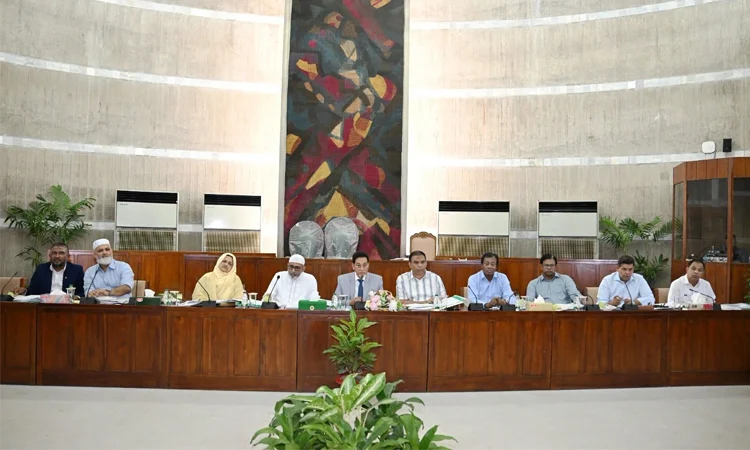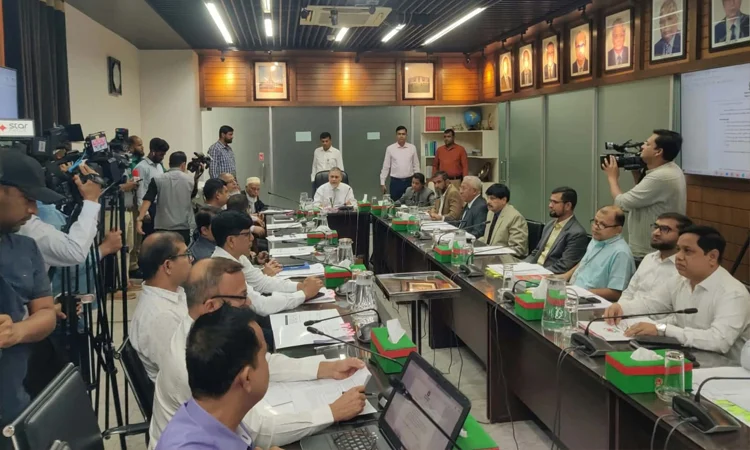
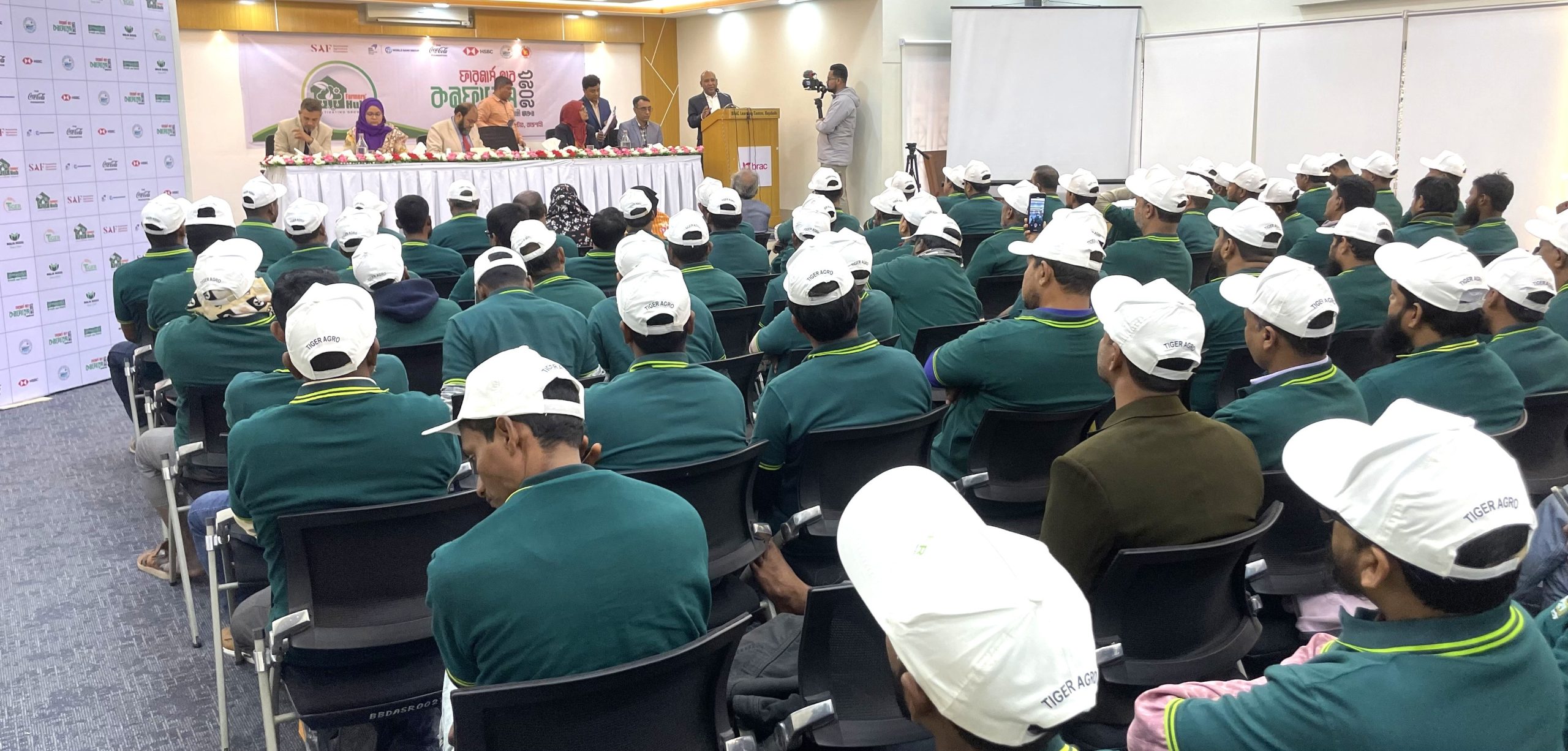

TBT DESK, RAJSHAHI: Over 120 agricultural stakeholders, including 100 grassroots "Farmers’ Hub" owners, gathered Jan 12, 2026 at the BRAC Learning Center in Paba, Rajshahi, for the Annual Conference of Farmer Hub Owners. The event highlighted the critical role of market-led innovation and water-efficient technologies in transforming the drought-prone Barind Tract into a sustainable economic zone.
The conference was organized by Sustainable Agriculture Foundation (SAF) Bangladesh under its "Introducing Water Efficient Technology" project and "Climate Resilient Agricultural Advancement in Barind (CRAAB)" project. The projects are technically supported by the 2030 Water Resources Group

(The World Bank Group) and sponsored by The Coca-Cola Foundation and HSBC Bangladesh.
The participants addressed a pivotal challenge for Northern Bangladesh: the disconnect between smallholder farmers and high-value national markets. By positioning "Farmers’ Hubs" as centralized hubs for quality seeds, seedlings, and saplings, as well as strategic aggregation points, the project has successfully introduced a structured forward market. This intervention reduces the influence of middlemen, ensuring farmers receive fair "farm-gate" prices while accessing premium agricultural inputs.
Strategic Synergy of Public and Private Sectors The event saw a high-level presence from the Department of Agricultural Extension (DAE) and the Department of Agricultural Marketing (DAM). Senior officials, including the Additional Director and Deputy Director of the DAE, emphasized that the Barind region's future depends on the rapid adoption of water-efficient irrigation to combat declining groundwater levels.
Private sector giants, including A R Malik Seeds, Ispahani Agro Limited, Tiger Agro Limited, PRAN Agro Limited, Lalteer and BRAC Seedsparticipated in the dialogue, exploring ways to integrate their supply chains with the Farmers’ Hub network. The discussion focused on improving "backward linkages" ensuring the availability of climate-smart seeds and seedlings and "forward linkages" through collective marketing and processing partnerships.
"The Farmers’ Hub model is more than a business; it is a climate-resilience strategy," said the Executive Director of SAF Bangladesh. "By empowering youth and local entrepreneurs to lead these hubs, we are creating a transparent, market-oriented ecosystem that can withstand the

environmental pressures of the Barind Tract."
Speakers highlighted that collaboration between public institutions, private companies, and farmer-led enterprises is essential to address input quality and enhance productivity sustainably. The event concluded with a consensus on strengthening hub networks, promoting efficient irrigation technologies, and enhancing market-oriented services.
The conference marks a significant milestone for SAF Bangladesh in advancing sustainable agriculture through innovation, partnership, and farmer-centered approaches.