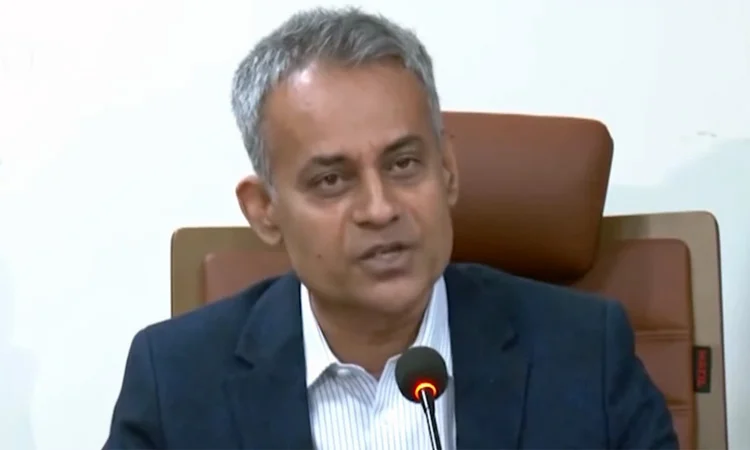

TBT DESK: The government is moving towards an investment-led growth model while placing strong emphasis on social inclusion in the upcoming national budget, Finance and Planning Minister Amir Khasru Mahmud Chowdhury has said.
Speaking to reporters after a meeting at the National Board of Revenue in Dhaka, the minister outlined a broad strategy to address what he described as a “triple crisis” facing the economy.
He stressed that mobilising domestic resources remains a top priority, noting that without sufficient revenue, the government would struggle to implement its commitments and election pledges.
“Our focus is to stabilise the economy and gradually shift from a debt-dependent model to one driven by investment,” he said, adding that the budget would prioritise marginalised communities to ensure more inclusive growth.
The minister highlighted a series of reforms aimed at creating a more business-friendly environment, including policy stability, deregulation and stricter financial discipline. He said long-term policy consistency would help restore investor confidence, while simplification of business procedures is expected to ease private sector operations.
Restoring order in the financial sector and capital market has also been identified as a key priority, as the government seeks to rebuild trust among both local and foreign investors.
According to the minister, a number of international investors have shown renewed interest in Bangladesh following the recent election period, with expectations of significant inflows in the near future.
He also underscored the need to diversify exports beyond the ready-made garment (RMG) sector, warning that over-reliance on a single industry could expose the economy to external shocks.
On Bangladesh’s graduation from Least Developed Country (LDC) status, he confirmed that the process is ongoing, with a proposal under preparation to seek a three-year extension from the United Nations to ensure a smoother transition.
The government is also engaging with key international partners, including Japan and Germany, to strengthen economic cooperation and secure support during this period of global uncertainty, particularly amid rising fuel import costs linked to tensions in the Middle East.
Concluding his remarks, the minister said the government remains committed to building a stable, disciplined economic environment capable of attracting long-term investment and generating employment.