
Reliable sources have confirmed that administrators will be appointed to five banks slated for merger within the next two days. Earlier, Bangladesh Bank announced the names of the administrators designated for this five banks. News of the imminent appointments has triggered renewed anxiety among depositors, many of whom fear that, without a clear and effective roadmap to safeguard their deposits, panic withdrawals could further destabilize the already fragile institutions.
Conversations with customers at branches of the troubled banks revealed that most are far more concerned about recovering their deposits than about the merger process itself. Many depositors explained that their trust lies not with Bangladesh Bank or administrative plans, but with specific bank officers or branches where they have long conducted their business. One frustrated depositor, when told about Bangladesh Bank’s consolidation plan, remarked sorrowfully, “Did I deposit my money at Bangladesh Bank?”
Economists and financial experts have expressed concern over the unusual nature of the merger plan. Typically, in such cases, weaker banks are merged with stronger ones to ensure stability. However, Bangladesh Bank’s decision to merge five “weak” banks—an approach described as almost unprecedented globally—has raised serious doubts. According to the central bank, the merged entity, tentatively named Sammilito Islami Bank, would inherit all non-performing loans and liabilities of the five institutions. Moreover, the prolonged consolidation process has led to a significant depletion of deposits, leaving the future bank with little liquidity. Analysts warn that, under such circumstances, the merged bank could become a liability rather than an asset to the national economy.
While experts have welcomed Bangladesh Bank’s initiative to reform the banking sector, many have criticized the questionable methods used to declare certain banks as “weak” and the lengthy reform process that has eroded public confidence. Most depositors reportedly prefer to keep faith in their existing banks rather than in a merger they view as uncertain and destabilizing. Many believe that by prematurely labeling the banks as weak, Bangladesh Bank has further undermined their ability to recover.
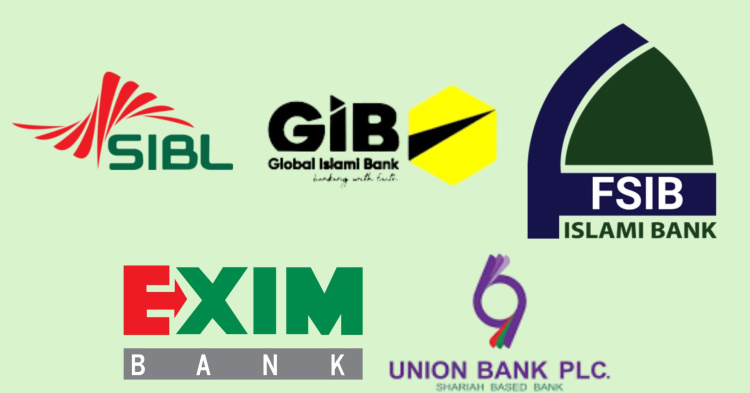
It may be recalled that last year, Bangladesh Bank identified Union Bank, First Security Islami Bank, Global Islami Bank, EXIM Bank, and Social Islami Bank as weak institutions and announced plans to merge them. However, both EXIM Bank and Social Islami Bank rejected the classification, maintaining that they are financially sound and strongly opposing the proposed merger from the outset.