

TBT DESK
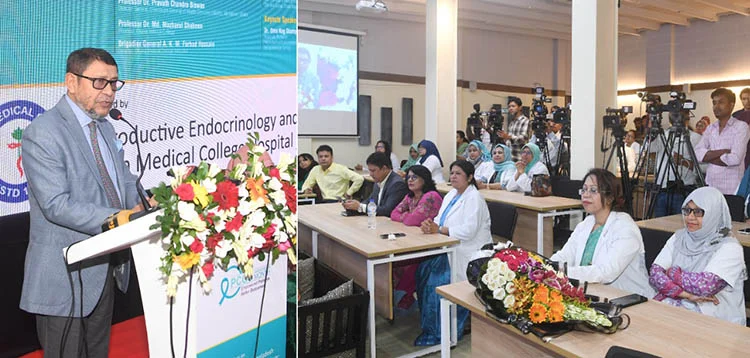
In a major milestone for public health in Bangladesh, the National Tuberculosis Control Program (NTP) under the Directorate General of Health Services (DGHS), Ministry of Health and Family Welfare (MoHFW), and leading non-governmental development organization Nari Maitree successfully hosted a High-Level Government Stakeholder Policy Interface today at the MBDC/NTP/DGHS conference room in Mohakhali.
Organized under the "Fast Track The Cure" (FTTC), a community based advocacy initiative of the global non-profit TB Alliance, the high-level consultative meeting brought together policymakers, tertiary clinical experts, international delegates, frontline health supervisors, and cured TB survivors. The primary objective was to consolidate urban successes from Dhaka and Narayanganj and map out a comprehensive roadmap for the nationwide expansion and decentralization of the ultra-short, 6-month, all-oral BPaL (Bedaquiline + Pretomanid + Linezolid) and BPaLM (with Moxifloxacin) regimens.
Presiding over the event, Dr. Mohammad Shahariar Sajjad, Director of Mycobacterial Disease Control (MBDC) & In-Charge of NTP, stated, "Bangladesh is fully committed to eliminating TB. The nationwide expansion of the ultra-short 6-month all-oral BPaL/M regimens sits at the absolute center of our national strategy. We are moving away from historical, toxic 20-month injectable protocols to humane, patient-centered care. We are proud to formally institutionalize Nari Maitree’s community-led demand generation and peer support models into the upcoming 7th edition of the National Guideline and Operational Manual for Tuberculosis."
The meeting highlighted empirical data from Nari Maitree’s 1,007-respondent baseline KAP survey, which revealed that prior to the intervention, only 14% of slum communities knew about BPaL/M, and social stigma stood at a staggering 62% overall. By deploying a specialized network of trained BPaL/M Ambassadors and Community Support Groups (CSGs) under the FTTC initiative, Nari Maitree successfully flipped these numbers—achieving a 98.33% ongoing treatment adherence rate across dense urban hotspots.
Akshaya Patil, Manager, Market Access and FTTC Lead at TB Alliance, outlined potential areas of collaboration between TB Alliance and Bangladesh’s National Tuberculosis Programme to strengthen DR-TB services in the country. She highlighted opportunities for training and capacity building to support the decentralization of BPaLM and DR-TB treatment. She also emphasized the importance of sustained community engagement in improving treatment literacy, supporting adherence, reducing barriers to care, and strengthening the overall DR-TB response.
Dr. Golam Sarwar Liaquat Hossain Bhuiyan, Director of the National Institute of Diseases of the Chest and Hospital (NIDCH), highlighted the vital link between tertiary clinical facilities and the community: "Potent short-course regimens require meticulous Active Drug Safety Monitoring (aDSM). Nari Maitree’s field workers serve as our extended clinical arms, utilizing digital tools like the OneImpact platform to catch early drug toxicities at the doorstep, allowing our doctors to safely optimize dosages without interrupting the cure."
Closing the session, Shaheen Akter Chowdhury Dolly, Executive Director of Nari Maitree, expressed her deep gratitude to the NTP’s DR-TB, M&E, and MIS departments for their seamless coordination. "Our 26-plus years in the fight against TB have taught us that medical innovation can only save lives if it is backed by local human compassion," she said. "Through this fortified partnership with the government and the TB Alliance, we are ready to take our successful urban blueprint and transform it into a nationwide reality."