
Staff Correspondent: The proposed national budget for fiscal year 2026-27 includes several positive initiatives in health, education, social protection and digital transformation. Economists and policy analysts have raised concerns over several ambitious assumptions and structural weaknesses that may hinder its successful implementation, says the Centre for Policy Dialogue (CPD).
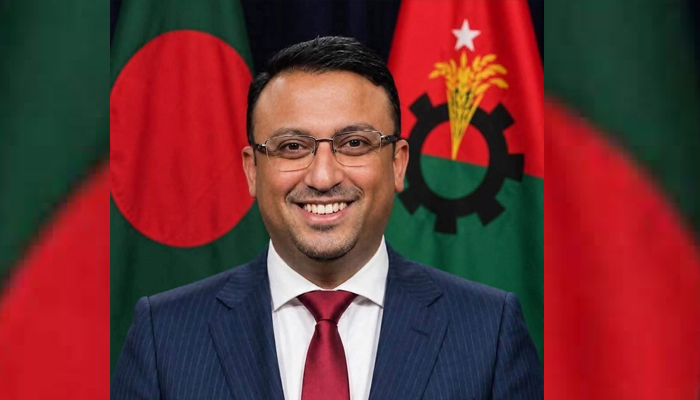
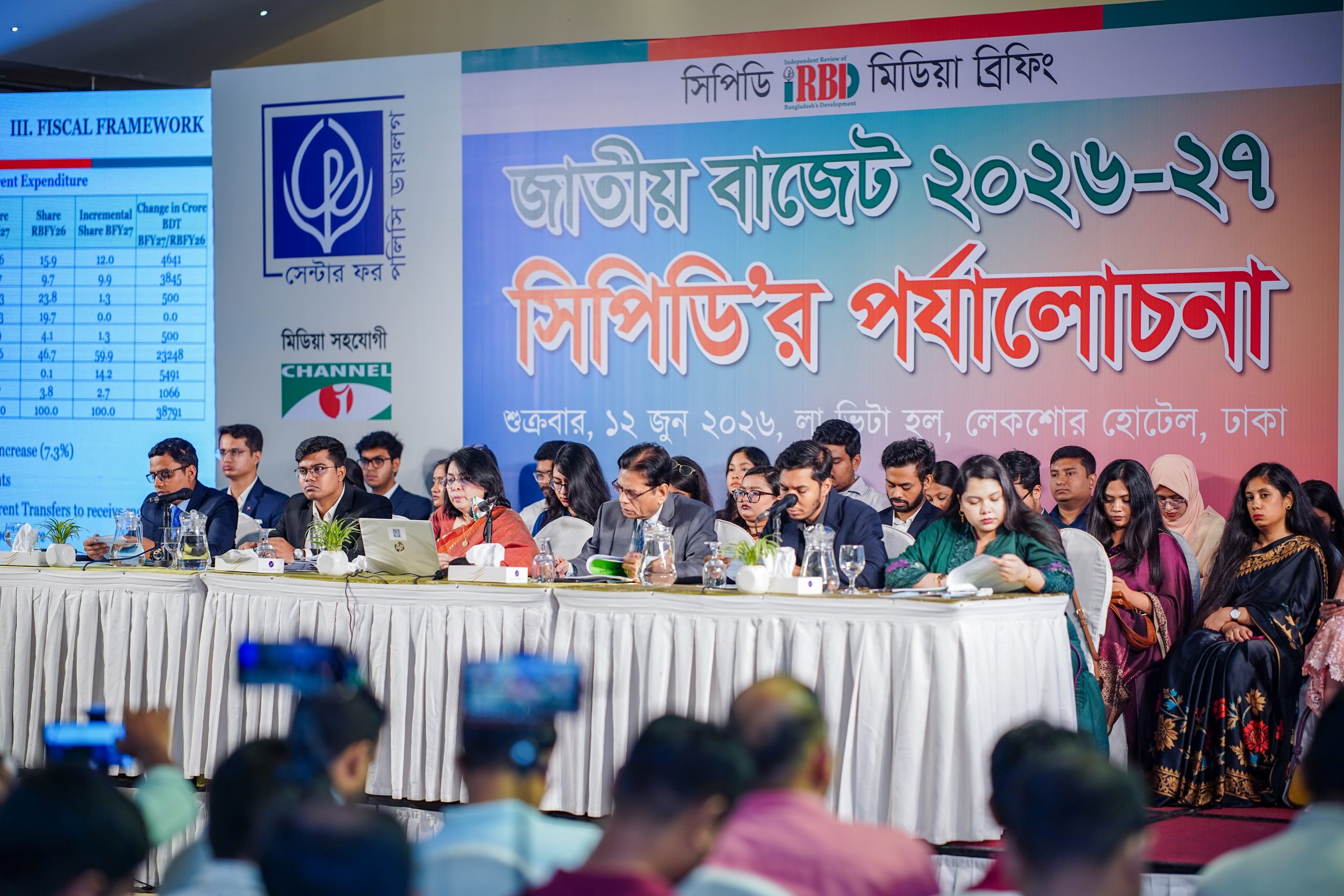
CPD Executive Director Dr Fahmida Khatun presented the think tank's assessment of the FY27 budget at a city hotel in Gulshan, a day after Finance Minister Amir Khosru Mahmud Chowdhury presented the Tk 9.38 lakh crore budget – the largest in the country's history – in Parliament under the theme “Journey Towards a Democratic, Humane and Inclusive Economy.”
The first budget of the newly elected government comes at a time when Bangladesh is struggling with high inflation, slow economic growth, weak private investment, revenue shortfalls, banking sector vulnerabilities and energy supply constraints. These challenges have prompted experts to scrutinise the feasibility of the government's projections and financing plans.
The think tank said that one of the major concerns is the government's GDP growth target of 6.5 per cent for FY27. The target represents a significant jump from the provisional growth estimate of FY26. However, analysts argue that such optimism may not reflect current economic realities. Private investment remains sluggish, job creation has been weak, and business confidence has yet to fully recover. Achieving the targeted growth would require a substantial increase in both public and private investment, which may prove difficult under prevailing economic conditions.
"We have always said that, economically, it is not justified," said Mustafizur Rahman, distinguished fellow of the CPD. "The reason is that every time a scope has been provided to legalise black money, the government's revenue gain has been very limited. Rather, it creates a moral hazard for others," he said.
According to Mustafizur, repeated opportunities to legalise undisclosed wealth discourage honest taxpayers and weaken tax compliance.
"Those who are paying taxes properly may think, 'If I do not pay now and instead pay later, I may receive additional benefits. So, why should I comply this time?' This creates a problem," he said.
CPD expressed concern over the budget's revenue mobilisation targets, projecting an 18.2 per cent growth over the revised FY26 figures.
Based on actual revenue data up to March 2026, CPD's own projection suggests the actual FY26 revenue outturn could be significantly lower, meaning approximately an additional Tk 2,45,000 crore may need to be mobilised, a highly challenging task.
The National Board of Revenue (NBR) tax is projected to grow by 20.1 per cent in FY27, accounting for 86.9 percent of incremental revenue, with VAT and income taxes set to lead the charge.
CPD said the budget deficit of 3.6 per cent of GDP, higher than 3.3 per cent in the revised FY26, will be financed through a combination of foreign loans (45.2 per cent) and bank borrowing (46.1 percent), with bank borrowing remaining the dominant financing source.
The Annual Development Programme (ADP) for FY27 has been set at Tk 300,000 crore, 30.4 per cent higher than the FY26 ADP and equivalent to 4.4 percent of GDP.
CPD termed this allocation “ambitious” in light of severe implementation underperformance: only 35.4 per cent of the FY26 ADP was spent in the first 10 months of the year.
Education and health sectors received the largest incremental allocations, rising by Tk 21,034 crore and Tk 17,382 crore, respectively, in the ADP.
The think tank called it “inspiring” that both sectors remain among the top five recipients, with health's ADP share jumping to 11.8 per cent from 7.9 per cent in FY26.
However, it raised a red flag on agriculture, whose ADP share fell to 3.6 per cent from 4.7 per cent, a development the organisation called “an alarming signal at a time when ensuring food security remains a high priority.”
On mega projects, CPD found that of 20 flagship infrastructure projects receiving Tk 58,747 crore, nearly 20 percent of total ADP, eight are scheduled for completion in FY27, yet the think tank concluded that “none of these will be completed by FY27” even under maximum resource utilisation.
The Rooppur Nuclear Power Plant has progressed to only 68.3 per cent completion after nearly a decade, while MRT Line 1 stands at a mere 5.9 per cent after six years of construction.
CPD also highlighted a troubling trend: the number of ADP projects carrying only a symbolic allocation of Tk 1 lakh or below has risen to 77 in FY27, up from 45 in FY26, indicating worsening tokenism in project listing. Meanwhile, 377 “carryover” projects remain in the pipeline, and 1,063 projects sit without any allocation whatsoever.
On fiscal measures, CPD said the personal income tax (PIT) structure remains unchanged for the current and next assessment years, with the tax-free threshold rising to Tk 3,75,000.
The think tank pointed out that while the threshold was raised from Tk 3.50 lakh to Tk 3.75 lakh, inflation-indexing will require it to be at least Tk 3.80 lakh, meaning low-income earners received no real purchasing power relief.
CPD welcomed the government's five-year PIT roadmap, including a threshold rise to Tk 4,00,000 for AY2028-29 and a new 35 per cent top slab for incomes above Tk 35 lakh from FY29, as providing medium-term predictability.
However, it cautioned that the roadmap's thresholds need to more closely track inflation to ensure adequate income protection.
On corporate tax, CPD noted that Bangladesh's 27.5 per cent rate for non-listed companies remains higher than regional competitors, including Vietnam (20 per cent), Indonesia (22 per cent), and India (22 per cent under the concessional rate), potentially weakening the country's investment attractiveness.
The budget deficit is projected at 3.6 per cent of GDP, slightly higher than the revised estimate for FY26. To finance this deficit, the government plans significant borrowing from both domestic banks and foreign sources. Net bank borrowing is expected to reach Tk 1.12 lakh crore, while foreign loans will rise sharply. Economists warn that excessive bank borrowing may crowd out private sector credit and discourage business investment. Increased dependence on external borrowing could also create future debt repayment pressures.
The Annual Development Programme (ADP) for FY27 has been increased to Tk 3 lakh crore, marking a substantial rise from the previous year. However, implementation capacity remains a major concern. During the first ten months of FY26, only around one-third of ADP funds had been utilised. Critics argue that simply increasing allocations without improving implementation efficiency may not deliver the expected development outcomes.
Project delays and cost overruns continue to undermine development spending. According to CPD analysis, many ongoing projects have experienced repeated time extensions. A significant number of projects have remained under implementation for more than six years, while dozens have exceeded ten years. Such delays not only increase costs but also reduce the overall effectiveness of public investment.
Mega projects present another challenge. Nearly one-fifth of the total ADP allocation has been directed towards major infrastructure projects. Yet several of these projects have shown slow implementation progress and are unlikely to be completed within their scheduled timelines. This raises concerns about future cost escalations and the need for additional budgetary support.
Agriculture, a sector critical for food security and rural livelihoods, has seen a decline in its share of ADP allocations. Analysts consider this reduction worrying at a time when climate-related risks, food inflation and supply disruptions continue to threaten agricultural production and food security.
Tax policy proposals have also generated debate. While the tax-free income threshold has been slightly increased, analysts argue that the adjustment does not fully compensate for inflation. As a result, lower-income taxpayers may receive little real relief despite rising living costs. The existing tax structure may therefore continue to place a disproportionate burden on middle-income earners.
Corporate taxation remains relatively high compared to several competing Asian economies. Business leaders fear that maintaining high tax rates for private companies could weaken Bangladesh's competitiveness, discourage investment and limit export diversification at a time when stronger private sector participation is urgently needed.
The budget also allows the regularisation of previously undisclosed investments in real estate through payment of applicable taxes. While the measure may increase revenue and improve transparency, critics argue that it could create moral hazard by encouraging future underreporting in anticipation of similar opportunities.
Another notable concern is the absence of a comprehensive roadmap to prepare Bangladesh for graduation from Least Developed Country (LDC) status. Although the budget acknowledges the challenges associated with losing preferential trade benefits, analysts believe clearer policy guidance is needed to help industries adapt to the post-LDC environment.
Despite these concerns, the budget includes positive measures such as increased allocations for health and education, support for startups and freelancers, tax incentives for green industries and expanded social protection programmes. However, experts emphasise that success will depend largely on effective implementation, improved governance, stronger revenue collection and realistic economic assumptions.