
When a new government assumes office after a national election, public expectation extends far beyond a mere transfer of power. Citizens expect a visible transformation in the character of governance, policy priorities, and the philosophical direction of state management. Particularly in the current context—where the economy faces multidimensional pressure, inflation remains persistent, confidence in the banking sector is fragile, foreign exchange reserves are under strain, inequality in healthcare and education is pronounced, and administrative efficiency is being questioned—the first 120 days become a period of policy reset. This period may not resolve all systemic challenges, but it clearly signals the government’s direction, priority of interests, and the level of inclusiveness and responsibility rooted in its future-state philosophy.
Restoring economic stability must be the first and foremost priority, as no reform can be sustained without it. Controlling inflation cannot rely solely on market monitoring or mobile court interventions. What is required is a coordinated Economic Stabilization Framework ensuring effective synchronization among the Ministry of Finance, Bangladesh Bank, the Ministry of Commerce, and the agricultural sector. Structural weaknesses across essential commodity supply chains—from import stages to retail distribution—must be identified through data-driven analysis.
Temporary tariff and VAT adjustments, targeted agricultural incentives, improvements in storage infrastructure, and focused subsidy programs can realistically reduce inflationary pressure. Simultaneously, a contractionary yet balanced monetary policy will help restore liquidity discipline in the market. Interest rate policy must maintain equilibrium—controlling inflation while encouraging investment. Targeted interest-reduction programs for small and medium enterprises can play a significant role in generating employment and building economic resilience.
Restoring confidence in the banking and financial sector will be one of the greatest tests for the new administration. Non-performing loans, weak regulatory oversight, and inadequate corporate governance have long exposed the sector to systemic risk. Establishing an independent Banking Reform Commission within the first 120 days—tasked with publishing the true picture of default loans, ensuring politically neutral board formation, and strengthening risk-based supervision—would send a strong positive signal to both domestic and international investors.
Introducing refinancing schemes for SMEs and startups would accelerate employment creation. An economy is not merely a reflection of GDP growth—it is fundamentally built on confidence, and rebuilding that confidence is now the central challenge.
Tax reform is equally essential. Increasing taxation on luxury goods while reducing the tax burden on essential commodities, fully digitizing tax administration, and expanding the tax net will enhance revenue generation while reducing taxpayer harassment. Automation and round-the-clock operations in port management would strengthen Bangladesh’s position within global supply chains and improve export competitiveness. Low-interest refinancing for production-oriented industries combined with simplified logistics support would accelerate industrialization.
The Federation of Bangladesh Chambers of Commerce and Industry (FBCCI) has historically played a critical role in policy dialogue. However, if the business community perceives its representation as questionable or democratic processes as weak, it creates broader economic confidence risks. Conducting free, transparent, and competitive elections across FBCCI and all major trade bodies within the first 120 days would serve not only as organizational reform but also as a powerful economic message. Strong public-private dialogue platforms reassure investors about policy continuity and business environment stability.
Healthcare inequality has become a major social stability concern. While urban specialized services have expanded, rural populations remain deprived of quality healthcare access. Within the first 120 days, mandatory telemedicine connectivity at the sub-district level, digital tracking of public hospital medicine supply chains, and publishing a draft National Health Insurance framework could significantly reduce out-of-pocket healthcare expenditure burdens. Mobile medical units focused on maternal and child health services could deliver rapid, measurable outcomes. Healthcare is not only a social service—it is a productivity driver of the economy.
While Digital Bangladesh is now a reality, digital security vulnerabilities threaten its sustainability. Establishing a National Cyber Response Taskforce, conducting cyber audits for critical infrastructure, and strengthening data protection laws are urgent priorities. Multi-layered security systems must be implemented across banking, healthcare, and government databases. A Digital Public Service Fast Track integrating birth registration, land records, health data, and academic certification under a unified digital identity would significantly reduce administrative costs and processing time.
Bangladesh must now move beyond being a technology user to becoming a technology creator. In this context, AI diplomacy is strategically critical. Technology partnerships with advanced economies now extend beyond software services into semiconductors, data architecture, and strategic technology capabilities. Joint research, technology transfer, and skill development partnerships—particularly with the United States—can gradually build domestic semiconductor and chip manufacturing capacity.
To strengthen domestic technological capacity, an AI Infrastructure Policy Committee should be established. This body would oversee national data center frameworks, cloud governance, high-performance computing capability, government data standards, and cybersecurity architecture. A National AI Infrastructure Roadmap would enable scalable computing, secure data sharing, and rapid innovation across healthcare, agriculture, financial systems, and smart manufacturing sectors.
Preparing for the Fourth Industrial Revolution requires a comprehensive national policy integrating innovation, research, startup ecosystems, and skill development. An Emerging Technology Application Development Fund can accelerate innovation across industries. A dedicated 4IR Implementation Taskforce integrating industry, academia, and technology sectors would drive real-world deployment of robotics, biotechnology, AI applications, industrial automation, and smart governance solutions—generating new employment and positioning Bangladesh as a regional innovation hub.
Food security extends beyond production—it involves storage, logistics, and fair market systems. District-level modern cold storage networks, agro-processing industries, and direct farmer integration into digital marketplaces would significantly reduce post-harvest loss. Subsidies for climate-resilient seeds and smart irrigation technologies would stabilize production and support long-term food system resilience.
Education and skill development remain the foundation of long-term economic growth. A national Learning Recovery Program focusing on mathematics, science, and language competency—combined with targeted regional support—would address learning gaps. Aligning technical and vocational education with industrial demand would enhance youth employment potential and maximize demographic dividend opportunities.
Energy sector transparency through published audit reports and expanded renewable energy investment is essential. Without updating long-term energy security strategies, economic stability remains vulnerable. Transparency in energy policy directly improves investor confidence.
Balanced diplomacy, export market diversification, and improved remittance incentive frameworks would ease foreign exchange pressure. ASEAN markets offer high-growth opportunities. Strengthening tariff advantages, quality certification support, and logistics cooperation would enhance competitiveness in garments, pharmaceuticals, IT services, and agro-products.
Bangladesh holds natural advantages in halal food production as a Muslim-majority nation. The global halal economy is already a multi-trillion-dollar market. Strengthening halal certification authorities, developing globally compliant processing industries, and expanding access into Middle Eastern and Southeast Asian markets can significantly increase foreign currency earnings. Halal cosmetics, pharmaceuticals, and tourism also offer major growth opportunities.
Administrative reform is essential for the sustainability of all initiatives. Time-bound ministry action plans, performance-based evaluation systems, merit-based promotion structures, and guaranteed independence of anti-corruption and regulatory bodies would strengthen institutional trust. Judicial backlog-reduction task forces and stronger human rights protections would further reinforce state legitimacy.
Skilled migration must become a strategic national priority to secure future foreign exchange flow and labor market dignity. Currently, a large portion of Bangladeshi migrant workers remain in low or mid-skill employment categories, limiting income potential and remittance quality. However, global labor markets are rapidly shifting toward high-demand sectors such as healthcare, IT, semiconductor support services, energy technology, automation operations, marine engineering, and care economy services. A National Skilled Migration Roadmap within the first 120 days can ensure global skill mapping, country-specific skill standard alignment, and international certification integration.
If technical training institutes, medical technical skill centers, IT academies, and industry-linked vocational systems are integrated into an export-oriented skill pipeline, migrant income can increase significantly. Bilateral labor agreements must expand beyond job placement to include skill recognition, social security access, and career progression pathways—positioning migrant workers as contributors to the global skill ecosystem rather than simply remittance senders.
Finally, political and social harmony remains critically important. Launching an inclusive national dialogue within the first 120 days—bringing together political parties, business leaders, civil society, and youth representatives—can establish consensus-driven governance. Unity, not division, will become the strongest pillar of the new government.
The first 120 days are not a period for miraculous transformation, but they offer an opportunity to build a strong foundation. If this period is utilized to establish transparency, accountability, institutional democracy, technology-driven transformation, and bold structural reforms, public confidence will gradually be restored. Bangladesh stands today at the intersection of possibility and challenge. With correct strategic direction and decisive implementation, these 120 days can mark the beginning of a responsible, inclusive, and sustainable state-building journey.
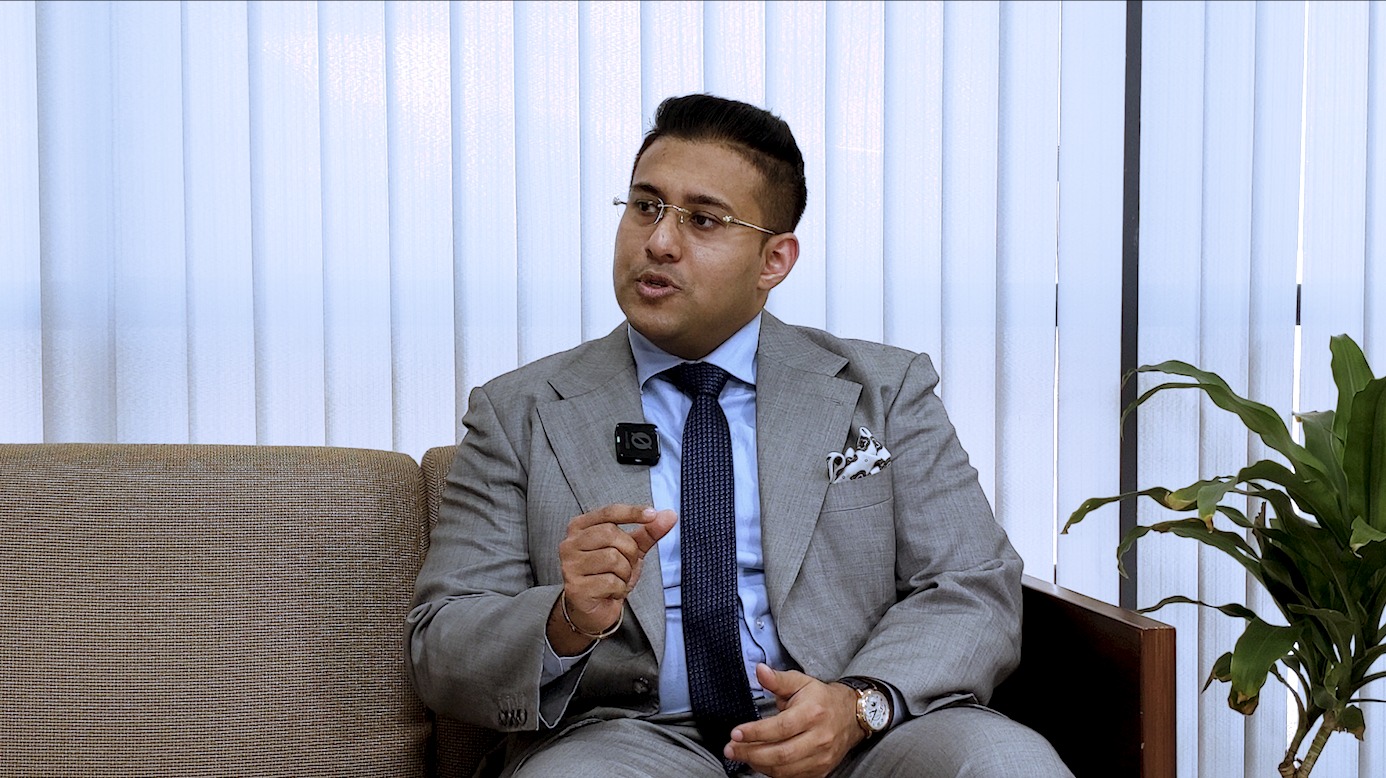
Sakif Shamim, FACHE, FLMI
Economist
Managing Director, Labaid Cancer Hospital & Super Speciality Centre
Deputy Managing Director, Labaid Group