
Md Sohag Rasif: As the world marks Valentine’s Day on 14 February, communities along Bangladesh’s southwestern coast observe Sundarbans Day—a reminder of the immense ecological asset that quietly safeguards millions of lives. While the observance has continued for more than two decades, the threats facing the Sundarbans have only intensified. This is not merely an environmental concern; it is a matter of security and long-term survival.
The Sundarbans, the world’s largest contiguous mangrove forest, spans roughly 10,000 square kilometres across Bangladesh and India, with the larger share lying within our territory. Recognised as a UNESCO World Heritage Site in 1997, it represents both a global ecological treasure and a national lifeline. Time and again, this mangrove belt has absorbed the force of cyclones and tidal surges, shielding coastal populations from catastrophic damage. In an era of accelerating climate change, its protective function has become even more critical.
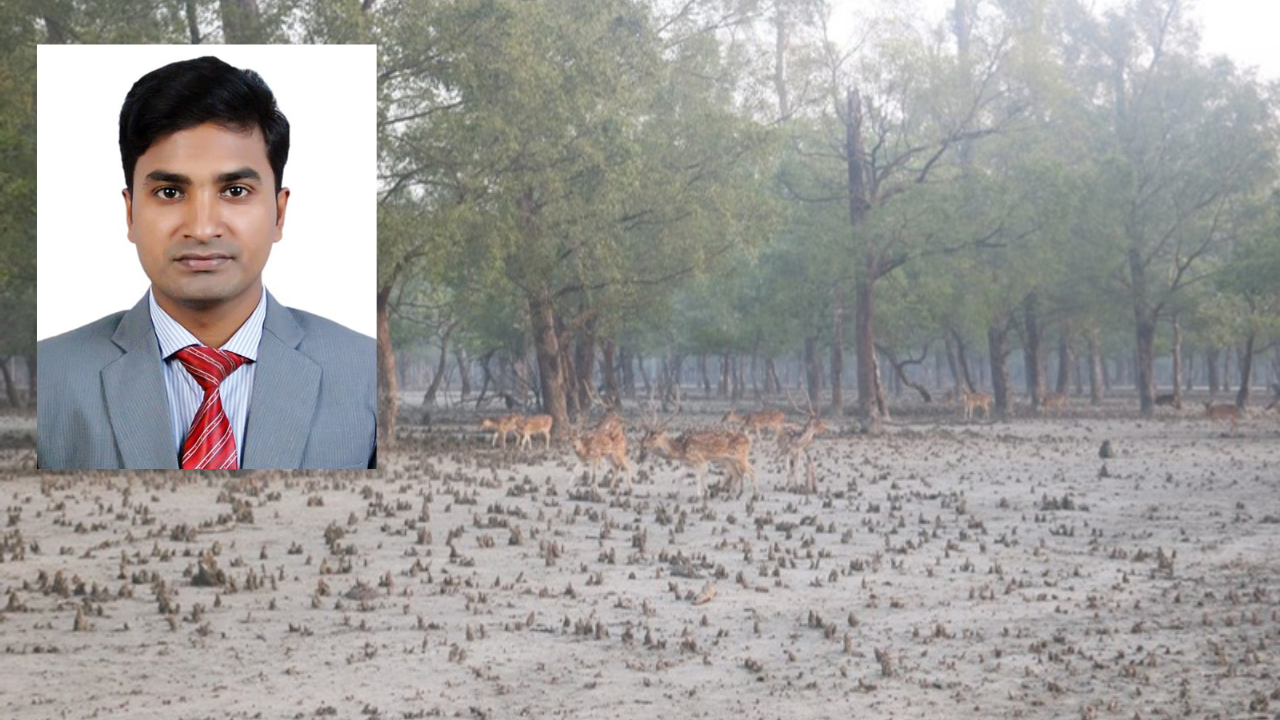
The ecological wealth of the Sundarbans is staggering. It hosts hundreds of plant and wildlife species, including the iconic Royal Bengal Tiger, numerous bird species, reptiles, dolphins, and marine life. The forest sustains thousands of livelihoods through fisheries, honey collection, and other forest-based resources. It also generates revenue through tourism. Yet these economic benefits must never come at the expense of ecological sustainability.
We are deeply concerned about the growing encroachment within forest areas. Reports of illegal constructions and tourism facilities expanding into sensitive zones demand immediate and transparent investigation. Mangrove ecosystems are inherently fragile. Clearing trees and respiratory roots to make way for concrete infrastructure not only disrupts biodiversity but also weakens the forest’s natural defence capacity. Authorities must ensure that no development project—public or private—compromises legally protected areas.
Pollution poses an equally grave challenge. Industrial effluents, oil spills, and the increasing presence of toxic substances in surrounding rivers threaten aquatic biodiversity and human health. The detection of microplastics in fish species near the forest should serve as a wake-up call. Regulatory agencies must strengthen oversight, enforce environmental compliance, and penalise polluters without exception. Environmental laws lose credibility when enforcement is selective.
Wildlife crime remains another persistent threat. Despite conservation efforts, poaching and illegal trafficking of wildlife continue to undermine progress. Protection measures must be reinforced through coordinated law enforcement, intelligence-sharing, and stronger prosecution of offenders. Simultaneously, illegal fishing practices in protected sanctuaries must be stopped.
Compounding these human-induced pressures are environmental stressors beyond our immediate control. Reduced freshwater flow and rising salinity levels—linked to upstream interventions and climate change—are affecting mangrove regeneration. This makes proactive conservation strategies even more urgent. We cannot afford complacency.
On 14th February 2001, the first National Sundarbans Conference was held in Khulna. The conference resolved to observe February 14 as Sundarbans Day and urged the government to recognize it nationally. Since 2002, the day has been celebrated annually in districts adjoining the forest, highlighting the urgent need to protect and conserve this vital mangrove ecosystem.
Observing Sundarbans Day symbolically is not enough. What is required is a coordinated, technology-driven conservation strategy: strict enforcement of environmental laws, continuous monitoring through satellite and drone surveillance, closure of polluting industries near forest boundaries or comply strictly with environmental standards and stronger action against illegal encroachment and poaching networks. Public awareness campaigns must complement institutional accountability.
The Sundarbans is not merely a repository of natural resources; it is the country’s green shield and ecological lifeline. Protecting it is not an environmental luxury—it is a national imperative. On this Sundarbans Day, the pledge must go beyond rhetoric. The time to act is now.
Author: Journalist and Ex Student, Department of Zoology, Jagannath University.