
Md. Shahidul Haque
From Antalya, Turkiye
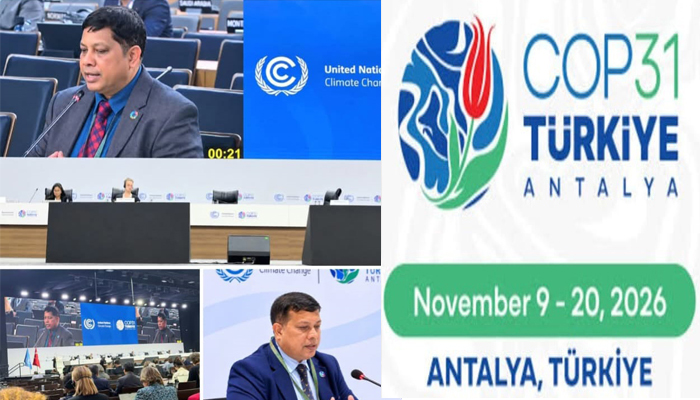
Today 19 November 2026, At the 31st session of the United Nations Climate Change Conference (COP31) in Antalya, Turkiye, Bangladesh has stressed the need for an effective national framework to address climate change-induced loss and damage, stronger South-South cooperation, and a fair and inclusive process for assessing progress in global climate action.
Bangladesh presented these positions at two important international events of the conference. The country was represented by Mohammad Navid Shafiullah, Additional Secretary (Climate Change Wing) of the Ministry of Environment, Forest and Climate Change.
On 17 November, speaking at the official UNFCCC side event titled “From National Frameworks to Global Action,” he said climate change-induced loss and damage is a harsh reality for millions of people in Bangladesh.
He said the adverse impacts of climate change not only damage people’s homes, assets and livelihoods, but also have a profound impact on social bonds, interpersonal relationships and mental well-being.
He stressed the need to develop a clear and effective national framework to address climate-related loss and damage, strengthen coordination among relevant ministries, ensure meaningful participation of local communities, and duly integrate loss and damage into national development plans and budgets.
He also highlighted the need to strengthen South-South cooperation through the exchange of knowledge, experience and expertise among developing countries to address the common challenges of climate change. He noted that South-South cooperation is not merely a policy commitment, but an important means of achieving real and effective progress through collective efforts.
He further emphasised ensuring meaningful and lasting benefits for climate-vulnerable communities through proper implementation of commitments made at national and international levels. On 18 November at 3:00 pm local time, Mohammad Navid Shafiullah presented Bangladesh’s national statement at a high-level ministerial event led by the COP31 Presidency, marking the launch of the second Global Stocktake (GST-2) process.
The event stressed the need to ensure a comprehensive, inclusive, equitable and science-based process for assessing collective progress towards achieving global climate goals.
Discussions also focused on ensuring that the latest scientific evidence duly reflects the different national realities, priorities, capacities and expectations of all regions and countries of the world.
The importance of international cooperation, mutual understanding and exchange of experience was highlighted in reviewing progress in global climate action and in strengthening ambition and implementation to achieve climate goals.
The need for participation of all countries and a sensitive approach to national realities to make the second Global Stocktake process effective and result-oriented was also emphasised.
Through Bangladesh’s participation in these two separate events at the conference, the country’s position on enhancing national capacity and international cooperation to address climate change-induced loss and damage, and on ensuring fairness and an inclusive approach in assessing progress in global climate action, was presented.