
Environment, Forest and Climate Change Minister Abdul Awal Mintoo today said 'One Health' must move from policy to action.
He stressed the need for building resilient agrifood systems and sustainable livelihoods by anticipating, mitigating and preventing risks instead of merely responding after emergencies occur.
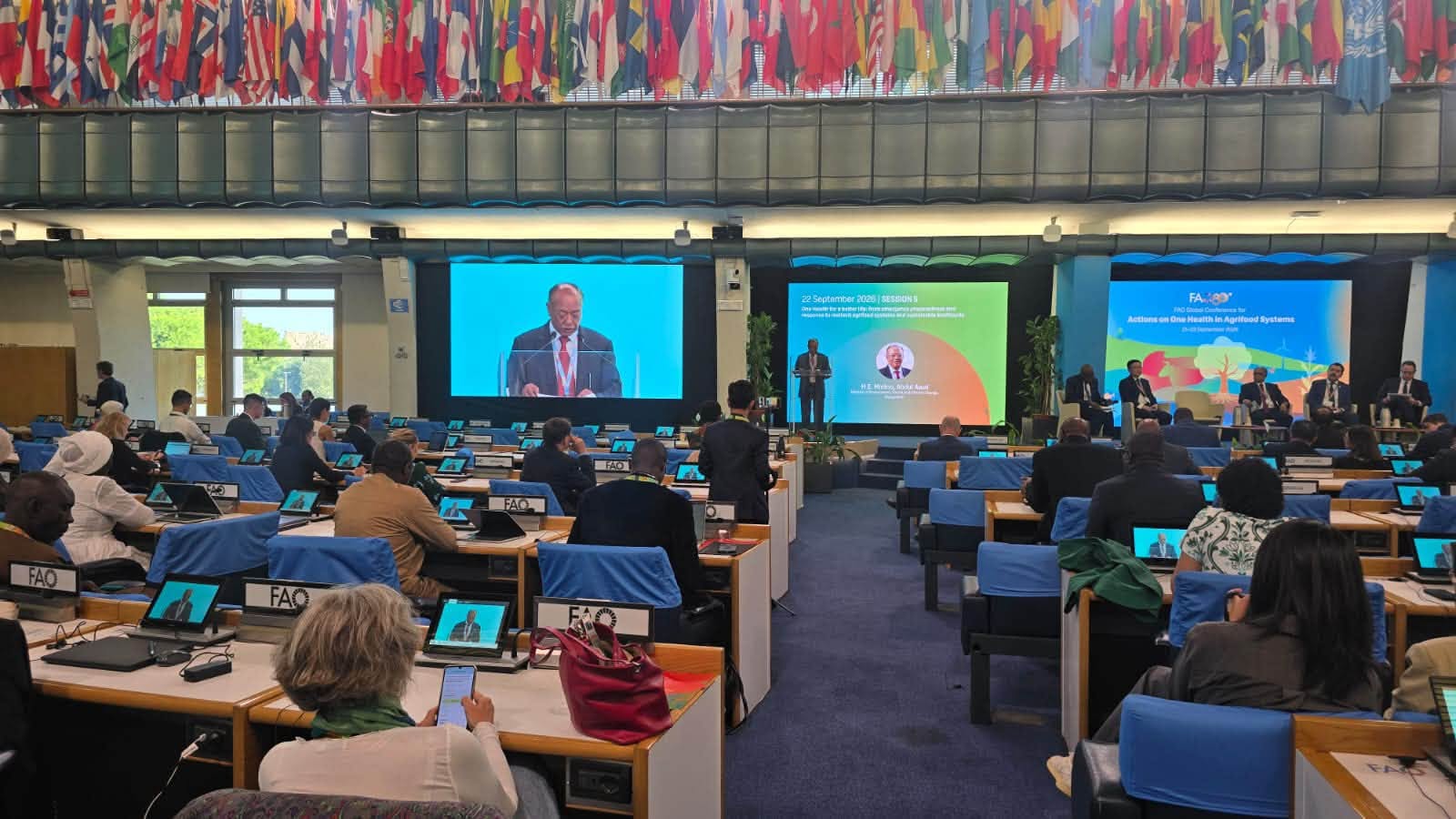
The environment minister made the remarks while delivering the keynote address at the plenary session titled "One Health for a Better Life: From Emergency Preparedness and Response to Resilient Agrifood Systems and
Sustainable Livelihoods", held at the Plenary Hall of the Food and Agriculture Organization of the United Nations (FAO) in Rome, Italy, according to a message received here.
He said the health of people and animals, ecosystems and the environment are closely interconnected.
"A risk arising in one area can quickly affect the others. Bangladesh's food and livelihood systems are closely linked to agriculture, livestock, fisheries and natural resources," he said.
At the same time, Mintoo said, climate change, environmental degradation, biodiversity loss and emerging health risks are creating growing pressures.
He added that One Health is not merely a health-sector programme but an integrated approach that connects health security, environmental sustainability, food security, resilient livelihoods and sustainable development.
Highlighting Bangladesh's commitment, the minister said the Third One Health Strategic Framework 2025-2030 has been formulated in continuation of the National One Health Strategic Framework adopted in 2012.
The inter-ministerial coordination mechanism and the One Health Secretariat are serving as important platforms for cooperation, information exchange and coordinated action among different sectors, he said.
Referring to the experiences of avian influenza and the COVID-19 pandemic, he said preparedness is not a final destination; it must continue to evolve as risks change.
This requires integrated surveillance and early-warning systems, biosecurity, stronger laboratory and field-level capacity, and a deeper understanding of the environmental, ecological and socioeconomic drivers of disease emergence, Mintoo said.
He described climate resilience as an inseparable part of health resilience.
He emphasised the need to connect climate adaptation, disaster preparedness, ecosystem restoration, community resilience and nature-based solutions with One Health priorities.
The Bangladesh minister said today's emergency risks cross national borders.
Effective preparedness therefore requires a whole-of-government approach, multisectoral cooperation, and strong regional and international partnerships, he said.
Appreciating the support of FAO and other international and regional partners, Mintoo called for pandemic prevention and preparedness to be linked with resilient agrifood systems, sustainable livelihoods, environmental
sustainability and climate resilience.
He put emphasis on country-led solutions, stronger national capacity and the practical application of global knowledge at the local level.
The minister said Bangladesh remains committed to advancing the One Health agenda through national initiatives, regional cooperation and international partnerships.
He called upon all partners to work with Bangladesh to turn One Health from policy into action and from action into measurable results.
The panel discussion was attended by Nigeria's Minister of Livestock Development Idi Mukhtar Maiha; Douglas Hoelscher, Minister-Counselor for Agricultural Affairs of the United States in Rome; Sopon Iamsirithaworn,
Deputy Permanent Secretary of Thailand's Ministry of Public Health; Memduh Unal, Director at the Islamic Organisation for Food Security.
Bangladesh Ambassador to Italy A. T. M. Rokebul Haque, other senior representatives, delegates from various organizations, observers and experts were present there.