
The Gentlemen returns for a second season with everything Guy Ritchie fans expect: gangsters, aristocrats, sudden violence and a great deal of foul-mouthed banter. But for all the expensive suits and international schemes, the show that once moved like a getaway car now spends a surprising amount of time idling.
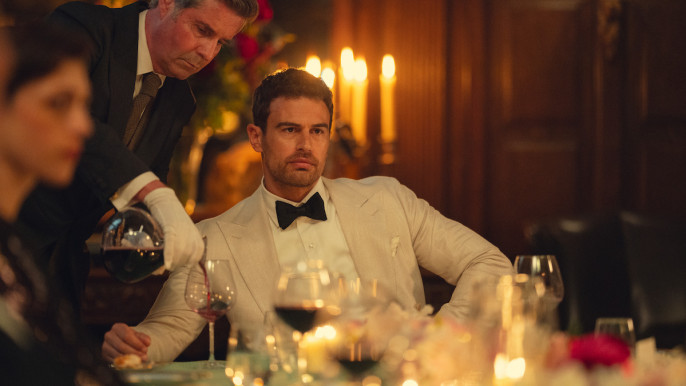
Theo James is back as Edward “Eddie” Horniman, the 13th Duke of Halstead, an aristocrat sinking ever deeper into the criminal world beneath his family estate. A season on from the events that made him a reluctant crime boss, Eddie is sitting on a fortune and working alongside Susie Glass, played by Kaya Scodelario, whose family runs a cannabis operation from under his floorboards.
Naturally, Eddie wants more.
His ambitions now extend beyond simply protecting the family fortune. He wants to separate himself from Susie and her father Bobby, played by Ray Winstone, who have Eddie tied down by the debt they took on while helping his financially troubled brother Freddy. At the same time, he becomes involved in an international drug deal with Italian crime boss Marco Moretti, played by Sergio Castellitto.
And that is not all. Eddie also wants to become a hereditary peer, giving him a route into Parliament and potentially allowing him to influence a bill concerning the decriminalisation of marijuana.
It is a suitably ridiculous escalation for The Gentlemen, a series that has never been particularly interested in subtlety.
The second season once again embraces Ritchie’s preferred cinematic vocabulary. There are motorcycle chases, criminal deals, elaborate schemes, aristocratic estates, angry gangsters and an endless supply of men shouting at one another. The look remains polished, with grand country houses and beautifully photographed landscapes providing a glossy backdrop to all the criminal activity.
Yet beneath the style, there is a sense that the series is running on familiar machinery.
The first season had plenty of the same ingredients, but its energy helped carry the formula. In the second season, the repetition becomes more noticeable. Characters move from one scheme to another, arguments turn into threats, threats turn into violence, and another round of elaborate criminal complications follows.
The result is often entertaining, but it can also feel unnecessarily stretched.
James’ Eddie is at the centre of this problem. He has the physical presence expected of a Ritchie protagonist, appearing almost permanently dressed as an aristocratic action figure, but the character remains difficult to read. Eddie is surrounded by larger personalities, yet his own personality rarely cuts through.
His deadpan performance can be amusing, particularly when placed against the increasingly absurd world around him. But there are moments when Eddie seems less like a fully developed character and more like a handsome suit with a gun.
That makes Freddy, played by Daniel Ings, particularly noticeable. Freddy remains one of the most entertaining parts of the show, bringing a chaotic energy that contrasts sharply with Eddie’s restrained presence. Whenever he enters the story, the series seems to find an extra spark.
Ray Winstone’s Bobby Glass provides another source of Ritchie-style excess. Bobby continues to conduct business from saunas and hot tubs, barking orders while barely appearing to leave his luxurious surroundings. It is exactly the sort of larger-than-life character the show was built around.
The season also makes room for Hugh Bonneville, who delivers a wonderfully exaggerated performance as Lord Hawthorne, an aristocrat whose willingness to accept bribes makes him one of the more amusing additions to the story.
There is something strangely comforting about The Gentlemen’s refusal to change its formula. In a television landscape where shows are constantly reinventing themselves, Ritchie appears perfectly happy to keep returning to the same world of gangsters, posh estates, dodgy deals and men aggressively explaining their business plans.
That consistency is both the strength and weakness of the second season.
Fans of Ritchie’s particular brand of crime comedy will find plenty to enjoy. The dialogue remains packed with colourful insults and eccentric characters, while the series continues to balance violence with deliberately silly humour. The production also retains the slickness that made the first season such an easy watch.
But the second season does not always match that visual confidence with the same momentum. For all its international dealings and escalating criminal ambitions, the story can feel as though it is waiting for something to happen.
The Gentlemen remains beautifully made, extravagantly silly and occasionally very funny. It knows exactly what kind of show it wants to be and has little interest in becoming anything else. The problem is that, at times, that confidence begins to look like inertia.
Still, there is a peculiar charm in watching Ritchie return to the same playground, armed with another collection of gangsters, aristocrats and ridiculous schemes. The Gentlemen may have plenty of money, guns and grand ambitions, but what it sometimes lacks is the one thing Eddie wants most: momentum.
Source: Hollywood Reporter