
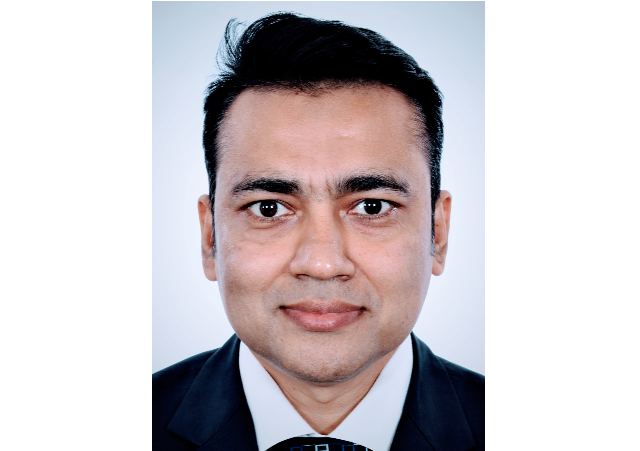

Dr Mohammad Mizanur Rahman, PhD
Whenever a talented Bangladeshi leaves the country for higher education or employment abroad, we immediately hear the familiar phrase: "Bangladesh is suffering from brain drain." The term has become so common that going abroad is often treated as synonymous with losing national talent. But is every talented person who leaves truly a case of brain drain? Or are we overlooking a deeper problem-the failure to use educated and skilled people effectively, both at home and abroad?
This question deserves a more balanced discussion.
Brain drain is certainly a real phenomenon. When a country loses large numbers of highly trained professionals from critical sectors such as healthcare, education, research, engineering, and technology, and cannot adequately replace them, the consequences can be serious. However, international migration is not always a one-way loss. In today's interconnected world, professionals may live and work abroad while continuing to contribute to their home country through research, investment, knowledge transfer, professional networks, training, and institutional collaboration.
Consider a Bangladeshi doctor working abroad who conducts research with Bangladeshi colleagues, an engineer who mentors young professionals in Bangladesh, or a researcher who collaborates with a Bangladeshi university. Should all of them simply be counted as "lost brains"? Perhaps not.
The modern discussion of skilled migration increasingly recognizes concepts such as brain circulation and brain gain. A person's physical location does not necessarily determine where his or her knowledge creates value. A Bangladeshi professional may be geographically abroad but remain intellectually, professionally, and economically connected to Bangladesh.
This does not mean that brain drain should be ignored. Rather, it means that the issue should be understood beyond simply counting how many educated people have left the country.
There is another issue that Bangladesh needs to discuss much more seriously: brain waste.
Brain waste occurs when educated or highly skilled people work in positions that do not adequately use their qualifications, training, and professional expertise. A related concept is brain misallocation, where human talent is not distributed in ways that maximize productivity and national benefit.
Bangladesh offers many examples that raise this concern. A person may spend years studying engineering and later build a career largely unrelated to engineering. A medical graduate may move into administrative work rather than clinical practice, research, public health, or medical education. A law graduate may work outside the legal profession. Highly educated professionals may enter banking, management, or administration because these sectors offer greater security, status, income, or career opportunities.
There is nothing inherently wrong with changing professions. Engineers can become administrators, doctors can become policymakers, and lawyers can become entrepreneurs. Their professional backgrounds may even strengthen those fields.
The real question is: Are we using our national investment in education and professional training as effectively as possible?
Producing a doctor, engineer, scientist, researcher, or other specialist requires years of education and training, along with substantial family, institutional, and national investment. If that expertise is not properly utilized, the country may lose part of the value of that investment even when the individual remains physically in Bangladesh. This is why the discussion of brain drain should also become a discussion of brain waste.
Instead of asking only, "Why are our talented people leaving?" we should ask, "Why are so many talented people seeking opportunities elsewhere?"
If a researcher leaves because Bangladesh lacks modern laboratories, competitive research funding, international collaboration, or clear academic career pathways, simply asking that person to stay will not solve the problem. If a doctor goes abroad to access advanced clinical training or research opportunities, blaming the doctor does not address the underlying structural issue.
The solution is to create an environment where talent can flourish.
Bangladesh should also rethink how it views its diaspora. Bangladeshi professionals living abroad are not merely sources of remittances. They can also contribute knowledge, technology, investment, research collaboration, mentorship, and international networks.
A physician abroad can train local clinicians. A scientist can collaborate with Bangladeshi researchers. An engineer can support technology transfer. An academic can develop university partnerships. An entrepreneur can invest in Bangladesh. A technology professional can connect Bangladeshi talent with global opportunities.
This is the potential of brain circulation.
Bangladesh could strengthen institutional mechanisms to connect its diaspora with national development through joint research programmes, visiting faculty initiatives, short-term return fellowships, professional mentorship, technology-transfer programmes, and diaspora knowledge networks. Such initiatives could transform migration from a perceived loss into a source of national advantage.
At the same time, Bangladesh must address the underutilization of talent at home. Education and employment policies need stronger alignment. The skills people acquire should have clear pathways into productive careers. Research, innovation, technical competence, and specialized knowledge should receive greater recognition alongside administrative and managerial careers.
Ultimately, retaining talent should not mean simply keeping people physically inside Bangladesh. A highly qualified person working in an unsuitable position may contribute less to national development than a professional living abroad who conducts research with Bangladeshi institutions, mentors young professionals, transfers technology, or invests in the country.
So, is Bangladesh suffering from brain drain?
Yes, particularly when critical sectors lose essential skilled professionals without adequate replacement. But brain drain is only part of the story.
We must also confront brain waste and brain misallocation.
The most important question is not simply, "How many talented Bangladeshis have gone abroad?" It is also, "How effectively are we using the talent we already have?"
Bangladesh needs a broader human-capital strategy: reduce harmful brain drain, prevent brain waste, improve the allocation of skills, and promote brain circulation and brain gain.
Talent should not be judged only by geography. Its real value lies in how effectively it is used and how much it contributes.
A Bangladeshi professional may live abroad and still contribute significantly to Bangladesh. Another may remain at home but work far below the potential of his or her education and training.
Therefore, our national debate should move beyond the simple question of whether our brains are leaving.
The deeper question is: Are we losing our talent abroad-or are we also wasting too much of it at home?
Perhaps Bangladesh's future depends not on where its talented people live, but on whether the country can create a system that allows their knowledge, skills, and experience to contribute to national development-wherever they are.
The author is Assistant Professor and Research Fellow, Management and Science University, Malaysia