
Naziur Rahman Sohel
An article titled ‘Memories of the War of Independence’ (Swadhinata Juddher Smriti), written by Sheheed President Ziaur Rahman, is set to be included in textbooks from the next academic year.
In addition, the National Curriculum and Textbook Board (NCTB) has taken an initiative to include an image of a historic diary he (Zia) kept at that time in textbook.
NCTB officials said the article will be added as a new chapter in the ‘Bangla Literature’ textbook for Class-IX and Class-X for the 2027 academic year.
The National Curriculum Coordination Committee (NCCC) has given the final approval to include this widely discussed document - considered a significant memoir of the history of the Great War of Liberation- in the curriculum.
NCTB Chairman Professor Mohammed Fakhrul Mawla told BSS that the NCCC has given final approval to include Shaheed President Ziaur Rahman’s article ‘Memories of the War of Liberation’ in the ‘Bangla Literature’ textbook for Class-IX and X, starting from the next academic year.
He said the government has taken this initiative to present everyone's respective contributions to textbooks in an impartial and objective manner.
Educationists and experts observe that after including this article, students will be able to learn without any bias about the historic “We Revolt” message broadcast from Chattogram and the eyewitness account of the declaration of the independence from Kalurghat; which marks a major milestone in presenting the objective history of the county’s 1971 War of Liberation.
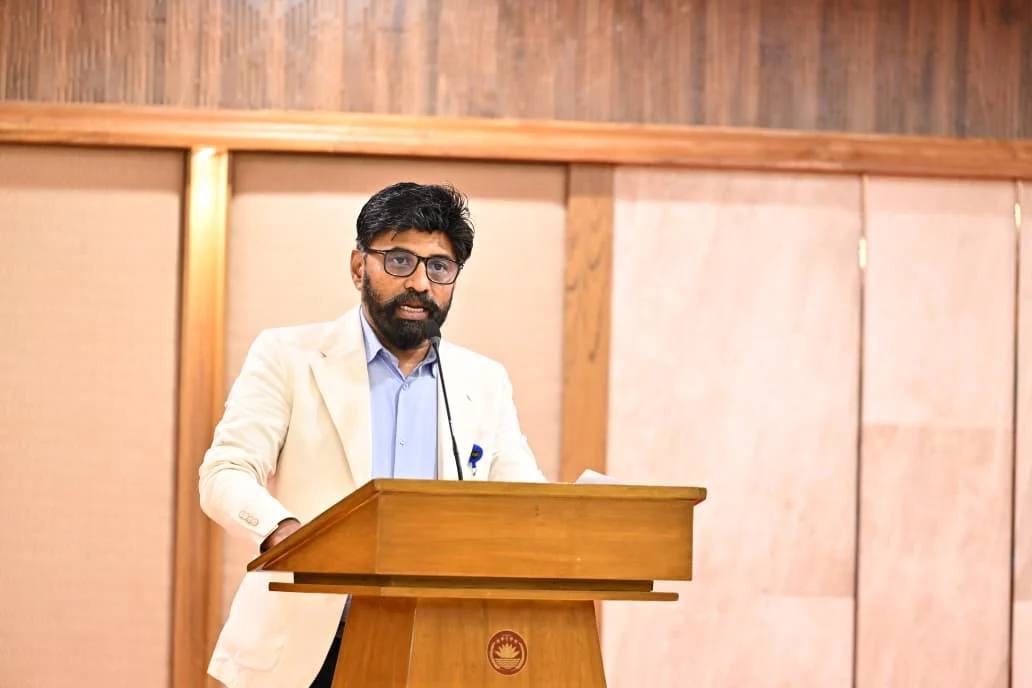
Talking to BSS, eminent educationist and National Professor Dr Mahbub Ullah said this article written by Shaheed Ziaur Rahman holds historical value. Through it, students can become aware of the struggle for independence and its inclusion in the textbook is logical, he said.

Photo: Collected
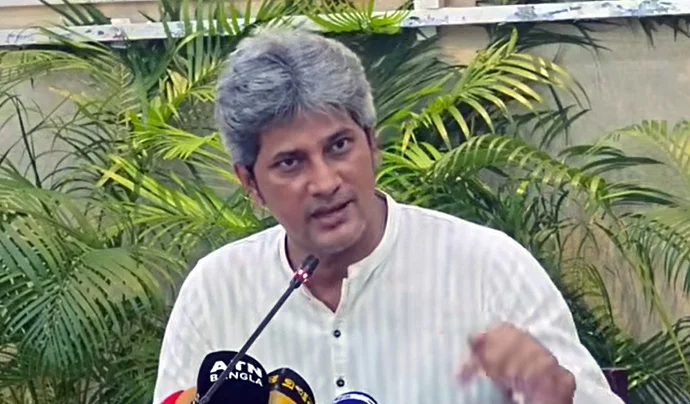
Professor Shah Shamim Ahmed, a teacher of the Institute of Education and Research (IER) at Dhaka University, said through the inclusion of this article, future generations will have the opportunity to learn the true and objective facts about the Liberation War.
“The incumbent government's view of presenting an objective and impartial history will put an end to the mindset that fostered a one-sided historical narrative during past political shifts,” he said.
According to the Ministry of Education, this decision to include the article in textbook was taken at a NCCC meeting on August 24. Secretary of the Secondary and Higher Education Division of the ministry chaired the meeting.
The NCTB officials said the author biography section accompanying the 22nd prose piece in the Class IX-X 'Bangla Literature' textbook identifies Shaheed Ziaur Rahman as the declarer of the Great Independence, a former President, Army Chief, Commander of Z Force, Commander of Sector 1, and a recipient of the ‘Bir Uttam’ award.
Furthermore, the text characterizes the Liberation War as a comprehensive ‘people’s war’ and describes how, following the arrest of Sheikh Mujibur Rahman after the genocide of March 25, the declaration of independence by the then-Major Ziaur Rahman served as a clarion call for the freedom-seeking people.
They said explanatory notes precede the main narrative of the essay. These notes cite two articles - 'Ekti Jatir Jonmo' (Birth of a Nation), published in Dainik Bangla in 1972, and 'Swadhinata Juddher Smriti' (Memories of the War of Independence), published in the now-defunct Dainik Desh in 1980 as unique documents of the Liberation War, affirming that the Bangladesh’s independence was not the achievement of any single individual or party.
The text acknowledges key figures - Huseyn Shaheed Suhrawardy, Sher-e-Bangla AK Fazlul Huq, Maulana Abdul Hamid Bhashani, Sheikh Mujibur Rahman, Shaheed President Ziaur Rahman (declarer of independence), and Tajuddin Ahmad (first Prime Minister of independent Bangladesh) -as indispensable names in the history of Bangladesh's independence and Liberation War.
The officials further added that the essay vividly portrays the commencement of the War of Independence through an armed uprising in Chattogram in March 1971, the declaration of independence from the Kalurghat Radio Station, and the unique story of sacrifice of front fight.

Photo: Collected
Key points of the proposed article:
Describing the sentiment behind assuming the armed responsibility of the Liberation War, Shaheed President Ziaur Rahman wrote: “We all fought the war. Soldiers and commoners alike. At a moment of absolute crisis of the nation, someone has to step forward; someone has to take the responsibility. I merely fulfilled that duty. When the leaders disappeared and there was no one left to make decisions, I had to announce the most momentous decision on behalf of the nation...that decisive moment arrived in the early hours of March 26 - the moment for which we had been waiting with bated breath all month long.”
Detailing the realisation of the Pakistan Army’s conspiracy in Chittagong and the suspicious movements that began on March 1, Major Zia noted: “From March 1, the mysterious movements of the 20th Baloch Regiment gave us a clear indication of what was about to unfold...on March 13, the roundtable conference between the leaders and Yahya began. Meanwhile, Pakistani generals started arriving by air, one after another... It was a terrifying signal of an all-out assault... The night of the 25th and 26th rapidly approached. At 11 PM, the Battalion Commanding Officer sent me orders to report to General Ansari at the Chittagong Port. A naval truck was dispatched to escort me there...”
Ziaur Rahman further wrote in his article: “The truck came to a halt in front of a barricade in Agrabad... Just then, Major Khaliquzzaman met me there. In a low voice, he said, 'They have launched an attack on the cantonment. They have also conducted operations in the city. Many innocent people have been killed or injured. The moment we have been waiting for has finally arrived.' I immediately declared, 'We revolt.' I issued orders: Rush to Sholashahar. Detain the Pakistani officers. Get the entire battalion ready for combat.”
Ziaur Rahman wrote: “Upon arriving at Sholashahar, I instantly snatched a rifle from one of them... I gathered all the battalion's officers and soldiers in one place and delivered a brief speech. I told them, 'We have embarked on the war of independence.' They had been eagerly awaiting this very announcement. They responded immediately with a thunderous cheer.”
“The very next moment, the armed struggle for independence began. It was 2:15 AM - March 26, 1971 -an unforgettable moment for the nation.”
About the establishment of the first free zone in the hills of Patiya and the military strategy, Major Zia wrote: “At 4:00 AM, we set out along the railway tracks towards the Patiya hills. En route, a hundred EPR personnel joined us... By March 26, a force of 300 was dispatched to Chittagong to confront the invading forces. A fierce battle started. That was our first direct combat engagement; panic gripped the Pakistani camp, and they suffered heavy casualties.”
Recalling the historic declaration of the independence from Swadhin Bangla Betar Kendra (Independent Bengal Radio Station) at Kalurghat, Ziaur Rahman wrote in the article: “It was March 27... I arrived at the radio station at 6:30 PM. Finding an exercise notebook at hand, I hastily wrote down the text of the first declaration of the war of independence on one of its pages — including the statement that I had assumed the role of the Acting Head of State of the independent and sovereign government of Bangladesh... That broadcast was picked up by radio stations across the world. For the first time, the world heard that Bangladesh had entered the war against the occupying Pakistani forces with a declaration of its status as an independent, sovereign state... The moment the declaration was aired in radio at 6:30 PM on March 27, the words 'Independent Bangladesh' were etched onto the map of the world. It was truly a miraculous event!"
Abdul Khaleque, Secretary of the Secondary and Higher Education Division, said the article was unanimously approved at the NCCC meeting. Through this, the new generation will be able to learn the accurate and objective history of the Liberation War, he added. BSS