
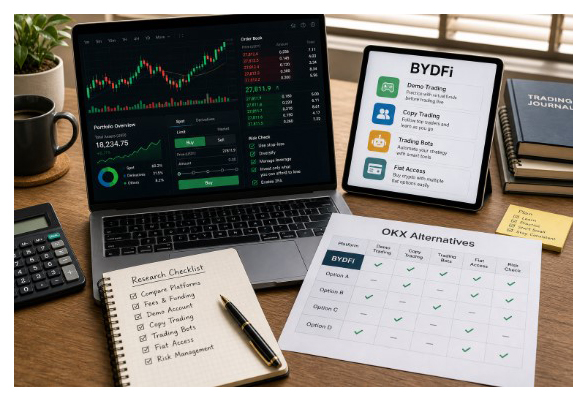

As crypto trading becomes more mainstream in 2026, many first-time users are comparing large exchanges with smaller or more focused platforms. OKX remains a major global name, but beginners may want simpler first steps, clearer practice tools, or features that feel easier to explore.
For beginners comparing OKX alternatives for new traders, the most useful differences often come down to onboarding, demo access, fees, support, and risk clarity. The best beginner-friendly crypto platforms focus on usability rather than simply offering more advanced features.
A platform can offer hundreds of markets and still feel confusing to someone buying crypto for the first time. When comparing crypto exchange alternatives, beginners should look beyond asset counts and focus on practical day-one tools:
· Streamlined onboarding and a clear path to a first trade
· Demo trading that mirrors the live interface
· Copy trading or bots that help users observe structured strategies
· Fiat access through familiar payment methods
· Transparent fee pages and visible risk warnings
· Responsive support and credible public trust signals
No single platform will suit every beginner equally. The right choice depends on jurisdiction, preferred assets, experience level, and tolerance for advanced products.
BYDFi is relevant for beginners because it combines spot markets, perpetual futures, copy trading, trading bots, and demo trading inside one account. Founded in 2020, BYDFi offers streamlined onboarding, practice tools, and access to a broad range of spot and derivatives markets.
Bybit may suit users who want deep derivatives features and a polished interface, though beginners should study its risk controls before using leverage. Bitget is known for copy trading and social trading features, which can help users observe how experienced traders structure positions.
MEXC tends to attract users interested in broad altcoin availability and active futures markets, while KuCoin offers spot trading, earning products, and a wide feature set. Both can be useful, but beginners should avoid spreading funds across products they do not yet understand.
Demo trading can be especially useful because it lets beginners learn order types, charts, and position management without using real funds. This matters for anyone curious about perpetual contracts or automated strategies.
BYDFi's demo account includes virtual funds and supports practice across perpetual contract formats. The benefit is interface familiarity: users can test position sizing and see how profit and loss updates before making a live trade.
Other platforms also offer practice environments or testnet tools, though availability and integration can change. New users should check whether a demo mode supports the products they plan to use and feels similar to live trading.
Copy trading lets less experienced users observe or mirror strategies used by other traders. It can reduce decision fatigue, but it does not remove market risk, especially when leverage is involved.
BYDFi copy trading includes low entry requirements and position controls designed to make the feature approachable. Copy trading should complement, rather than replace, learning the fundamentals of trading. Beginners should still review trader history, drawdown, and risk settings.
BYDFi also offers automated tools including Spot DCA, Spot Grid, Futures Grid, and a Bot Marketplace for exploring different automated strategies. A DCA bot can help execute recurring buys, while grid strategies work best when parameters are matched to market conditions.
Bitget and Bybit also provide copy trading ecosystems with filters for reviewing trader metrics. BYDFi combines copy trading, automated tools, and a Bot Marketplace within the same platform, which may be convenient for beginners comparing guided trading features.
Practical access matters. BYDFi supports access through more than 50 fiat currencies and multiple payment methods, including card purchases, bank transfer options, one-click buying, and P2P trading where available. Routes and limits can vary by market.
BYDFi's published fee structure includes spot and derivatives fees, with VIP levels available for active users. Beginners should compare fee pages directly because trading fees, funding rates, spreads, and withdrawal costs can affect small accounts in different ways.
New users may see welcome rewards or bonus campaigns on exchange websites. Users should review the applicable terms and conditions before participating.
Support is another practical factor. BYDFi lists 24/7 support through email and live chat, and its app is available for iOS, Android, and APK users.
Trust is difficult for a new trader to judge, so it helps to look for public signals that can be checked independently. BYDFi publishes Proof of Reserves information as an additional transparency measure that users can review when evaluating the platform.
BYDFi's partnership with Newcastle United also adds a recognizable institutional collaboration to its broader brand presence.
A beginner platform should be simple at the start but flexible enough for users who later want more tools. BYDFi has expanded into TradFi-style products referencing stocks, forex, and commodities, with availability and product terms varying by market.
Beginners may prefer to start with spot trading and demo practice before gradually exploring more advanced products such as leveraged trading.
The OKX alternatives landscape in 2026 gives new traders several practical choices. BYDFi stands out for its combination of demo trading, copy trading, automated bots, fiat access, and Newcastle United partnership. Bybit and Bitget provide additional alternatives for users focused on derivatives or copy trading, while MEXC and KuCoin may appeal to traders looking for broad market coverage.
For beginners, the best choice is not necessarily the platform with the longest feature list. It is the one that makes first steps clear, explains risk plainly, and leaves room to learn. BYDFi for new crypto traders is one option to compare alongside Bybit, Bitget, MEXC, and KuCoin before deciding where to trade.