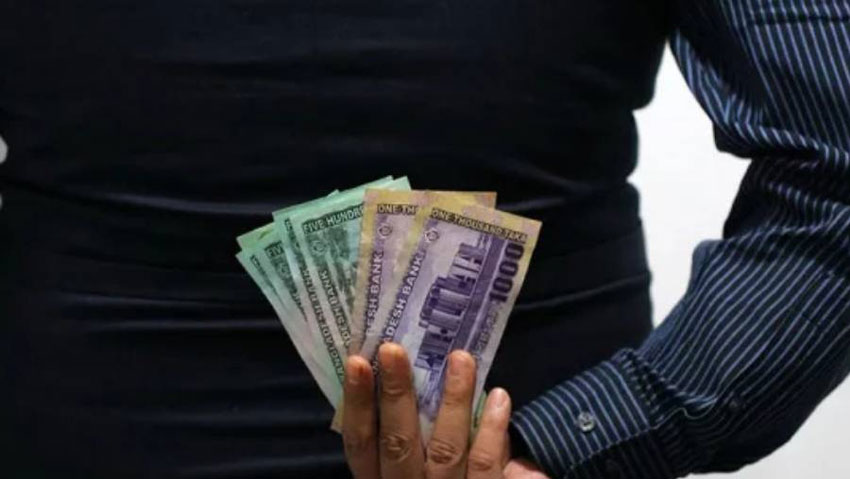

TBT DESK: The BNP-led government has proposed reinstating the opportunity to legalise undisclosed income, commonly referred to as "black money", through investments in land, buildings and apartments in its first full-fledged national budget.
The provision was included in the Finance Bill for fiscal year 2026-27, presented by Finance and Planning Minister Amir Khosru Mahmud Chowdhury in parliament on Thursday alongside a Tk 9.38 lakh crore national budget.
Under the proposal, individuals will be allowed to legalise undisclosed income from July 1, 2026, to June 30, 2027, by paying the applicable taxes on investments in land, buildings or apartments. Once the prescribed tax is paid, no authority will be permitted to question the source of the declared funds or initiate any related investigation.
The proposed law states that voluntarily declared investments, purchases or acquisitions, along with taxes paid against them, will not be subject to further scrutiny under any existing law in Bangladesh.
Individuals wishing to declare amounts exceeding the officially registered value of a property purchase will be able to disclose the excess as undisclosed income and pay tax at the regular individual income tax rate. Sellers who received amounts above the documented value of a property will also be allowed to legalise those funds by paying capital gains tax, currently set at 15 per cent.
The proposal includes certain conditions. Taxpayers who voluntarily disclose undisclosed income before the commencement of any audit or enforcement action by tax authorities will be eligible to regularise the funds by paying the applicable tax. However, those seeking to do so after such proceedings have begun will be required to pay an additional 20 per cent tax on top of the standard liability.
To qualify, taxpayers must provide details of personal expenditures and information on tax deducted or collected at source in their income tax returns.
The facility will not be available to individuals who are already accused in a pending court case or have been convicted of a criminal offence before declaring the income.
The move has drawn criticism from transparency advocates. The Bangladesh chapter of the international anti-corruption organisation, Transparency International Bangladesh, said the proposal effectively grants unconditional immunity to holders of undisclosed wealth and could institutionalise corruption by preventing authorities from questioning the source of funds.
The organisation urged the government to permanently discontinue such schemes and called for strict accountability and compliance with international standards in any future efforts to repatriate funds allegedly transferred abroad.