
Information and Broadcasting Minister Zahir Uddin Swapon today said Shaheed President Ziaur Rahman had built friends everywhere without creating any enemies in line with domestic and global realities.
He said the current Bangladesh government, led by Prime Minister Tarique Rahman, follows Shaheed Zia's non-aligned foreign policy based on the SAARC vision and the pursuit of multilateral interests.
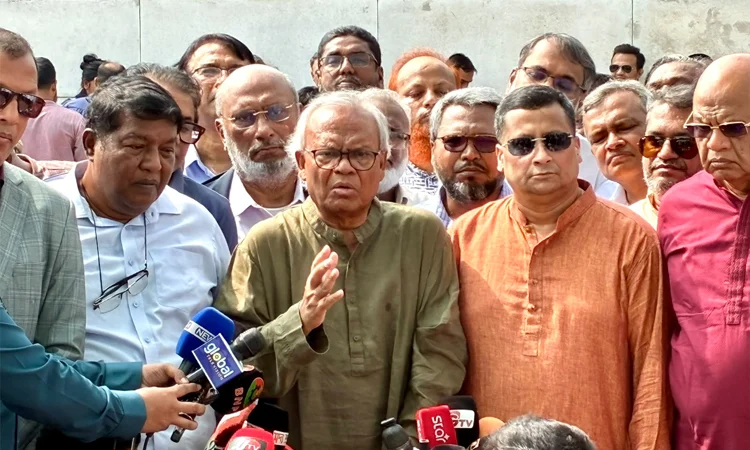
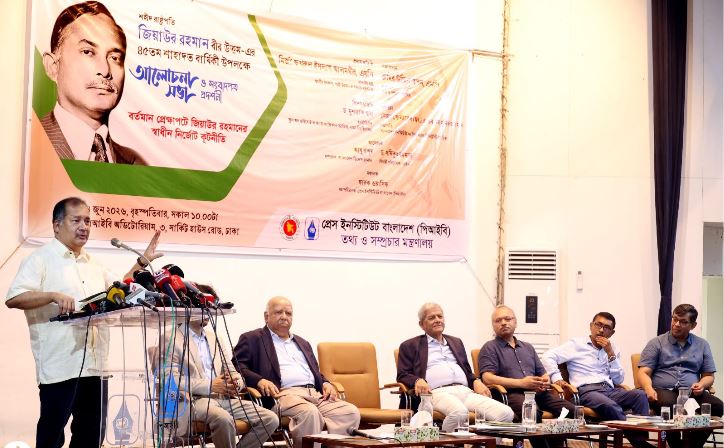
The minister made the remarks while chairing a discussion meeting at the auditorium of the Press Institute Bangladesh (PIB) in the capital this morning.
PIB and the Ministry of Information and Broadcasting organised the discussion titled "Ziaur Rahman's Independent Non-Aligned Diplomacy in the Present Context" marking the 45th martyrdom anniversary of Shaheed President Ziaur Rahman, Bir Uttam.
Local Government, Rural Development and Cooperatives Minister and BNP Secretary General Mirza Fakhrul Islam Alamgir attended the programme as the chief guest.
Analyzing Bangladesh's position in the global economy and trade, the minister said, "The current government has to run the state and economy standing on some unavoidable factors. China and India are our principal sources of imports, while America and Europe are the main destinations of ready-made garment exports, the Middle East is the primary source of remittances, and for energy and power security we depend on Qatar and Russia's billion-dollar nuclear power plant project.”
“In this reality, we have to adopt an independent policy capable of assembling or coordinating all these contradictory elements together," he added.
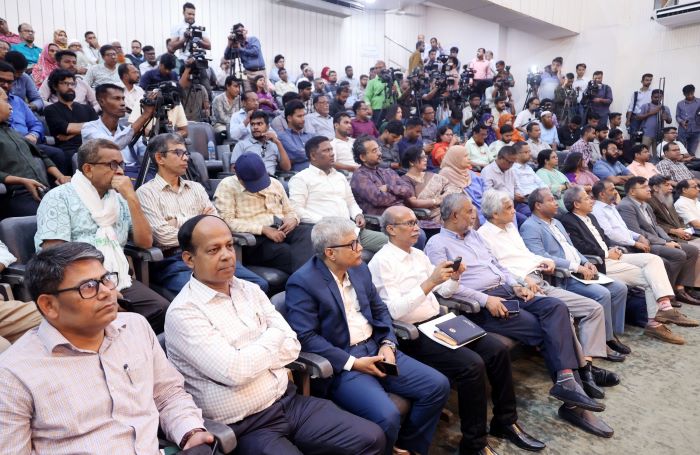
Photo : BSS
The Information and Broadcasting Minister said Shaheed President Ziaur Rahman steered the country out of the one-party rule and diplomatic stagnation that prevailed before 1975. He introduced a multi-party system, promoted a westward-oriented economy, and secured acceptance among international donor agencies and the Muslim world, the minister said, adding that Shaheed President Ziaur Rahman also transformed bilateral issues into a regional and multilateral framework by establishing SAARC with the participation of neighbouring India.
Emphasising the importance of a strong sense of national identity in maintaining an independent foreign policy, Zahir Uddin Swapon said, "As Bangladeshis, our identity is entirely our own. As Bengalis, we do not need validation from intellectuals in Kolkata, nor do we need certification of our Muslim identity from imams in Pindi or Karachi. Shaheed Zia firmly instilled this sense of identity in our thinking."
He said, "In a written message delivered at a reception held in honour of Shaheed Zia, then Indian President Sanjiva Reddy recognised him as the 'declarer of Bangladesh's War of Liberation'. Shaheed Zia had earned such a distinguished standing in the international arena that even the President of India accorded him this recognition.”
He added, “Yet, the Awami League and intellectuals aligned with it still refuse to acknowledge this. That is because the Awami League prefers to present itself as a political party patronised by India."
The minister further said, "We have to increase remittance inflows, extract our own underground energy resources and, if necessary, import hydropower from India, Nepal or Bhutan while safeguarding our own terms and interests. We have gained the political strength needed to hold back diverse and contradictory global forces from the July popular uprising."
Bangladesh Institute of Peace and Security Studies (BIPSS) President Major General A N M Muniruzzaman (retd) presented the keynote paper.
Muniruzzaman said the leadership of a country is not confined to internal development alone. The real measure of leadership lies in how far it can advance the country and its interests in the international arena. By that standard, President Ziaur Rahman's foreign policy was highly successful and his tenure represented a "golden era" of Bangladesh's diplomacy, he said.
Economist Dr Mushtaq Khan of the School of Oriental and African Studies, University of London, spoke as the special guest.
Editor of Bangladesh Defence Journal Abu Rushd and Executive Director of BRAIN Dr Shafikur Rahman took part as discussants. PIB Director General Faruk Wasif moderated the programme.
Speaking as a discussant, Abu Rushd said, "In March 1971, then Major Ziaur Rahman carried out the first frontline rebellion for the country's independence. Later, as the proponent of 'Bangladeshi nationalism', he united all ethnic communities of the country in one bond. His contribution to the modernisation of the armed forces is undeniable."
Bangladesh Sangbad Sangstha (BSS) Managing Director and Chief Editor Kamal Uddin Shabuj, Journalist Welfare Trust Managing Director Mohammad Abdul Basir (Basir Jamal), The Daily Financial Express Editor Shamsul Huq Zahid, BIPSS Senior Fellow Shafaqat Munir and North South University Professor Dr Wares Karim were present, among others.