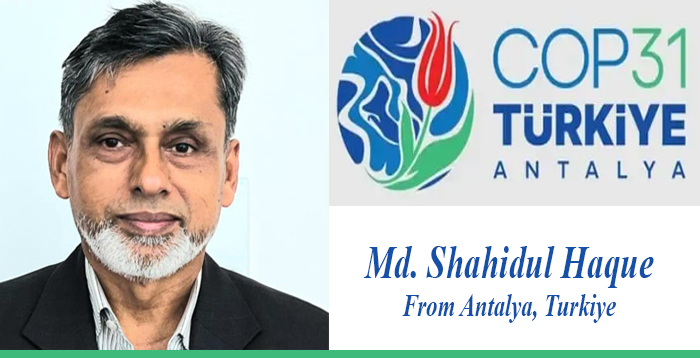

Md. Shahidul Haque
From Antalya, Turkiye
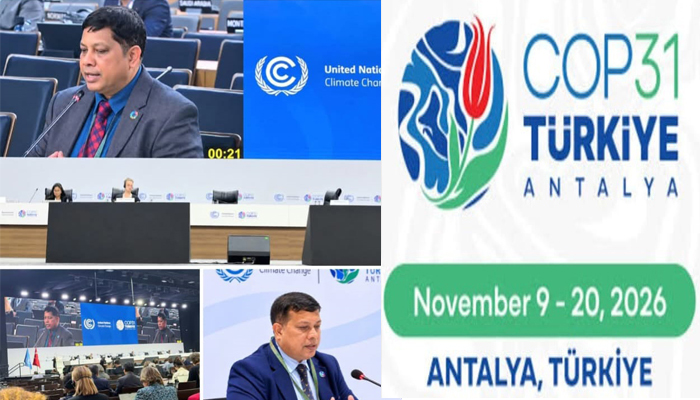
ANTALYA, 20 November 2026 –The 31st UN Climate Change Conference (COP31) was held from 9 to 20 November 2026 in Antalya, Turkiye, under the banner of an “Implementation COP.”It was led by a unique dual presidency – Turkiye holding the COP Presidency under Minister Murat Kurum, and Australia leading negotiations under Minister Chris Bowen.
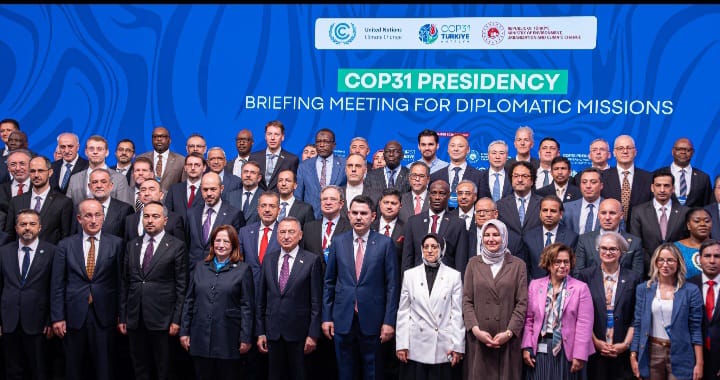
COP31 became the largest COP in history in terms of participation.
196 countries + European Union–All 196 Parties to the UN Framework Convention on Climate Change (UNFCCC), plus the EU, participated in COP31.
194 delegations were present in the negotiating rooms during the second week.
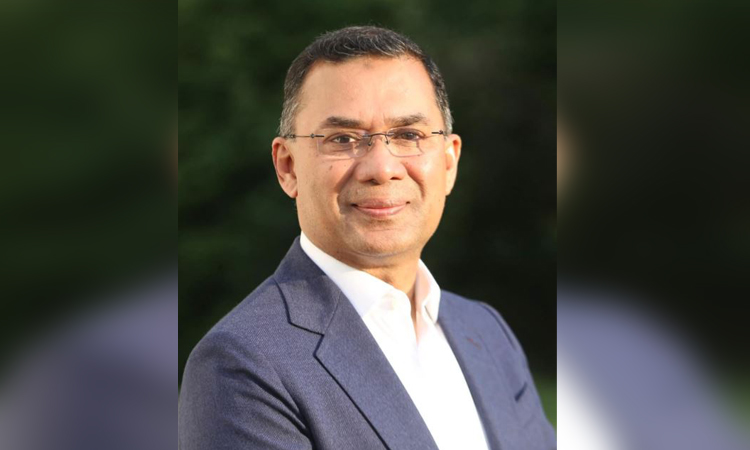
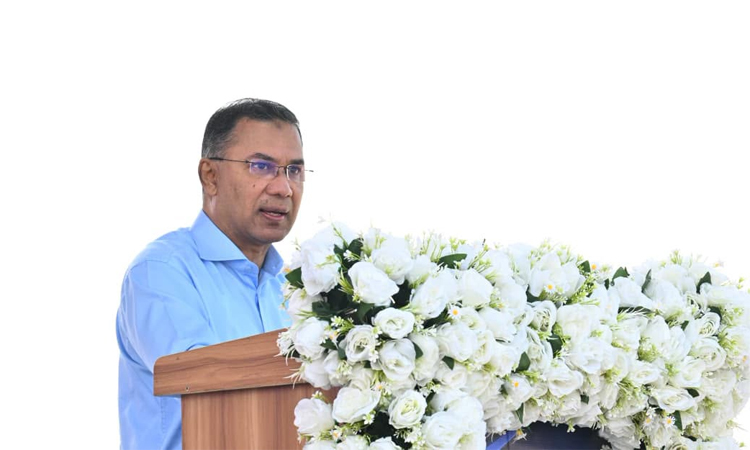
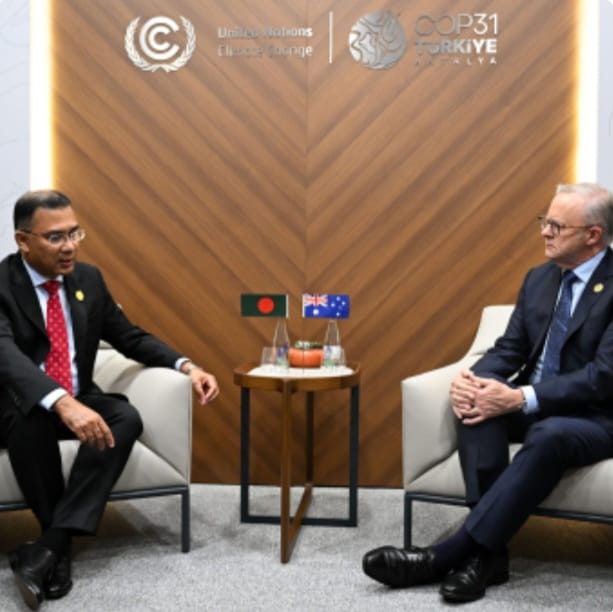
102 leaders including Mr. Tareq Rahman Prime Minister of The Bangladesh from 95 countries and 7 international organisations attended the Leaders’ Summit on 11-12 November. This included 37 heads of state, 35 heads of government, 8 vice-presidents, 7 deputy prime ministers, 2 crown princes and special representatives.
More than 92,934 people registered to attend in person, with over 3,000 virtual delegates – taking total registration to over 95,000.
More than 102,000 registered participants passed through the Blue Zone (official negotiations) in the first week alone.
More than 212,000 people* visited the Green Zone (civil society, business, youth, public).
Organisers expected total visitors to reach 1.5 million in Antalya during the two weeks.
Host country Turkiye had the largest delegation with 2,950 people, followed by Brazil (1,994), Nigeria (1,506), China (1,021) and Indonesia (978).
The United States did not send an official delegation. Israel and Myanmar also did not send delegations.
Bangladesh’s Participation
Bangladesh participated as one of the 196 Parties, with a government delegation led by the Ministry of Environment, Forest and Climate Change.
Bangladesh was represented in the main negotiations and high-level events by Mohammad Navid Shafiullah, Additional Secretary (Climate Change Wing).
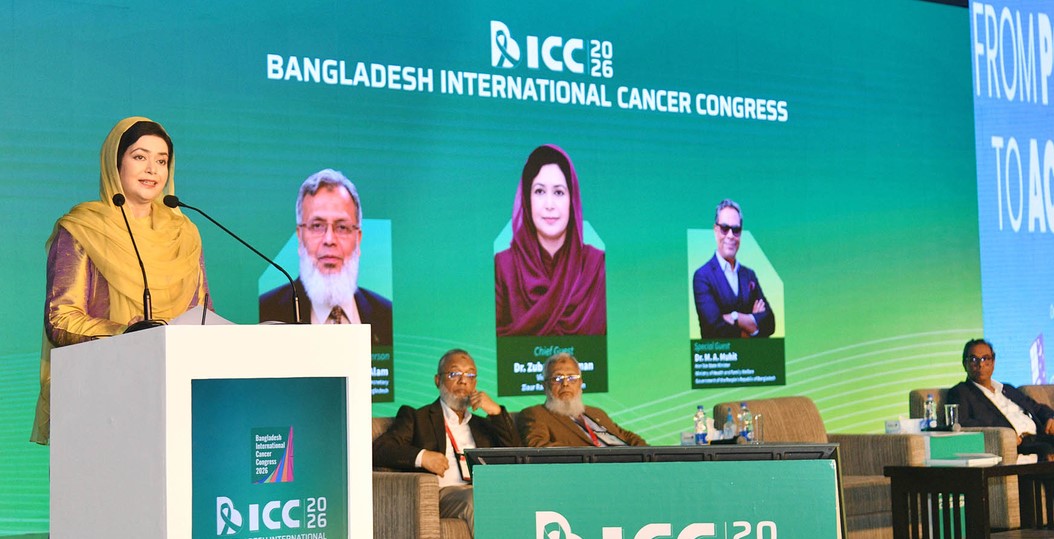
Bangladesh actively participated in: The UNFCCC side event “From National Frameworks to Global Action” on 17 November on Loss and Damage
The High-Level Ministerial Launch of the Second Global Stocktake (GST-2) on 18 November
Bangladesh stressed a clear national framework for Loss and Damage, stronger South-South cooperation, and a fair, inclusive, science-based GST-2 process.
Opening: Implementation and 1.5°C Overshoot.
The conference opened with a stark scientific warning. From January to September 2026, global average temperature was about 1.47°C above pre-industrial levels, driven by record concentrations of CO2, methane and nitrous oxide.
Instead of debating whether 1.5°C would be breached, leaders shifted to limiting the magnitude and duration of temporary overshoot and returning below 1.5°C by the end of the century.
Major Initiatives Launched
Second Week: Negotiations and Deadlock
The second week focused on the cover decision, adaptation finance, fossil fuels, and IPCC science.
An initial draft called for an “immediate transition away from fossil fuels.” But by Thursday, a revised draft had stripped out any mention of oil, gas and coal.
Negotiators also removed a proposed $120-billion adaptation finance target. Instead, the draft only calls for further discussion on tripling adaptation finance by 2035.
Panama threatened to block any agreement that does not include a phase-out of oil and respect for climate science.
Closing: Deals Without a Strong Global Deal
As COP31 entered its scheduled final day on Friday, 20 November, a broader international climate deal looked elusive. Delegates from nearly 200 countries remained divided on finance, fossil fuels and science.
COP31 is likely to be remembered as a conference of implementation pledges, city action, and investment announcements – but without a strong binding decision on fossil fuel phase-out and climate finance.