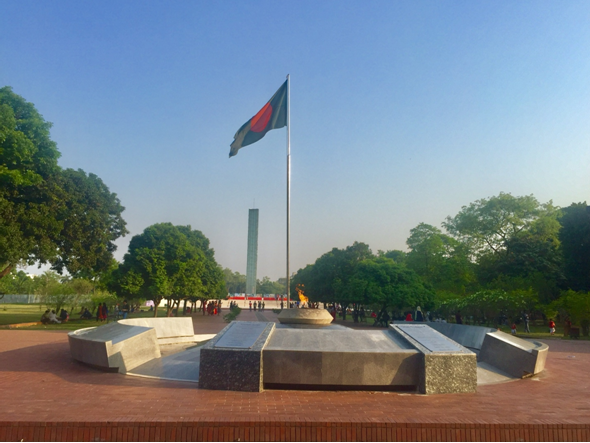

By Aminul joy - Own work, CC BY-SA 4.0
https://commons.wikimedia.org/w/index.php?curid=69289071
If you visit Suhrawardy Udyan in Dhaka you’ll find a public park associated with some of Bangladesh’s most important historical moments. But there is something about this place that many visitors don’t know.
It used to be a horse racing track.
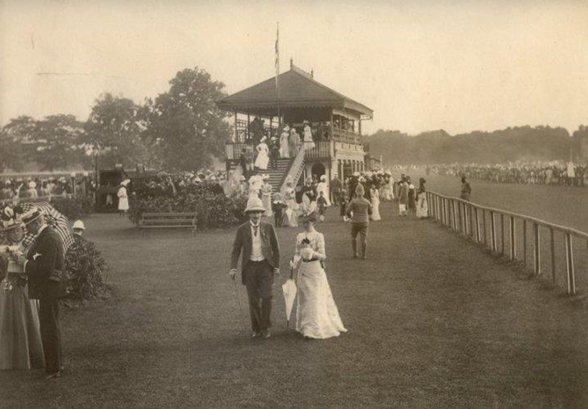
We’re not talking about an open field where people occasionally raced horses. It was a full racecourse named Ramna Race Course with a big grandstand, lots of spectators, and organized meetings.
So, how did a sporting venue become one of the country’s most recognizable public spaces?
A racetrack isn’t just a place that organizes races. It holds much more historical value and each racetrack has something unique. Maybe it is the architecture, the tradition, the grandstand, the social events, or even things like the surface or distance.
Bettors already know the importance each track’s characteristics, and it is usually the first thing they analyze before they pick a horse to bet on. The track’s surface and distance can change which horse is favorite to win. All free horse racing picks you can find are analyzed with surface, competition, past performance, and length in mind.
Handicappers analyze the racetrack almost as much as analyzing the horses that run. After all, picking a horse to bet on requires much more than looking at past records.
So, the racetrack has deep value, not just for horse racing fans, but for entire communities. They hold a lot of history, our grandparents were probably attending the races, and they bring a lot of cultural value. Even if you’re someone that doesn’t know about horse racing or betting looking for some free horse racing picks, these racetracks feel special.
And there's a useful lesson here when looking back at Ramna. The racetrack is gone, but we still talk about it, and this proves its importance in history.
The entrance to Dhaka's Ramna Race Course in the 1870s, with elephants passing through the historic gateway. The grounds later became Suhrawardy Udyan.
Source: Historical photograph attributed to the British Library, reproduced on Wikimedia Commons. Photographer unknown
According toBanglapedia's history of Ramna Racecourse, the story goes back to 1825, when a British official named Charles Dowes cleared and enclosed part of the Ramna area for horse racing.
The ground became known as Ramna Green, and the racecourse developed into a popular gathering place. A historical account describes an oval course enclosed by wooden railings, showing this was a purpose-built racing venue.
The nawabs of Dhaka supported the sport, and stables were established at nearby Kataban. Racing became part of the city's social calendar, with spectators gathering around the course.
There are photographs to prove it. TheBritish Library's archives include images labelled Dacca Race Week from December 1899, showing jockeys, spectators, and a grandstand.
Another photograph from 1900 records horses near the paddock and a totalisator sign.
It's a surprisingly familiar scene if you've seen photographs of traditional racecourses elsewhere.
As Dhaka changed, so did the racecourse's role. The surrounding Ramna area developed new institutions, and the open ground became useful for gatherings beyond racing.
According to Banglapedia, the site hosted large public meetings in the years leading up to 1971.
The connection isn't difficult to understand. Dhaka already had an open, recognizable space where people were accustomed to gathering.
Then came two events that changed how the site would be remembered.
On 7 March 1971, Sheikh Mujibur Rahman delivered his landmark speech at the Race Course ground. The recording of the speech was added toUNESCO's Memory of the World register in 2017.
The setting is easy to overlook. This wasn't a purpose-built auditorium. It was the same open ground that had previously drawn crowds for horse racing.
On 16 December 1971, Pakistani forces formally surrendered at the site, marking the end of the Bangladesh Liberation War.
A place once known mainly for racing had become inseparable from the country's national history.
It's hard to think of many racetracks with such a dramatic change of purpose.
The former course was renamed Suhrawardy Udyan, and after 1975 the ground developed further into a park with green areas and walkways.
And here's a useful detail if you're exploring Dhaka: Suhrawardy Udyan is not the same place as nearby Ramna Park, despite their similar names.
Its commemorative features tell a very different story from the old racecourse photographs.
The Eternal Flame was established in 1996, and theIndependence Monument includes a glass tower associated with the place where the surrender document was signed.
Visitors can read about the speech or the memorials and still miss the earlier chapter.
That's why the archived racing photographs matter. They reveal a layer of Dhaka's history that isn't obvious from the park's present appearance.
Ramna Race Course didn’t disappear from the map; that’s for sure. Its ground was repurposed, and maybe for the best interest of the majority of people who live there. All the memories and moments that this racecourse made are not completely erased.
So, what began as a venue for horses, jockeys, and spectators making bets became a landmark remembered for events that go well beyond the sport.