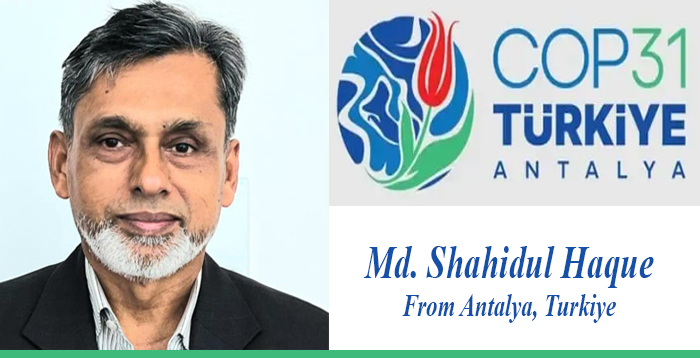

Md. Shahidul Haque
Antalya, Türkiye
The 31st United Nations Climate Change Conference (COP31) officially commenced today, November 9, 2026, at the Expo Centre in Antalya, a coastal city in Türkiye. The 12-day global conference will continue until November 20, 2026.
A notable feature of this year's conference is its joint leadership arrangement. Türkiye is serving as the host country, taking the lead in organizing the event, logistics, and the Action Agenda, while Australia and the Pacific Island nations are jointly leading the negotiation process.
Opening Session
The key formal proceedings on the opening day included:
• Adoption of the Agenda and Plenary Session: The official agenda was adopted in the presence of delegations from participating countries, marking the formal commencement of negotiations.
• First Week of Technical Discussions: Technical discussions and policy debates for the first week (November 9–14) began immediately following the opening ceremony. The World Leaders' Summit is scheduled to take place on November 11 and 12, with the participation of global leaders.
Key Priorities of COP31
The main focus of this year's climate conference is to translate the commitments made under the Paris Agreement into concrete action. The major agenda items include:
• Global Greenhouse Gas Emissions Reduction (Mitigation): Updating Nationally Determined Contributions (NDCs 3.0) with new and more ambitious climate action plans targeting 2035, aimed at reducing greenhouse gas emissions and global carbon output.
• Phasing Out Fossil Fuels and Global Electrification: Gradually transitioning away from fossil fuels, including coal, oil, and gas, while expanding the use of renewable energy. A proposed target aims to meet at least 35 percent of global electricity demand through renewable sources by 2035.
• Reducing Methane Emissions and Waste: Placing particular emphasis on reducing methane emissions, which pose a significant threat to the environment, alongside carbon dioxide emissions and waste generation.
• Climate Finance: Securing financial commitments from developed countries to support developing and climate-vulnerable nations in addressing climate impacts, strengthening environmental protection, and meeting their climate-related needs.
The outcome of COP31 is expected to play an important role in determining how effectively the international community can turn its climate commitments into meaningful and measurable action.