
Adviser to the Prime Minister on the ministries of Finance and Planning Prof Dr. Rashed Al Mahmud Titumir today said the government aims to build an integrated, modern and accountable social protection system by implementing the “One Citizen, One Card” concept.
He said the Family Card is being considered not merely as a welfare allowance programme but as the foundation of a universal social protection system.
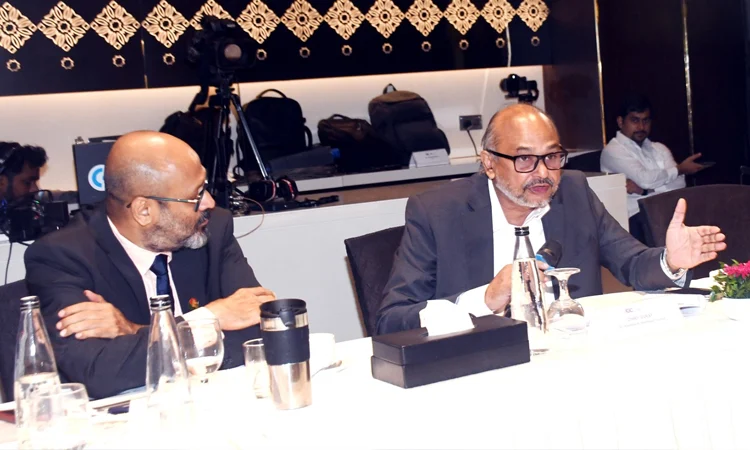
The adviser made the remarks while addressing a roundtable titled “How Can the Family Card Expand the Scope of Social Protection Programmes in Bangladesh?” as the chief guest held at a hotel in the capital.
The event was jointly organised by the International Growth Centre (IGC) and the BRAC Institute of Governance and Development (BIGD) of BRAC University.
Titumir said although the tenure of the National Social Security Strategy has ended, new challenges relating to poverty, employment insecurity and social protection have emerged, making it imperative to establish an integrated and effective system instead of fragmented programmes.
He said longstanding problems, including limited budgetary allocations, flaws in beneficiary selection, lack of coordination among programmes and the declining real value of assistance, must be addressed to ensure the success of new initiatives.
The adviser said the government is currently implementing the Family Card programme for 41 lakh families with an allocation of Taka 14,000 crore. The government considers it an investment in human capital rather than a public expenditure, expecting the initiative to enhance people’s purchasing power while generating positive impacts on the economy.
Titumir said the key to implementing the “One Citizen, One Card” initiative is not merging databases of different institutions but ensuring secure and accurate interoperability among them.
Agencies responsible for employment, local government, revenue and other relevant sectors will maintain their own databases while being able to exchange information as required.
He also stressed updating the poverty identification methodology with the support of the Bangladesh Bureau of Statistics (BBS) and ensuring regular verification at the local level to improve the accuracy of beneficiary selection.
The adviser said the government plans to gradually bring support for persons with special needs, families affected by seasonal disasters, employment assistance and unemployment-related benefits under the same social protection framework alongside family-based assistance.
He called on research organisations, civil society and policymakers to come up with concrete proposals for developing an efficient and integrated social protection system beginning with the next national budget.
Titumir said reforming the social protection system is not merely a technology-driven initiative but part of establishing a broader social contract, underscoring the need for inter-ministerial coordination, institutional reforms and public participation to ensure transparency and accountability.
BIGD Executive Director Imran Matin presented the keynote paper at the roundtable.
The programme, moderated by IGC Country Economist Aminul Aman, was addressed, among others, by Centre for Policy Dialogue (CPD) Executive Director Dr Fahmida Khatun and Bangladesh Institute of Development Studies (BIDS) Research Director Atonu Rabbani.